Introduction
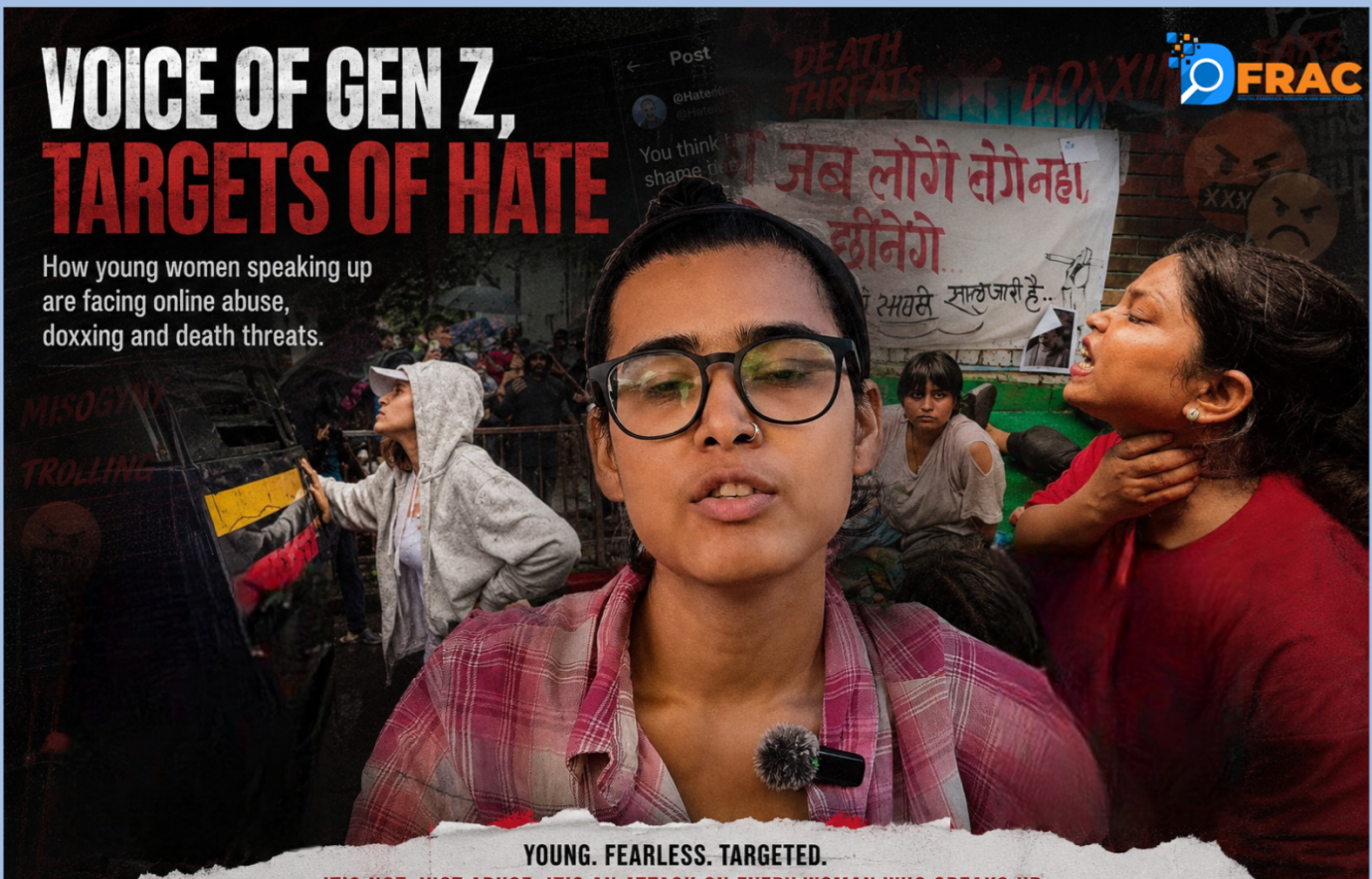
The July 2026 protests over examination-related grievances and the treatment of demonstrators produced a number of viral images and videos featuring young women. Their photographs, statements and protest videos travelled rapidly across social-media platforms, turning them into recognisable faces of a movement that had largely been organised and amplified online.
Among those who drew significant attention were Neha Bora, Neha Bharti, Sakhi Bandhu, Shraddha Singh and Rhiya Ahir. Their visibility, however, came with a darker consequence. As their protest-related content went viral, several of these women reported or became subjects of intense online hostility, including misogynistic abuse, body-shaming, threats, defamatory posts, attempts to expose personal information and, in some cases, alleged rape and death threats.
DFRAC examined publicly available social-media posts, comments, reposts and media interviews concerning these women. The investigation found that the hostility frequently moved beyond criticism of their political views or participation in the protests. Women were often attacked through their appearance, sexuality, gender identity and personal lives.
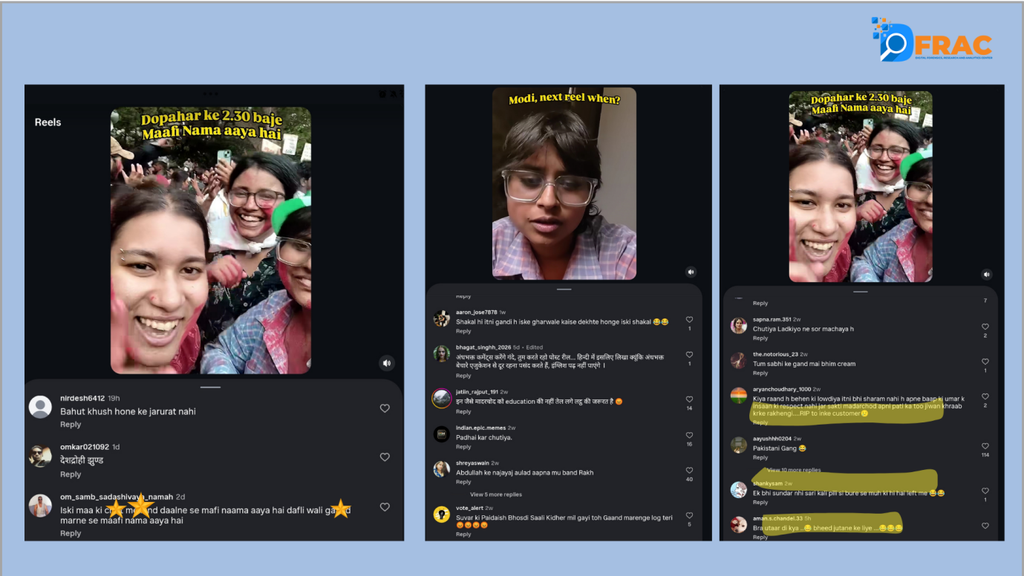
Shraddha Singh: From a Viral Reel to Threats and Doxxing Allegations
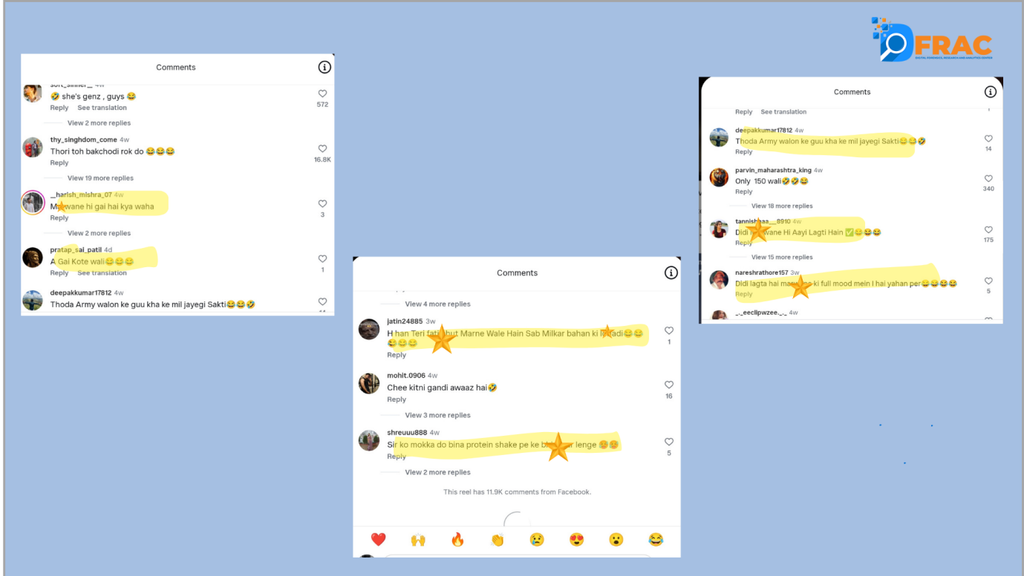
Shraddha attended the Jantar Mantar protest and posted a short reel featuring Rapid Action Force personnel in the background.After criticism intensified, she deleted the video and issued an apology. However, according to her account to media organisations, the backlash continued even after its removal.
She said that her phone number and address had been circulated online and that her mother received abusive messages, forcing Singh to remove her mother’s Instagram account.
For example, in the comments on her posts related to the student protests, DFRAC found several abusive and sexually derogatory remarks, including “waane gayi hai kya,” “150 waali,” “fati hui ut waane gayi hai,” “behan ki li,” and “kothe waali.”
Sakhi Bandhu: Gendered Abuse and Body-Shaming
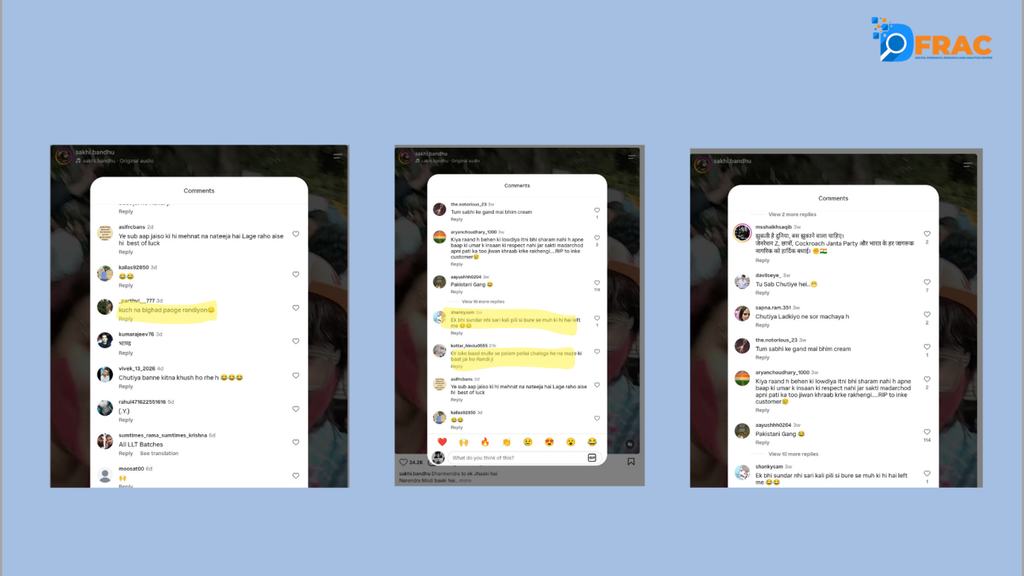
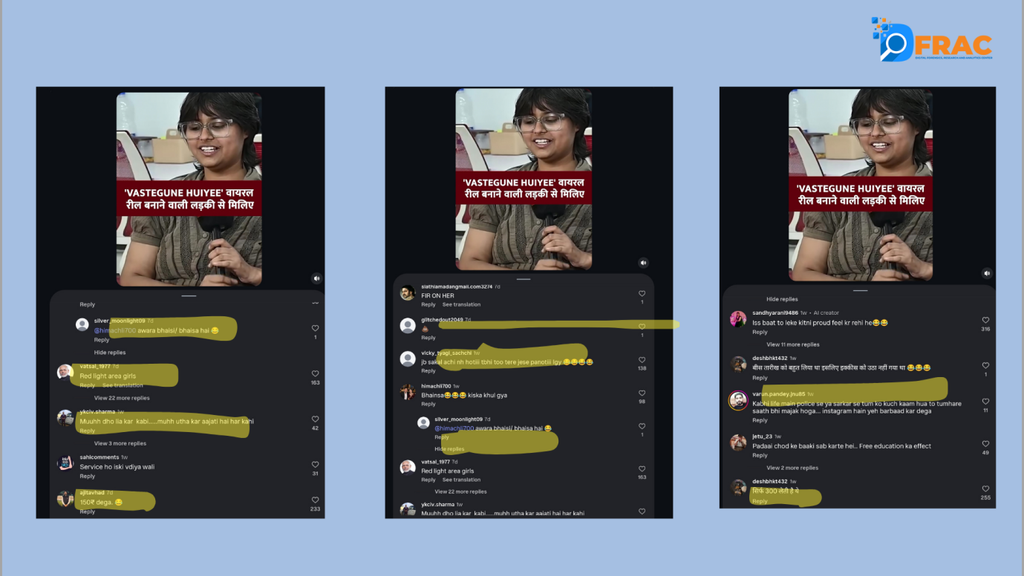
Sakhi Bandhu, who became popularly associated online with a viral protest video and was widely referred to through the phrase “Vaastegunahunyia girl”, experienced another form of online targeting.DFRAC’s review of publicly available material found hostile comments directed not merely at her political position but at her identity and appearance. In an interview cited in media coverage, Bandhu described the scale of the abuse, saying she had lost count of the messages she had deleted and people she had blocked.
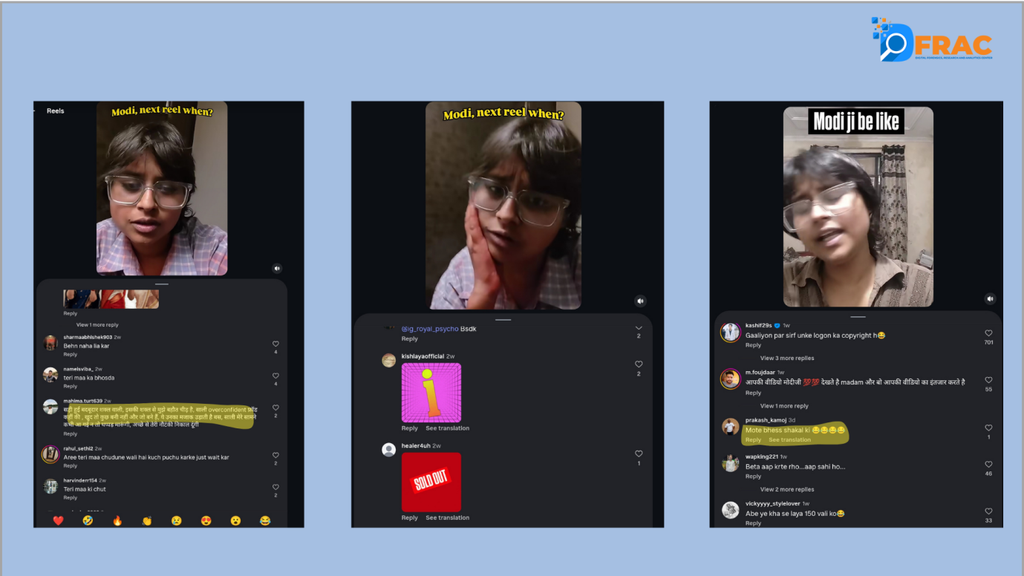
She also described being called “gay” as an insult and being labelled a “paid protester”.
The use of a transgender identity as a slur is particularly revealing.Body-shaming was another recurring feature of the online response.For example, the comments on Sakhi Bandhu’s posts included body-shaming and derogatory remarks such as “mote bhains, shakal ki,” “badbudar shakal ki,” “Red Light waali,” “r*d,” and “gay.”
Rhiya Ahir: The “Grey Hoodie Girl” Becomes a Target
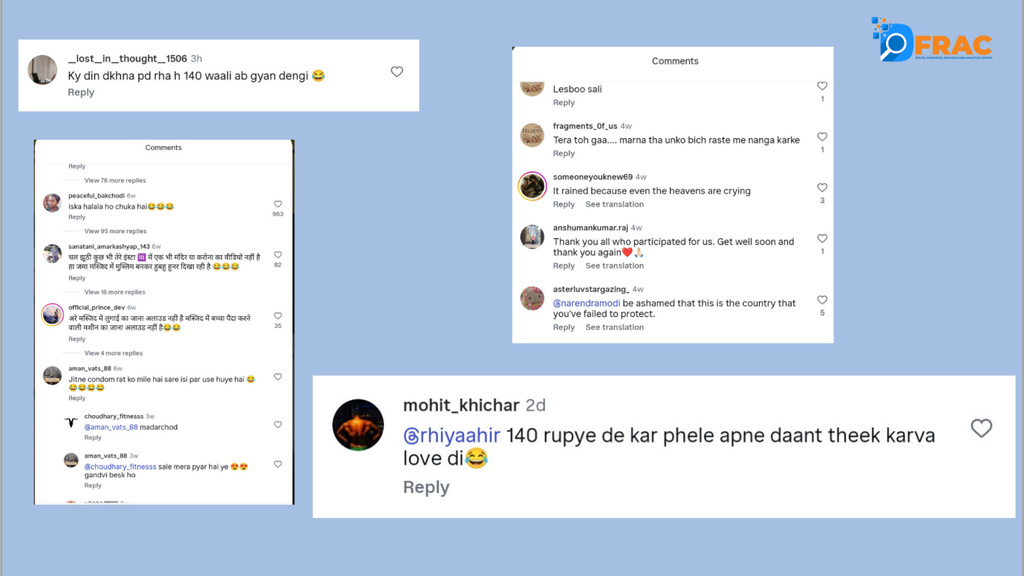
Rhiya Ahir’s experience followed a similar trajectory. Her photograph from the Mumbai protest became viral after she stood in front of a police vehicle carrying detained demonstrators. The photograph was repeatedly shared across social-media platforms and news reports, making her one of the most recognisable faces of the protests.The visibility generated by the photograph was followed by online abuse.
According to a Times of India report cited in the material reviewed by DFRAC, Ahir told authorities that she had faced abusive comments and threats since the protest and had previously complained to the police.
For example, abusive slurs targeting Rhiya Ahir in the comments on her post included terms such as “Gd me,” “n*ga,” and “140 waali.”
A Gendered Cost of Public Visibility
The attacks documented or reported in the cases examined include misogynistic comments, body-shaming, gendered insults, sexualised abuse, threats and alleged circulation of personal information. The material also shows instances where harassment extended to family members. The concern arises when criticism turns into threats, personal abuse or attempts to expose private information.
For women whose images suddenly become associated with a protest movement, the consequences can be particularly personal. They were targeted in the comments on their protest-related posts, where users used derogatory labels such as “140 waali,” “150 waali,” and “40 waali” to demean and sexually objectify them.
Their appearance, clothing, identity and private lives may become subjects of discussion even when those issues have little connection with the cause for which they were protesting.
| Category of Abuse / Threat | Nature of Targeting |
| Misogynistic abuse | Gendered insults and derogatory comments targeting women because of their participation in the protests. |
| Body-shaming | Comments attacking physical appearance, body, looks and clothing |
| Sexualised abuse | Vulgar, sexually degrading and sexually explicit comments directed at women protesters. |
| Transphobic slurs | Use of perceived gender identity or transgender terminology as a derogatory insult. |
| “Paid protester” accusations | Claims that women participated in the protests for money rather than political conviction. |
| Rape threats | Threats of sexual violence intended to intimidate or silence women protesters. |
| Death threats | Threats to kill or physically harm women following their protest-related visibility. |
| Threatening calls/messages | Repeated threatening phone calls, direct messages and other intimidating communications. |
| Doxxing | Alleged circulation of private information such as phone numbers or addresses. |
| Family harassment | Abuse and threats extended to mothers, relatives or other family members. |
| Content re-uploading | Deleted protest videos or photographs continued to circulate through other social-media accounts. |
| Refusal to remove content | Accounts allegedly declined requests to remove reposted or objectionable content. |
| Defamatory content | Posts or narratives making damaging allegations or portraying women protesters negatively. |
| Manipulated content | Altered or manipulated photographs, videos or other content circulated online. |
| Intimidation | Persistent hostile engagement designed to create fear or pressure women to withdraw from public activity. |
| Online shaming | Public ridicule and humiliation based on women’s viral protest appearances |
Conclusion:
The experiences of Sakhi Bandhu, Shraddha Singh, Riya Ahir, Neha Bora and other women demonstrate how political visibility can carry a disproportionate digital cost for women.
The most concerning finding is not that these women were criticised. Protesters in a democracy must be open to criticism.The concern is what happened when criticism became sexualised abuse, body-shaming, threats, alleged doxxing, attacks on family members and intimidation.
DFRAC’s investigation therefore highlights a broader digital-safety concern: as social media increasingly determines who becomes the face of a movement, platforms, law-enforcement agencies and civil society must also confront what happens when those faces become targets.