Executive Summary
Over the last three months, multiple investigations, fact-checks, and digital monitoring exercises conducted by DFRAC identified a sustained pattern of misinformation campaigns originating from or amplified by Pakistan-linked social media ecosystems targeting India. These campaigns have evolved beyond conventional geopolitical propaganda and increasingly exploit communal sensitivities, regional tensions, political polarization, and public distrust.
The investigation indicates that these influence operations rely on a coordinated ecosystem of anonymous X (formerly Twitter) handles, cross-platform amplification networks, manipulated visuals, recycled protest footage, AI-assisted narratives, and misleading contextual framing. The objective is not merely to spread false information but to shape perception, inflame tensions, weaken institutional credibility, and influence both domestic and international discourse about India.
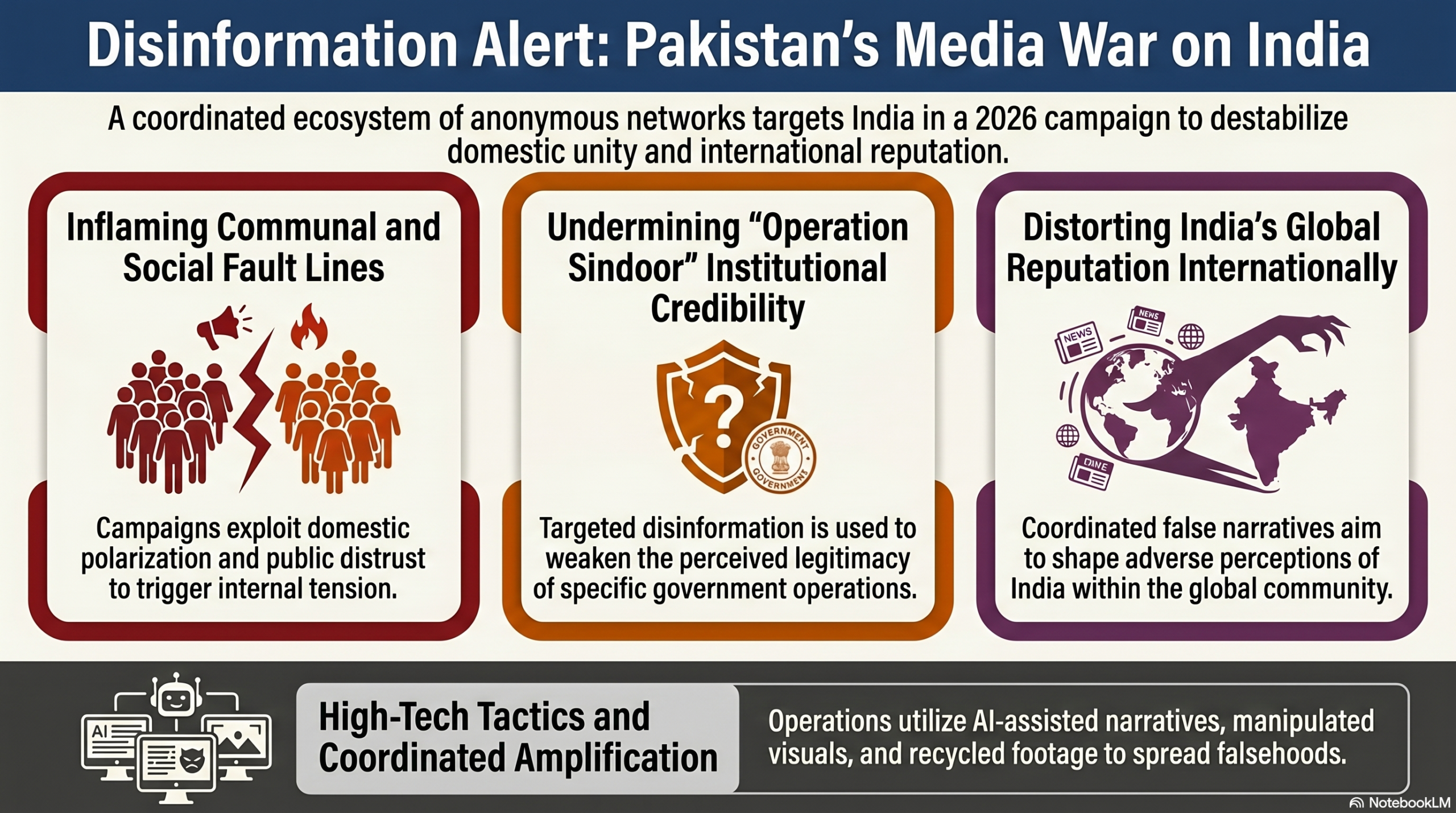
DFRAC’s analysis between February and May 2026 suggests that these campaigns pursue three broad strategic objectives:
1.Exploiting Communal and Social Fault Lines Within India
2.Undermining the Credibility of Operation Sindoor Through Disinformation
3. Shaping Adverse Global Perceptions Through Coordinated False Narratives
1. Exploiting Communal and Social Fault Lines Within India
DFRAC investigations found that Pakistan-linked propaganda accounts systematically circulated misleading and inflammatory claims designed to aggravate communal distrust and social polarization inside India. These campaigns frequently weaponized sensitive incidents by assigning fabricated communal angles, misrepresenting local disputes as religious persecution, and recycling unrelated videos to provoke outrage.
The campaigns primarily relied on three methods:
False communal attribution
Miscontextualized viral videos
Narrative amplification through coordinated accounts
The content was often emotionally framed to maximize virality and exploit existing social anxieties.
Key Patterns Identified
A. False Communal Attribution of Criminal Incidents
Several incidents involving local disputes or criminal altercations were misleadingly reframed as communal attacks.
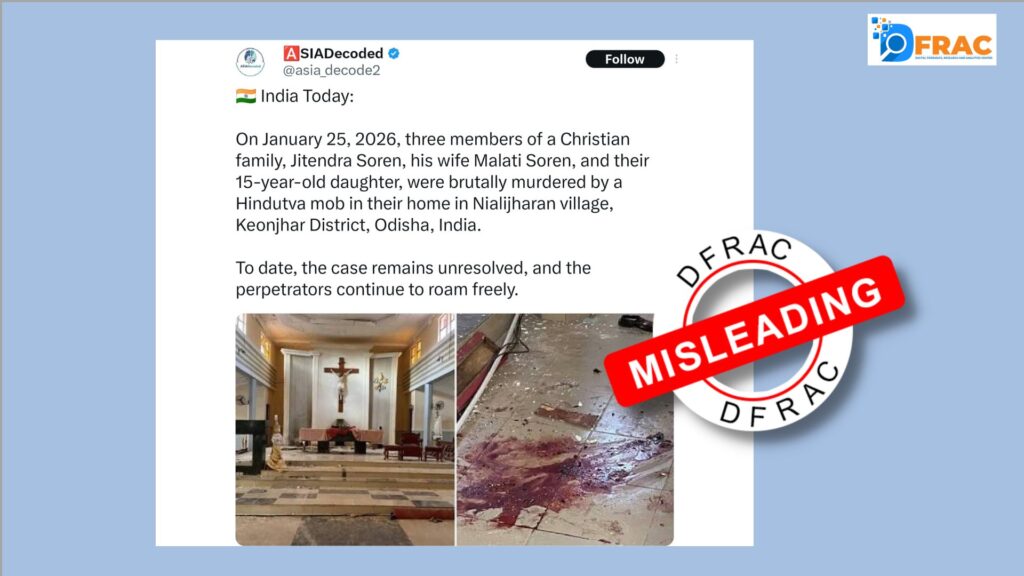
Factcheck: Keonjhar Triple Murder: Viral Communal Claim Misleading, Family Dispute Behind Killings
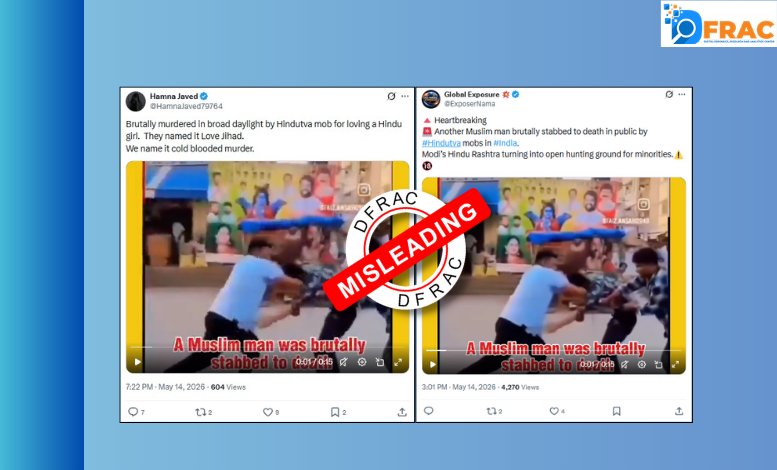
Factcheck: Video of youth’s murder over financial transaction shared with communal claim
This reflects a broader tactic of converting localized disputes into narratives of systemic communal oppression.
B.Weaponization of Protest
DFRAC identified repeated misuse of domestic protest videos to falsely suggest nationwide unrest against Indian institutions.
Fact Check: Old Video of Workers’ Protest in Noida Falsely Shared as “GenZ Protesters Clashing Near Army Headquarters”
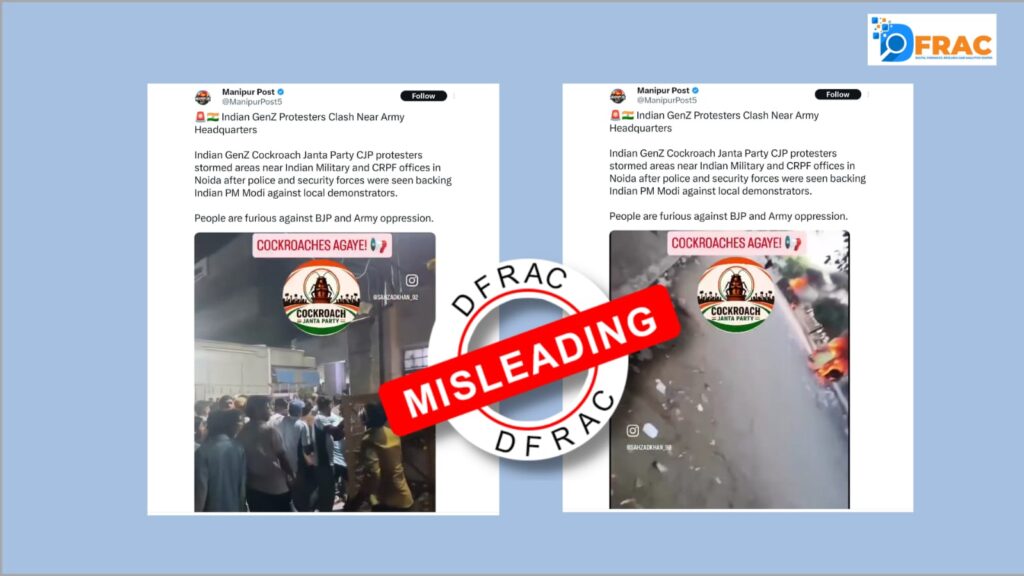
Multiple Pakistan-linked handles circulated videos from protests in Bihar and Noida, falsely claiming that Indian youth had launched coordinated anti-government uprisings near military establishments.DFRAC found that the videos were unrelated to the claims being circulated. The original video is from Noida Workers’ Strike.The campaign used emotionally loaded terminology such as “oppression,” “fascism,” and “military-backed crackdown” to attract international engagement.
C. Religious Radicalization Narratives
DFRAC also identified attempts to communalize security-related incidents through fabricated claims.
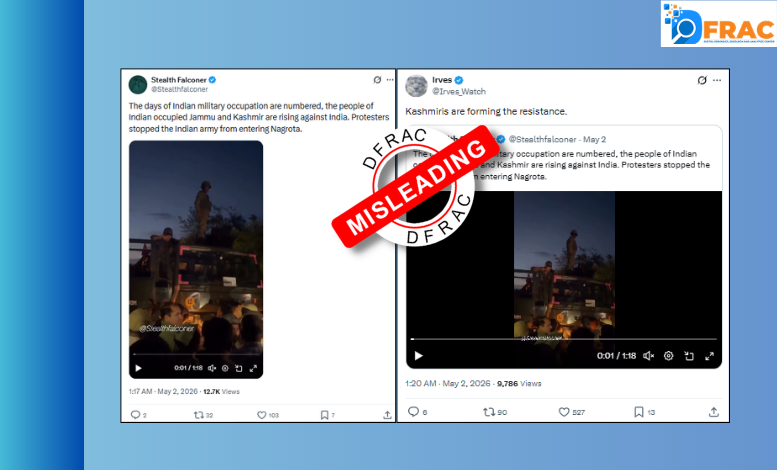
Fact Check: Misleading claims using a video of water crisis protests in Jammu-Kashmir to show anti-army sentiment
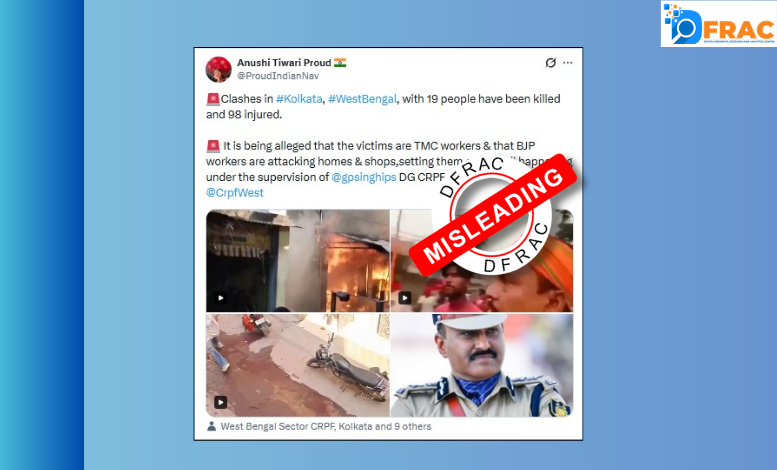
FactCheck: Misleading claim of 19 deaths and 98 injuries in post-poll clashes in West Bengal
2. Undermining the Credibility of Operation Sindoor Through Disinformation
DFRAC investigations also identified coordinated attempts to discredit Operation Sindoor through false narratives, manipulated military-related content, and fabricated operational claims.
A. Fabricated Military Admissions
Pakistan-linked propaganda handles circulated edited clips and misleadingly framed interviews to falsely suggest admissions of Indian military failures.
FactCheck: Podcast Clip of Indian Army Veteran Falsely Shared as Admission of Pakistani Missile Strike on Pathankot Air Base
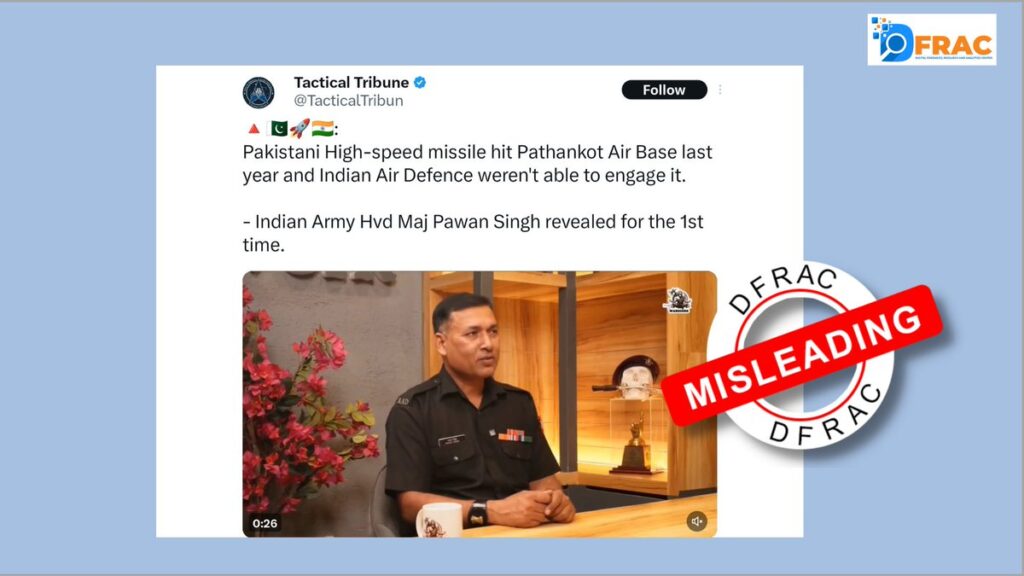
DFRAC investigation found that The viral claim is false and Misleading.The video has been shared with a fabricated and misleading narrative to spread disinformation.
B. Information Saturation Through Repetition
False narratives surrounding Operation Sindoor were repeatedly reposted through multiple accounts to create an illusion of credibility through volume.
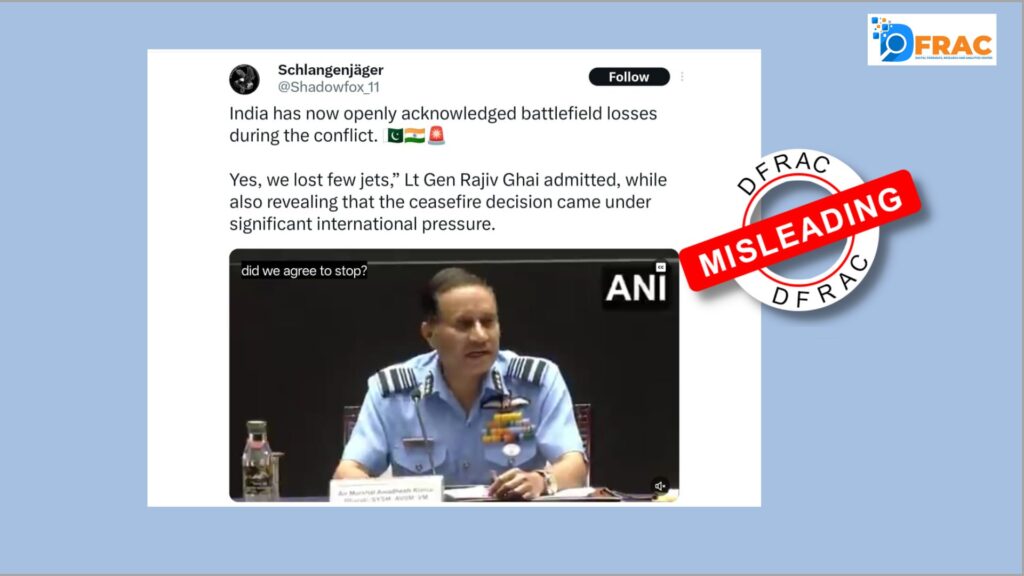
Fact Check: AI-Manipulated Video Falsely Claims Lt Gen Rajiv Ghai Admitted India’s Battlefield Losses
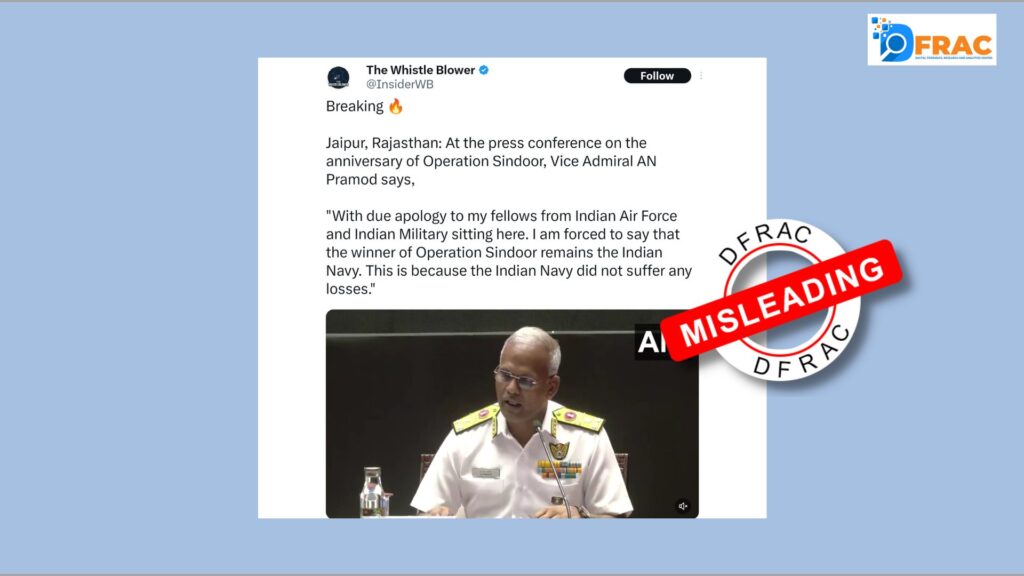
Fact Check : AI-Manipulated Video Falsely Claims Vice Admiral AN Pramod Declared Indian Navy the “Winner” of Operation Sindoor
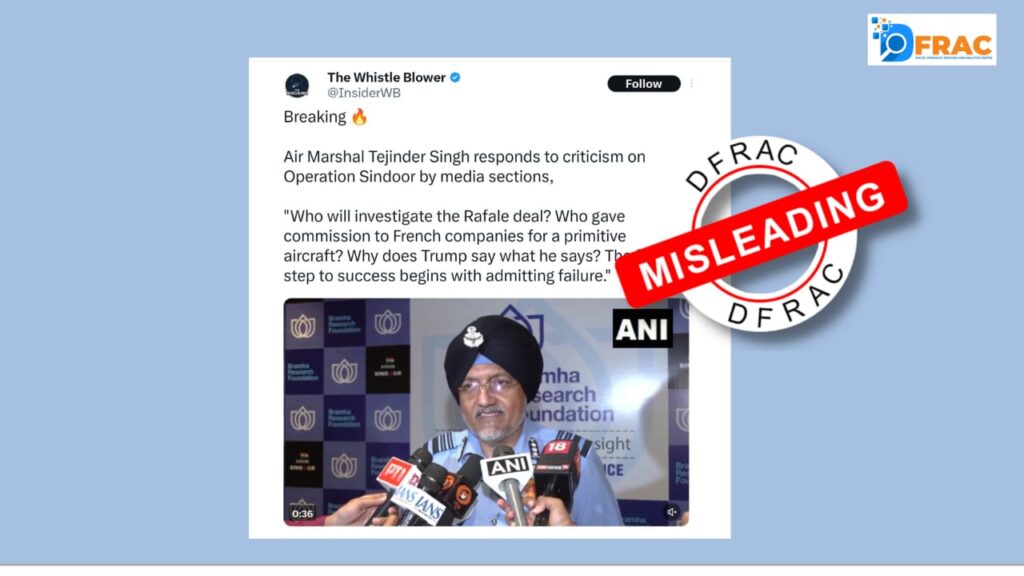
FactCheck: Viral Video Falsely Claims Air Marshal Tejinder Singh Criticised Rafale Deal and Operation Sindoor
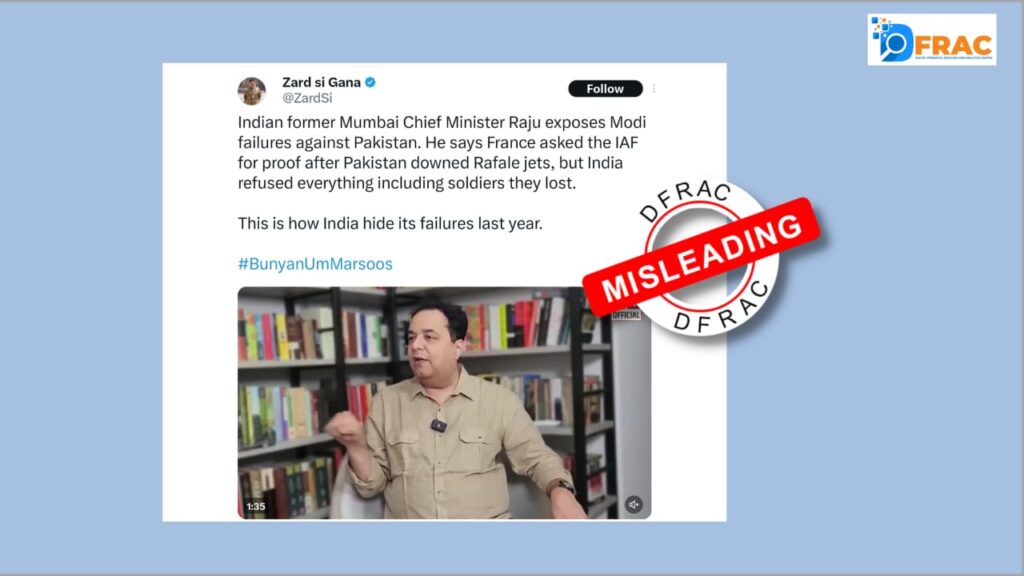
FactCheck: Viral Video Misrepresents Journalist Raju Parulekar as Former Mumbai CM, Distorts Remarks on India–Pakistan Tensions
3. Shaping Adverse Global Perceptions Through Coordinated False Narratives
DFRAC’s investigation found that a significant volume of misleading and manipulated content circulated through Pakistan-linked social media networks sought to shape negative international perceptions about India during sensitive conflict and geopolitical situations.The analysis identified coordinated efforts to selectively frame India as a partisan actor in regional conflicts while simultaneously amplifying allegations of human rights violations through miscontextualized videos, misleading captions, recycled visuals, and unverifiable claims.
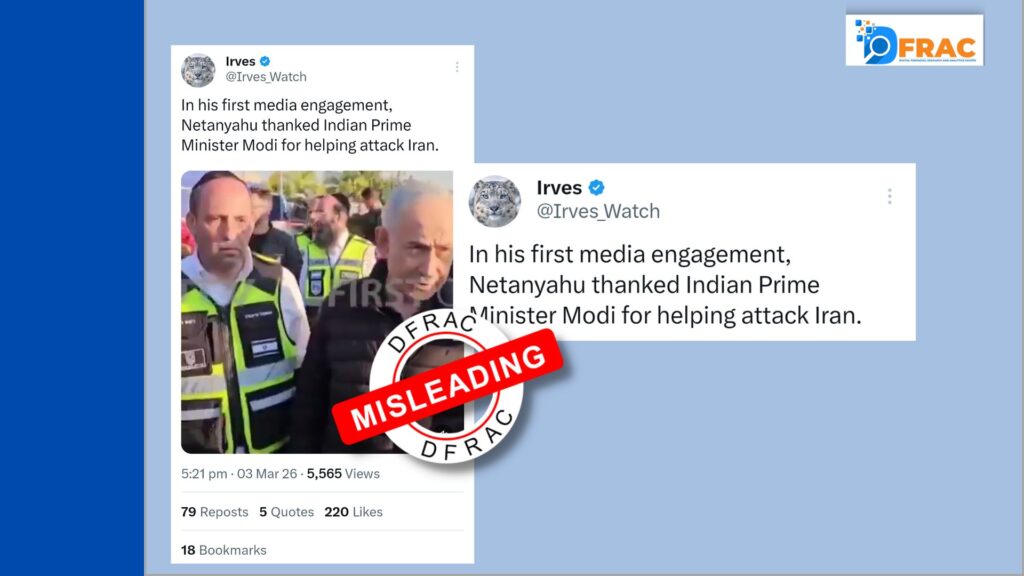
Fact Check: Viral Claim that Netanyahu Thanked PM Modi for helping Attack Iran is Misleading
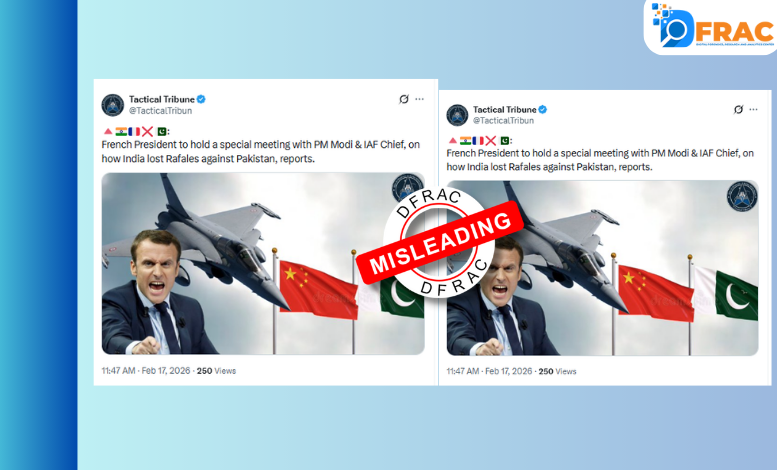
FactCheck: False claim circulates during the French President’s visit to India for the AI summit
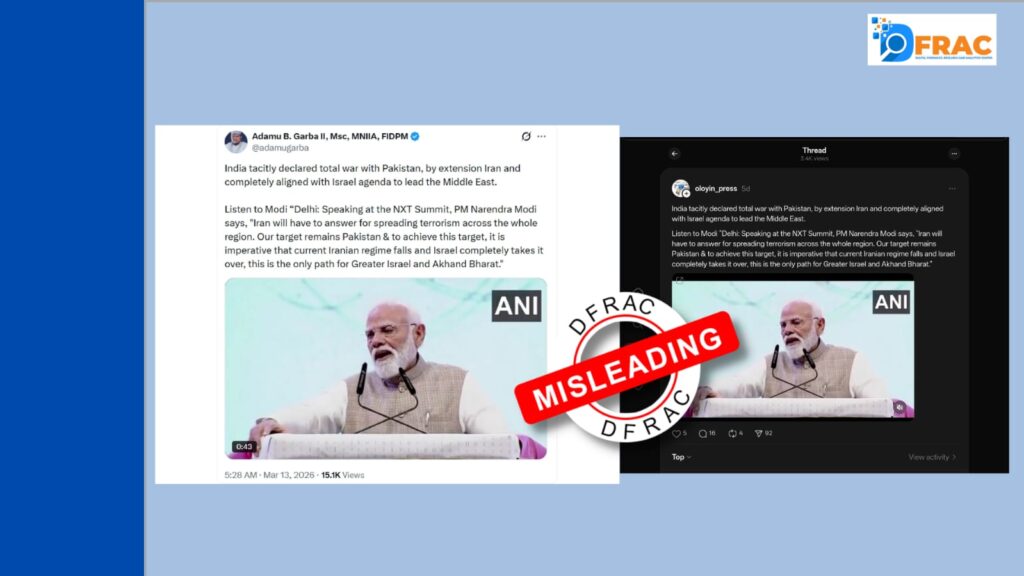
FactCheck: Doctored NXT Summit video falsely claims PM Modi declared war on Pakistan and Iran
Conclusion
DFRAC’s investigation examined in this report reveal a systematic attempt to weaponize communal sensitivities, manipulate public perception regarding national security, and shape adverse international narratives about India.The challenge is no longer limited to isolated fake news incidents. It represents an evolving information warfare environment in which digitally coordinated propaganda seeks to influence social cohesion, democratic discourse, and geopolitical perception simultaneously.