As tensions escalate in the ongoing Iran–Israel–United States conflict, the information ecosystem has witnessed a parallel surge in misinformation and propaganda. The DFRAC investigation has identified a coordinated network of social media accounts largely linked to Pakistan that are actively disseminating digitally manipulated videos and misleading narratives targeting India. This campaign appears designed to distort India’s global image, misrepresent its foreign policy stance, and create confusion among audiences both domestically and internationally. The core theme of this misinformation campaign is to falsely portray India’s alignment against Iran in the ongoing conflict. These claims are not supported by official statements or verified sources and are amplified using deceptive editing techniques.
Key Findings
1.Systematic use of digitally manipulated videos
2.Targeting Political and Institutional Credibility
3.Fabricated Narratives and Strategic Framing
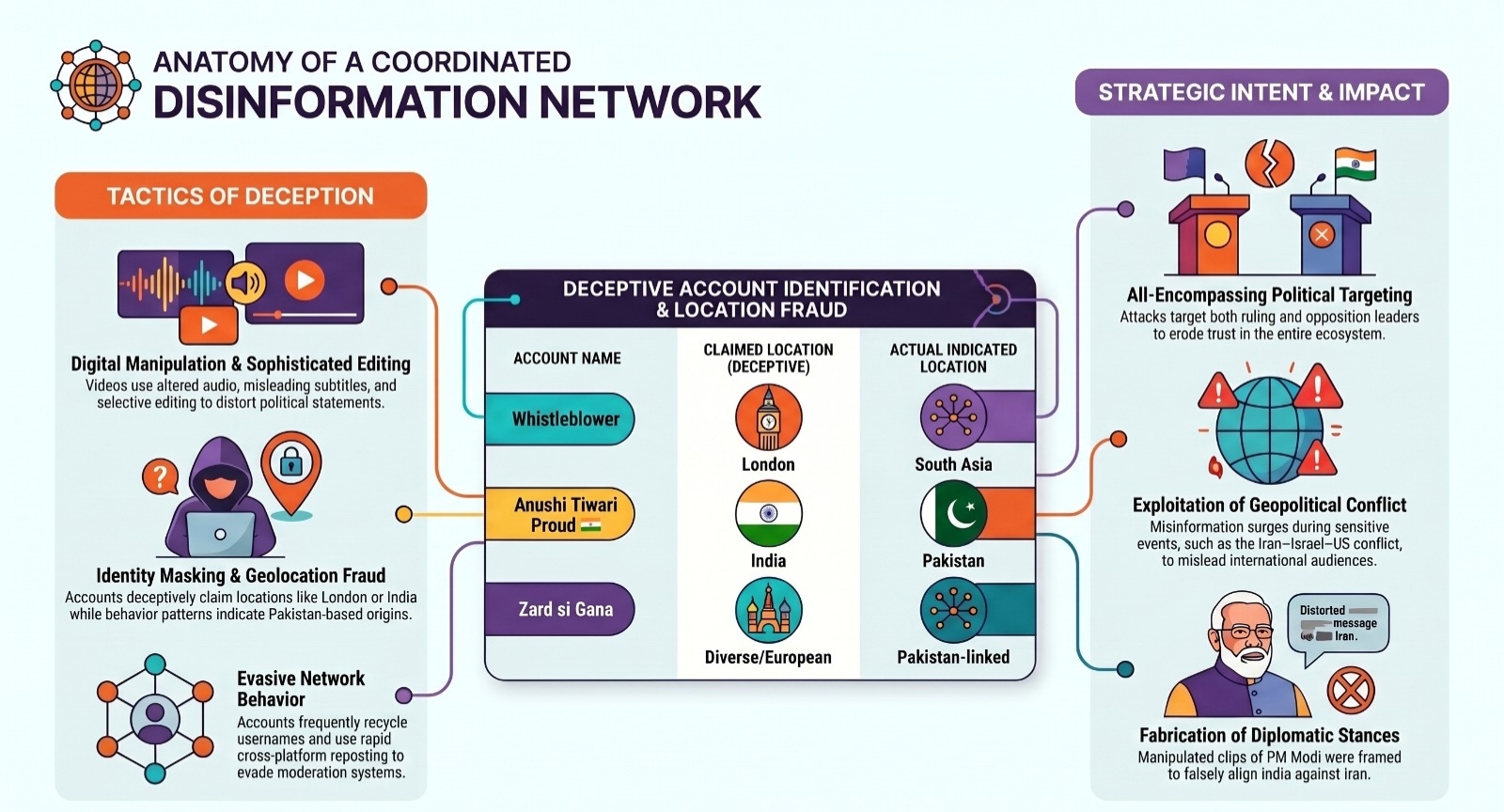
4.Use of Fake Identities and Locations
5.Evasion Tactics and Content Recycling
6.Key Accounts and Amplification Networks
7.Timing and Strategic Intent
1.Systematic use of digitally manipulated videos
A defining feature of this campaign was the widespread use of digitally altered and AI-generated videos. These videos were designed to mimic Indian officials, military leaders, and media personalities, thereby lending false credibility to fabricated narratives.Notable examples include:
A manipulated video falsely depicting Defence Minister Rajnath Singh endorsing US military actions against Iran.
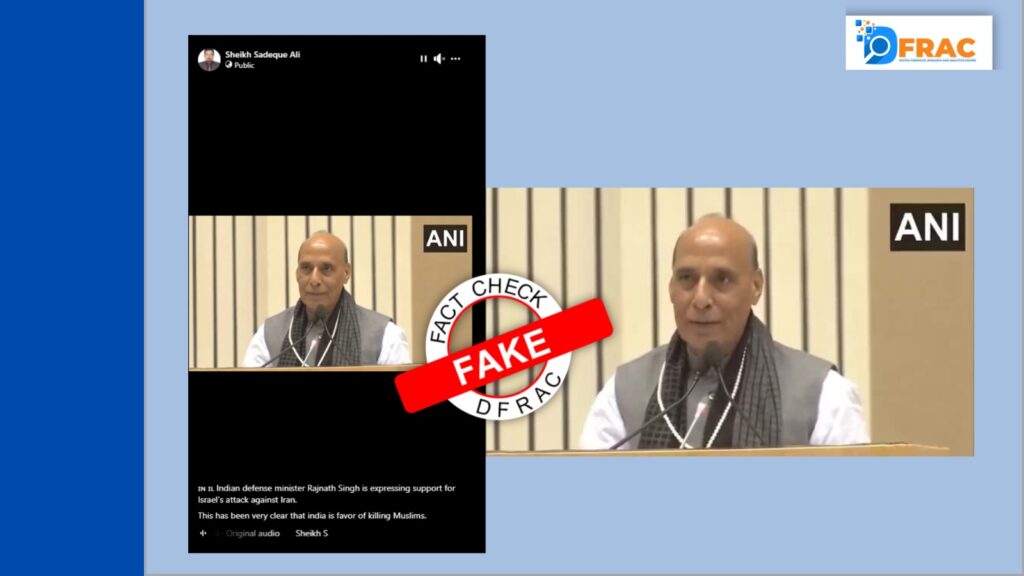
A doctored clip claiming Army Chief General Upendra Dwivedi admitted that India had shared intelligence about IRIS Dena with Israel.
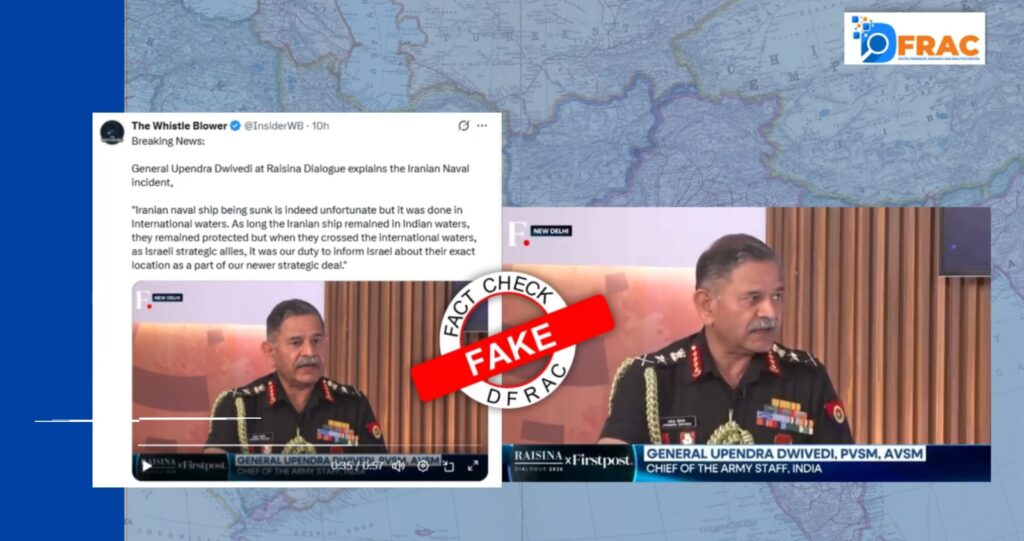
A fabricated video showing Prime Minister Narendra Modi allegedly making provocative remarks, including referring to Israel as a “global fatherland.”
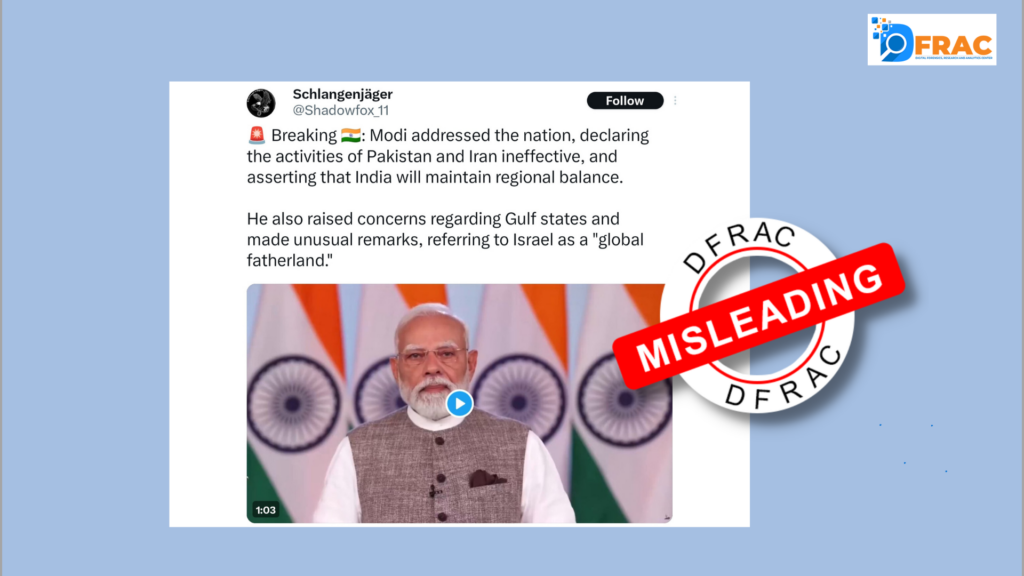
These videos were often paired with misleading captions, fabricated subtitles, or selectively edited visuals to distort context. In one instance, a viral claim alleged that Bahrain had arrested an Indian engineer for passing intelligence to Mossad. The supporting image purportedly from a Bahraini press release was digitally altered to insert an Indian identity. No credible evidence was found to substantiate this claim.
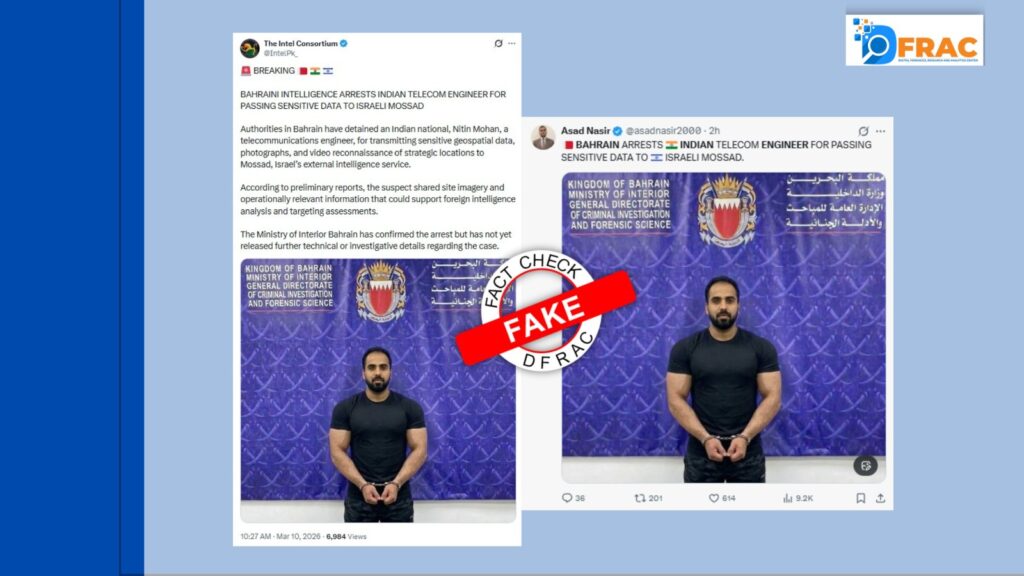
2.Targeting Political and Institutional Credibility
The disinformation campaign systematically targeted a broad spectrum of Indian institutions, including:
Government officials
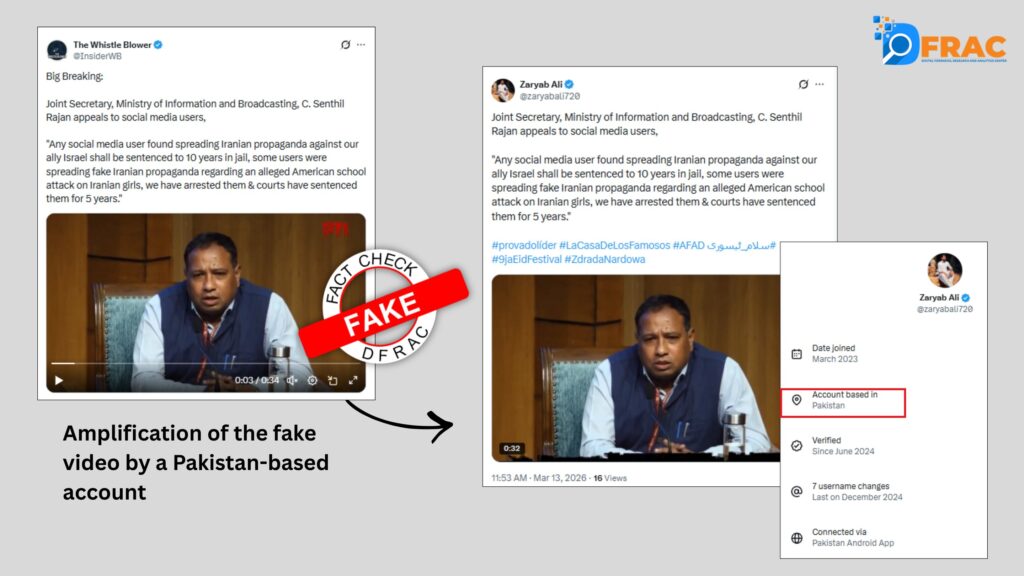
Military leadership
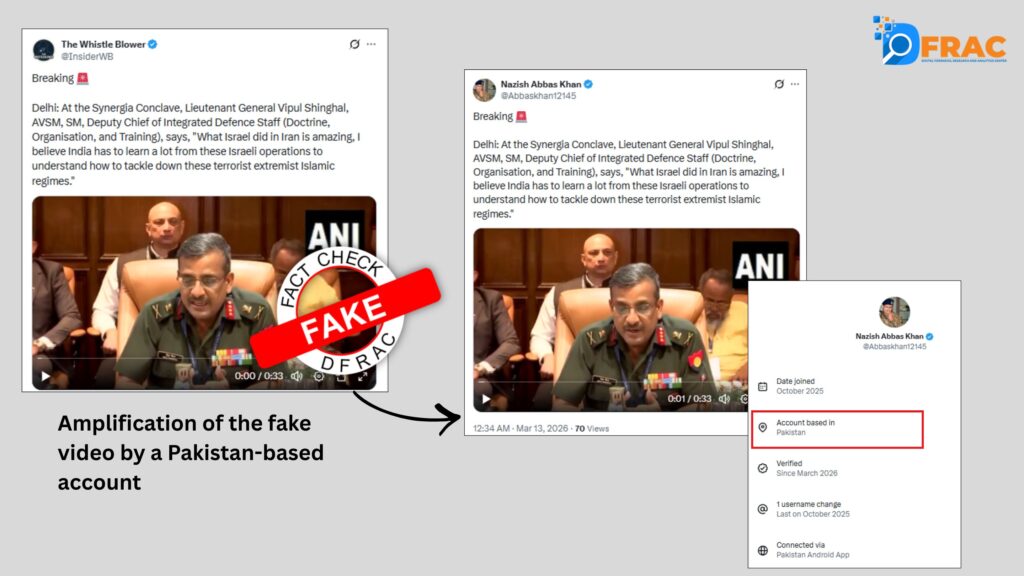
Media Institutions
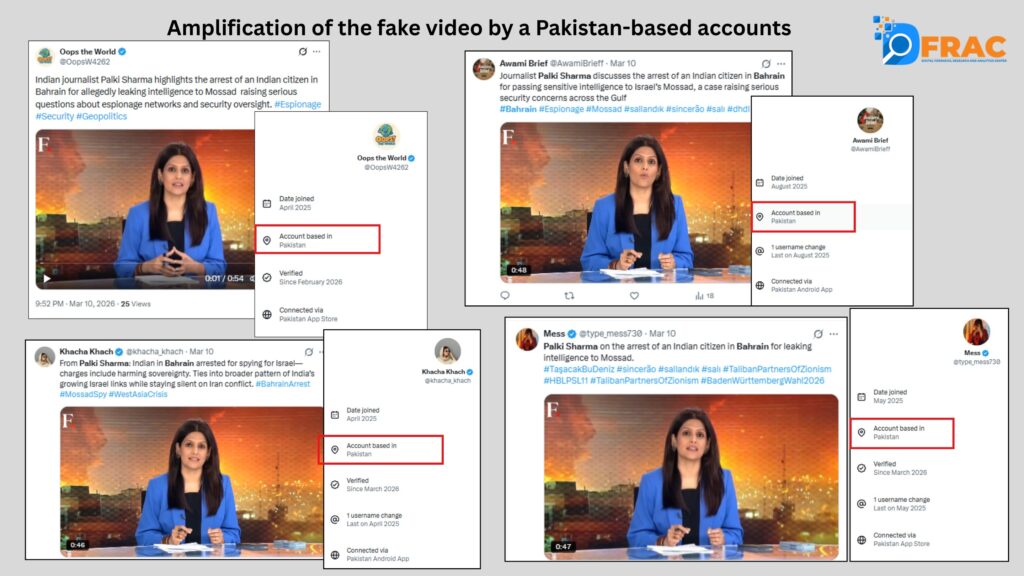
Prominent individuals were impersonated or misquoted to portray India as hostile toward Iran. Fabricated clips of senior military officials suggested aggressive or covert actions, while AI-generated content falsely depicted Indian journalists making inflammatory statements.
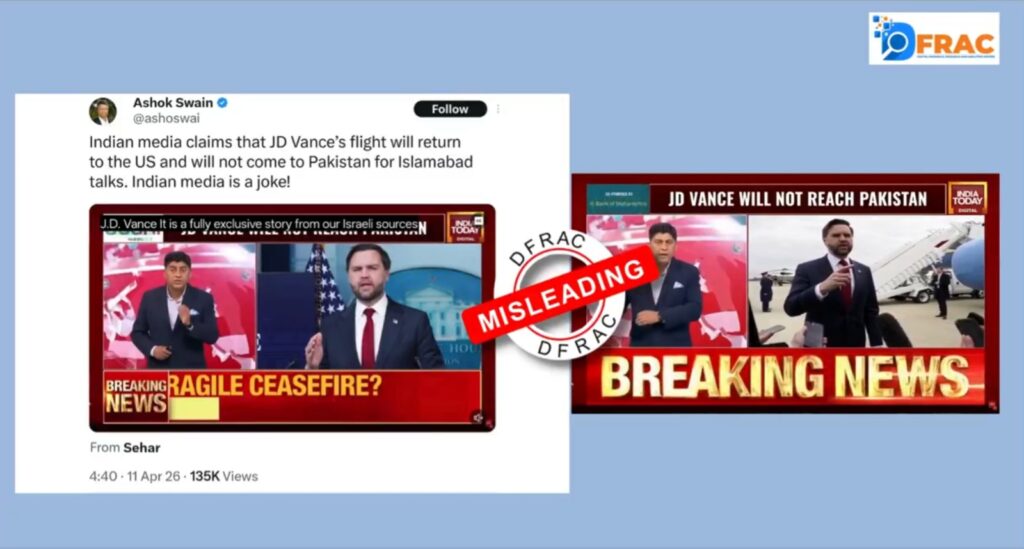
Example: In one case, a manipulated video showed an Indian news anchor claiming that JD Vance left Islamabad without engaging in any peace talks,with captions mocking the Indian media’s credibility.
3.Fabricated Narratives and Strategic Framing
The campaign consistently pushed a set of coordinated narratives portraying India as:
A covert ally of Israel
A betrayer of Iran
An aggressor in regional geopolitics
Many posts falsely attributed statements to Indian officials, alleging intelligence-sharing with Israel or plans for hostile actions against Iran. In reality, official statements consistently emphasized India’s neutral stance.Emotional and sensational framing played a critical role in amplifying these narratives. Stories about alleged Indian spies, diplomatic betrayals, or shifting alliances were crafted to provoke outrage and distrust.These narratives appeared strategically tailored to resonate with audiences in Muslim-majority countries and the Global South. By framing India as a “neo-colonial” or anti-Iran actor, the campaign sought to undermine India’s diplomatic credibility.
4.Use of Fake Identities and Locations
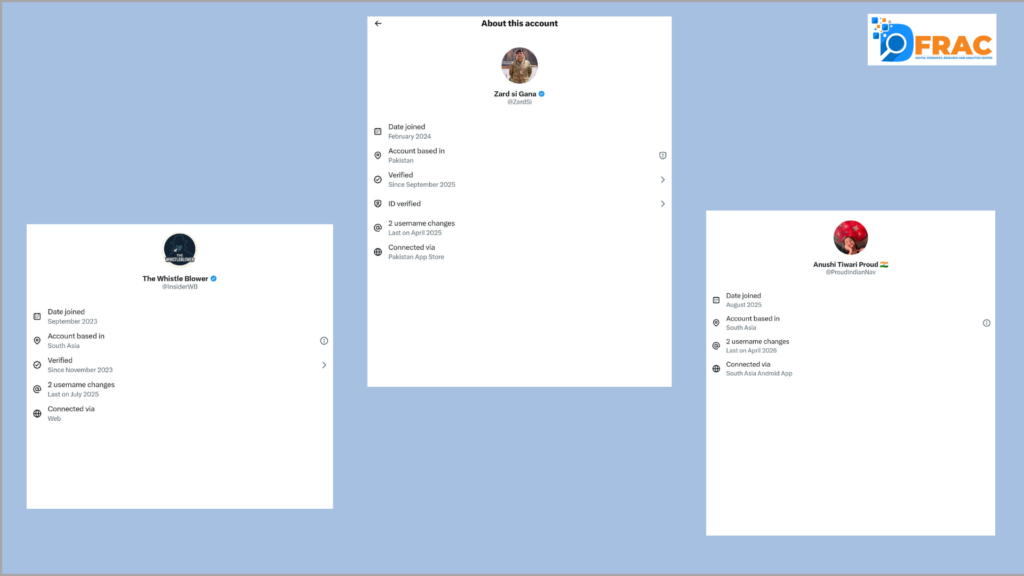
A key tactic employed in the campaign was identity masking. Numerous accounts posed as:
However, investigations revealed links to operators based in Pakistan or the broader South Asian region. Many accounts falsely listed locations such as India or Europe to enhance credibility.When accounts were flagged or suspended, new profiles quickly emerged with similar names, content, and messaging patterns indicating a coordinated and resilient network.
5.Evasion Tactics and Content Recycling
The campaign demonstrated a high degree of adaptability and persistence:
False content was reposted across multiple accounts within hours of its initial appearance.
When debunked, the same narratives resurfaced with minor modifications.
Backup accounts were used to maintain continuity after suspensions.
Visual content particularly emotionally charged images was reused frequently due to its higher engagement potential.
In contrast, verified information from official sources received significantly lower amplification within these networks.
6.Key Accounts and Amplification Networks
DFRAC identified several accounts playing a central role in propagating misinformation:
An account Anushi Tiwari Social media posts allege that Rajnath Singh issued a warning to Iran, stating that if Iran harms Indian oil tankers, India will give a fitting reply.
Another account, Shadowfox_11 (alias Schlangenjäger), circulated the doctored video of Prime Minister Narendra Modi.
Hashtags such as #IndiaBetraysIran and #BahrainArrestsIndianSpy were amplified simultaneously across multiple networks, complicating efforts to contain their spread.
7.Timing and Strategic Intent
The timing of disinformation waves suggests a deliberate and coordinated strategy:
March 4, 2026: Surge in #IndiaBetraysIran posts immediately after the sinking of IRIS Dena.
March 11, 2026: Viral spread of the false Bahrain “Indian spy” narrative during heightened diplomatic activity.
April 2026: Renewed misinformation wave coinciding with reports of Pakistan’s role in US–Iran ceasefire negotiations.
Each surge aligned with key geopolitical developments, indicating an attempt to insert India into the conflict narrative at moments of heightened global attention.This timing suggests a broader strategic objective: to divert attention from Pakistan’s diplomatic positioning while shaping international perceptions against India.
Conclusion:
The DFRAC’s findings indicate a structured and coordinated misinformation campaign rather than isolated incidents. The use of deep fakes, fabricated narratives, impersonation tactics, and synchronized amplification highlights a deliberate effort to influence public perception.By repeatedly misrepresenting India’s leadership, institutions, and foreign policy and aligning these narratives with geopolitical development, the campaign sought to erode trust in India’s global standing.