
Executive Summary
Pakistan’s approach to promoting its Kashmir agenda internationally has undergone a major shift between 2022 and 2025. This shift indicates Pakistan’s transition from large-scale social media campaigns to more concentrated operations led by Pakistani activists based in Western countries, particularly the United Kingdom.
At the center of these UK operations is Raja Fahim Kayani, a Pakistani-origin activist who runs multiple organizations from London. Meanwhile, Pakistan’s main digital campaign about Kashmir, called “Youm-e-Istehsal” (Day of Exploitation), has almost collapsed. This annual social media push has shrunk by nearly 90% in variety and lost all international support, now consisting mainly of fake accounts rather than real people.
The most significant challenge to Pakistan’s entire Kashmir strategy comes from the Kashmiri people, who are publicly rejecting Pakistan’s claims to represent them. This report examines how these developments are connected. Pakistan’s digital failure has forced it to concentrate resources on diaspora activists like Kayani, who use the UK’s democratic freedoms to advance Pakistan’s intelligence objectives while maintaining legal protection through charitable status and political advocacy rights.
1. Who is Raja Fahim Kayani?
Raja Fahim Kayani is a Pakistani-origin activist who has become the most visible face of pro-Pakistan Kashmir advocacy in the United Kingdom. Based in London, Kayani serves as the key coordinator for Pakistan’s Kashmir-related activities across Europe.
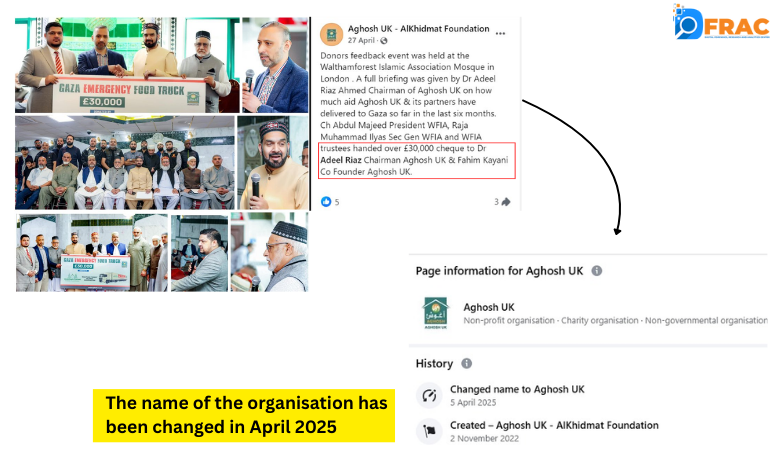
Kayani holds leadership positions in two seemingly different types of organizations. First, he serves as President of Tehreek-e-Kashmir UK, which openly campaigns for Kashmir’s separation from India and its integration with Pakistan. Second, he operates as a key figure in Al-Khidmat Foundation UK, which presents itself as a charitable organization helping communities in need. Rather than relying solely on diplomatic channels or large-scale propaganda campaigns, Pakistan now uses individuals like Kayani who can operate legally within Western democracies while advancing Pakistani intelligence objectives.
Kayani’s Primary Organization: Tehreek-e-Kashmir UK
Tehreek-e-Kashmir UK serves as Kayani’s main political platform. The organization’s name translates roughly to “Kashmir Movement UK,” and it presents itself as representing the interests of Kashmiri people living in Britain.
The organization regularly organizes protests outside Indian government buildings in London, particularly targeting the Indian High Commission. These protests typically coincide with significant dates in the India-Pakistan relationship, such as Indian national holidays, which Kayani’s group labels as “Black Days.” The protests serve multiple purposes: they generate media coverage that can be highlighted in Pakistani domestic media as evidence of international support, they maintain visible opposition to Indian policies, and they provide networking opportunities for anti-India activists.
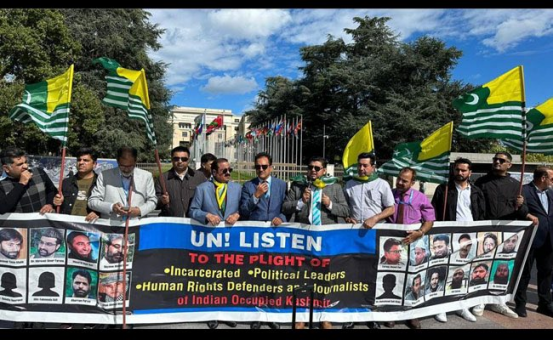
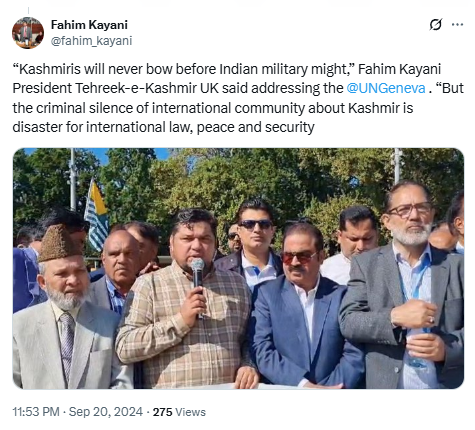
Kayani’s role within Tehreek-e-Kashmir UK extends beyond simple leadership. He serves as the primary spokesperson, coordinator of international activities, and liaison with other separatist organizations.
The Charitable Front: Al-Khidmat Foundation UK
Al-Khidmat Foundation presents itself as a humanitarian organization focused on providing aid to communities in need, particularly in Pakistan and Kashmir. This charitable status provides several advantages: tax benefits, reduced government scrutiny, community credibility, and legal protection for international activities.
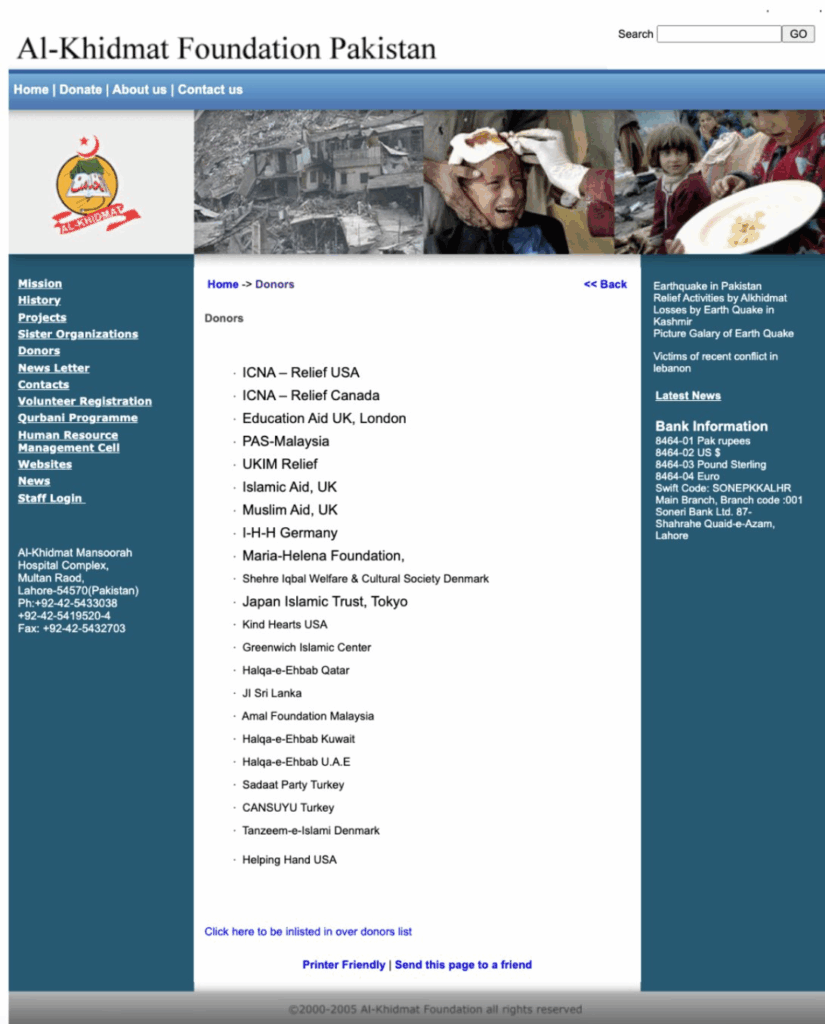
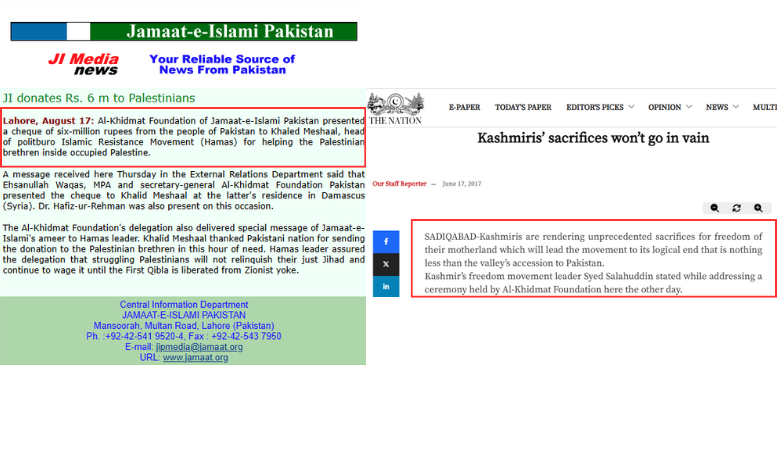
However, Al-Khidmat Foundation is not simply a charity. The organization serves as the charitable wing of Jamaat-e-Islami, Pakistan’s largest radical religious political party. Jamaat-e-Islami maintains documented connections to multiple organizations designated as terrorist groups by various governments, including Hamas, Hizbul Mujahideen, and other militant organizations operating in Kashmir.
The connection between charitable work and intelligence operations becomes clearer when examining Al-Khidmat’s activities. In 2006, the organization openly announced providing $100,000 to Hamas for what it called their “just Jihad.” This public support for a designated terrorist organization demonstrates how Al-Khidmat functions as more than a traditional charity.
How Kayani Connects Pakistan’s Intelligence Network
Kayani maintains regular contact with Pakistani diplomatic missions in Birmingham and London. The connection to Pakistani intelligence becomes more apparent when examining Kayani’s international travel patterns and meeting schedules. In May 2025, Kayani met with Gilgit-Baltistan Chief Minister Haji Gulbar Khan at the regional government headquarters in Islamabad. This level of access to Pakistani government officials indicates coordination that extends far beyond simple diaspora advocacy.
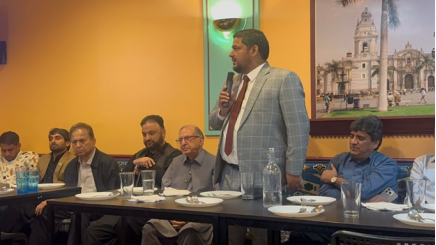
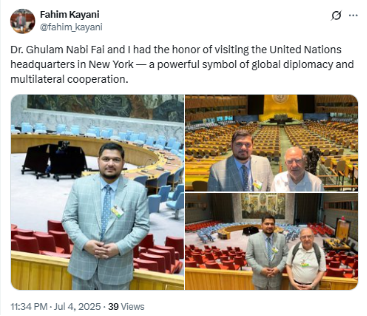
Perhaps most significantly, Kayani’s operational model closely resembles that established by Ghulam Nabi Fai, a convicted ISI agent who operated in the United States until his arrest in 2011. Fai used similar techniques: maintaining charitable status, organizing advocacy campaigns, and building relationships with Western political figures while secretly receiving funding and direction from Pakistani intelligence services. The parallel structure suggests Pakistani intelligence services adapted their approach to UK legal frameworks while maintaining the same fundamental operational model.

Kayani’s Integration with Khalistan Separatists
One of the most significant aspects of Kayani’s operations involves coordinating Kashmir advocacy with Khalistan separatist movements.
In 2019, a press conference was convened by Raja Fahim Kayani, President Tehreek-E-Kashmir, UK, the coordinator for the protest outside the Indian High Commission London along with Mohammed Ghalib President Tehreek e Kashmir Europe, Ranjit Singh Sarai of World Sikh Parliament.
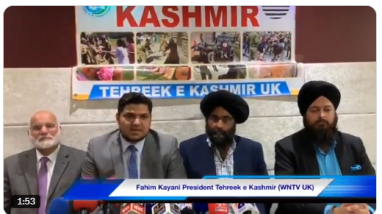
In January 2020, the World Sikh Parliament announced its support for Kayani’s anti-India protests in London. By connecting Kashmir and Khalistan advocacy, Pakistan attempts to present separatist sentiment as more widespread and diverse than actual support indicates.

The coordination extends beyond symbolic support to operational cooperation. Kayani’s organizations provide platforms for Khalistan advocacy while Sikh separatist organizations reciprocate by supporting Kashmir campaigns. This mutual reinforcement creates the appearance of organic solidarity while actually representing coordinated intelligence operations designed to advance Pakistani strategic objectives against India.
International Network Development
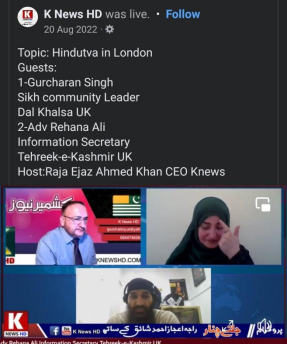
Kayani serves as a key node in a broader international network of Pakistani intelligence-linked advocacy organizations. The network includes Tehreek-e-Kashmir chapters in Scotland and other European countries, all coordinated through Kayani’s London-based operations.
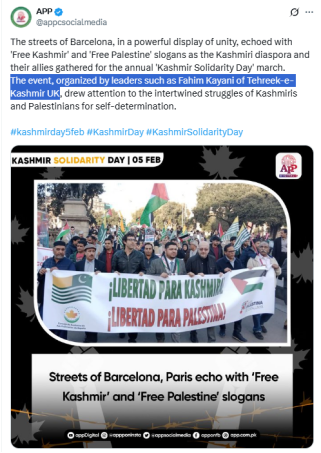
On August 3, 2025, in the run-up to Youm-e-Istehsal, Kayani traveled across several UK cities holding conferences and public events to mark the occasion. These events were positioned as international solidarity with Kashmir, yet the participation pattern exposed the same weakness visible in Pakistan’s digital campaigns: attendance and support came almost exclusively from the Pakistani diaspora community in Britain, with virtually no visible Kashmiri-origin voices. This mirrors the collapse of online campaigns where international engagement dwindled, underscoring how Pakistan’s advocacy—whether digital or diaspora-led—has failed to resonate with the very Kashmiri people it claims to represent.

As Pakistan’s digital campaigns like Youm-e-Istehsal lost traction internationally, figures such as Kayani became more central to Pakistan’s Kashmir narrative. Where bots and hashtags failed, diaspora activists provided a more sustainable, legally protected means of projection.
Understanding Pakistan’s Digital Campaign Collapse: The Youm-e-Istehsal Failure
What is Youm-e-Istehsal?
Pakistan created this campaign to serve several purposes. They wanted to keep international attention focused on Kashmir, present Pakistan as the protector of the Kashmiri people, challenge India’s legal changes in Kashmir, and build global sympathy for what they claimed was Kashmiri suffering under Indian rule.
The campaign was designed to work like other successful social media movements. It would use hashtags to organize conversations, create emotional content that people would share, coordinate timing so thousands of people would post simultaneously, and generate enough activity to trend on social media platforms and attract mainstream media attention.
However, as we will see, this campaign has failed spectacularly over the past four years, revealing fundamental problems with Pakistan’s entire approach to building international support for its Kashmir position.
Campaign Performance 2022-2024: The Decline Begins
2022: Peak Complexity and Reach
The 2022 campaign represented Pakistan’s most sophisticated attempt at digital narrative construction. The operation deployed 9 diverse hashtags, including territorial claims (#KashmirIsPakistan), emotional appeals (#KashmirisLivesMatter, #5thAugustBlackDay), legal references (#Article370), and multilingual messaging (#کشمیربن_کررہےگاپاکستان).
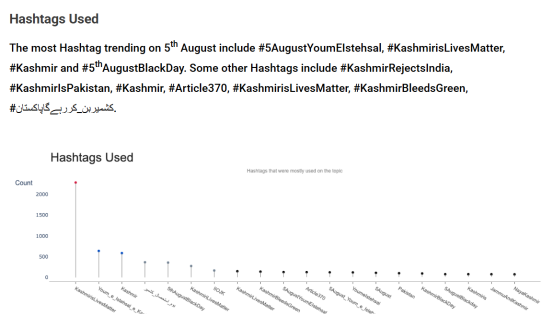
The campaign achieved modest international participation across Pakistan (1,300 users), India (205 users), UK (68 users), and Thailand (130 users). Over 500 new accounts were created specifically for the August campaign, indicating substantial organizational investment. The campaign sustained activity across multiple weeks with creative, varied content suggesting human-driven rather than automated operations.
2023: Strategic Simplification
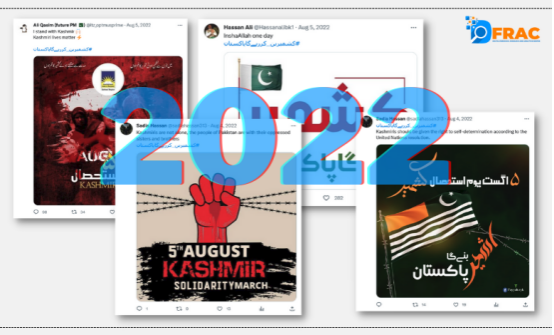
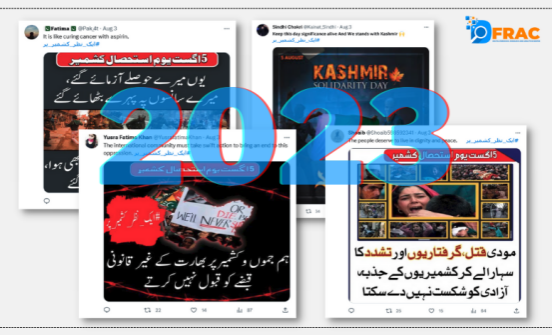
By 2023, clear signs of decline emerged. Hashtag diversity dropped to 4 distinct tags, representing a 55% reduction from 2022. International participation decreased significantly, with an estimated 60% decline in non-Pakistani engagement. The campaign showed increased reliance on standardized content and reduced creative messaging, suggesting resource constraints or strategic confusion.
2024: Coordination Collapse
The 2024 campaign revealed serious organizational dysfunction. Hashtag diversity further contracted to only 3 main tags, representing a 66% decline from 2022. Most critically, coordination failures became apparent when peak tweeting occurred on August 6 instead of the target date of August 5, with only 30 tweets on the actual commemoration day compared to 173 tweets on August 4.
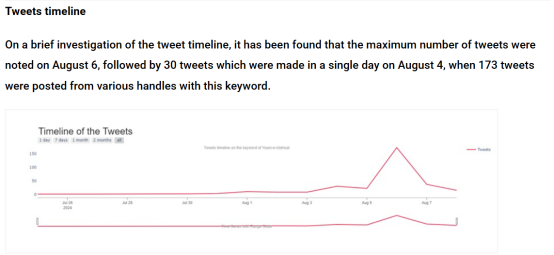
International activity became almost entirely limited to Pakistani embassy accounts and diplomatic missions, indicating the loss of genuine grassroots international support. The campaign increasingly relied on identified bot networks using identical content and synchronized posting patterns, marking the transition from human-driven to artificially amplified operations.
2025 Campaign Performance: Strategic Failure
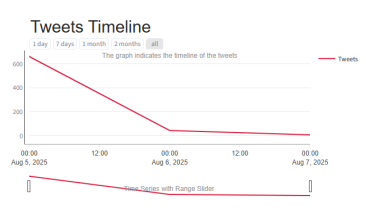
The 2025 Youm-e-Istehsal campaign represents the endpoint of four years of systematic decline. Despite improved timing coordination with 661 tweets correctly placed on August 5, the campaign achieved unprecedented contraction across all meaningful metrics.
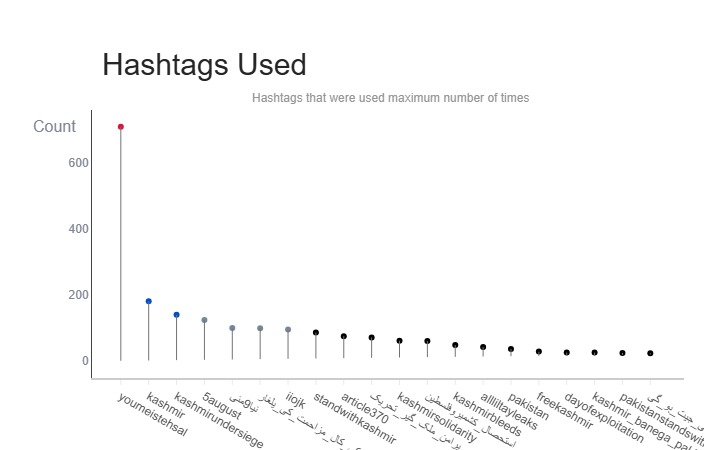
Core Performance Metrics:
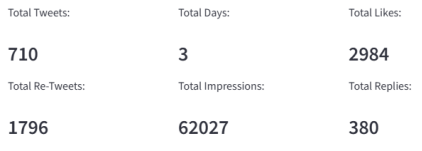
Engagement Pattern Analysis:
The 2025 data reveals clear artificial amplification patterns. With 2.53 retweets per original tweet but only 0.54 replies per tweet, the campaign shows classic bot network behavior – high automated sharing but minimal authentic conversation. The low reply rate indicates users are not engaging with the content meaningfully, suggesting the campaign has become irrelevant even to its target audience.
The Diminishing Pattern: How the Campaign Collapsed
Quantitative Collapse Across All Dimensions
The four-year decline reveals systematic failure across every measurable dimension. Hashtag diversity collapsed by 89% from 9 creative variants to 1 dominant tag. Tweet volume declined by 65% from an estimated 2,000+ tweets to 710. Campaign duration contracted by 80% from multi-week operations to just 3 days. Most critically, international reach experienced a 100% loss, moving from multi-country participation to Pakistan-only engagement.

From Authentic to Artificial
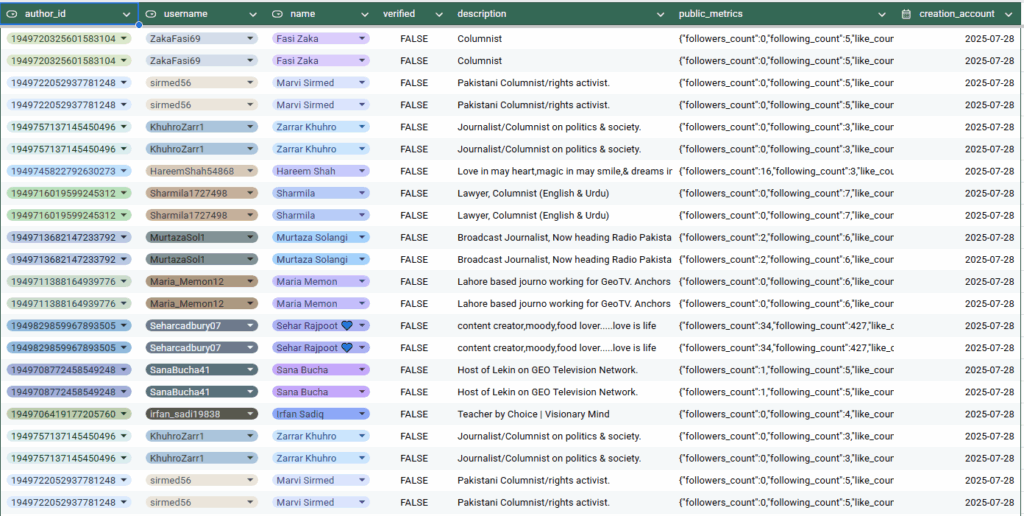
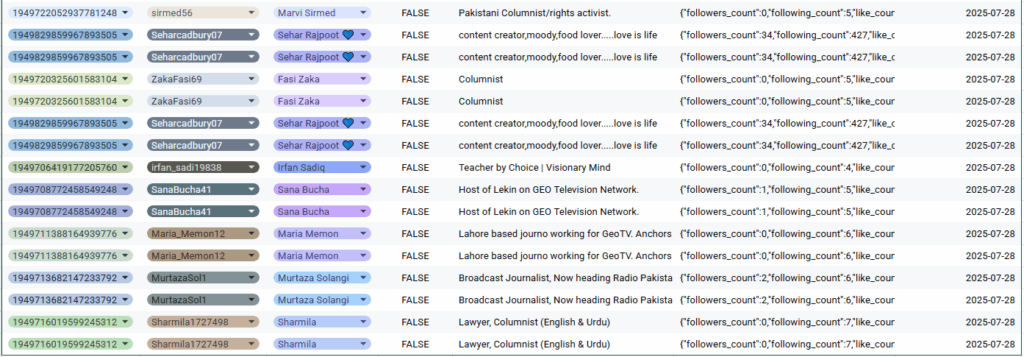
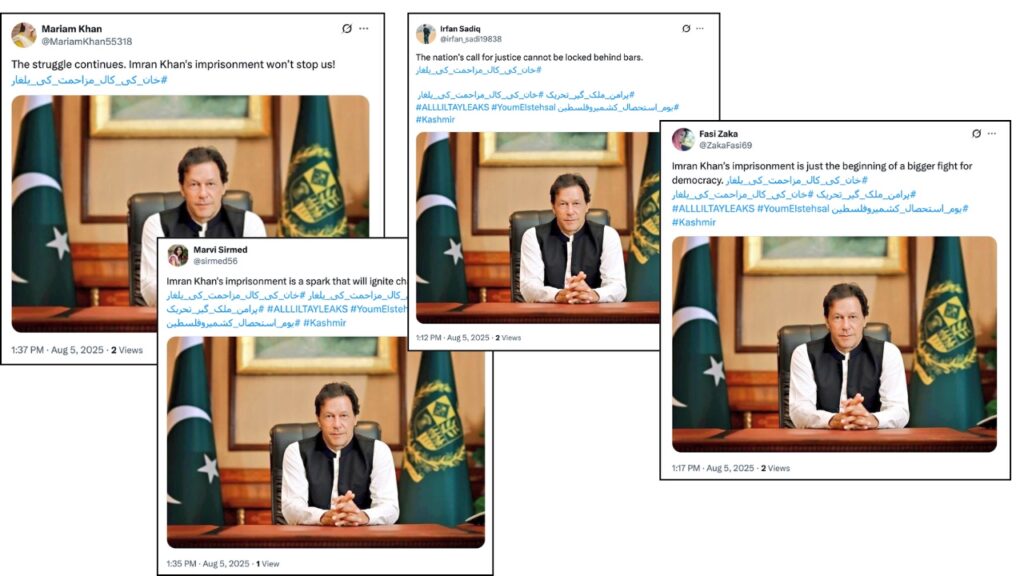
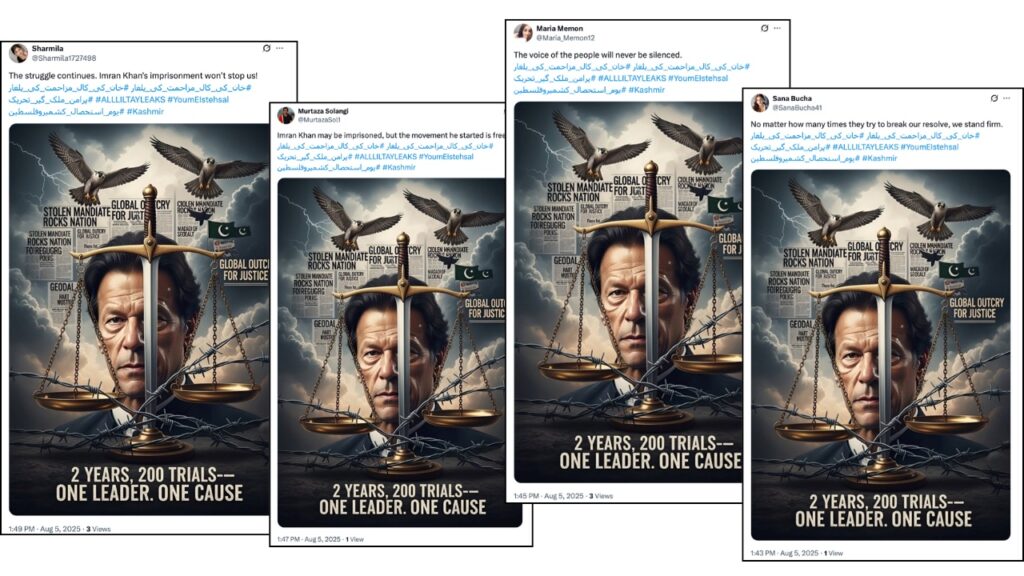
The 2025 campaign showed 2.53 retweets for every original tweet, but only 0.54 replies per tweet. This pattern indicates that content was being automatically shared by fake accounts but not generating real conversations among actual people. We identified 38 bot accounts this year.
Geographic Isolation and International Irrelevance
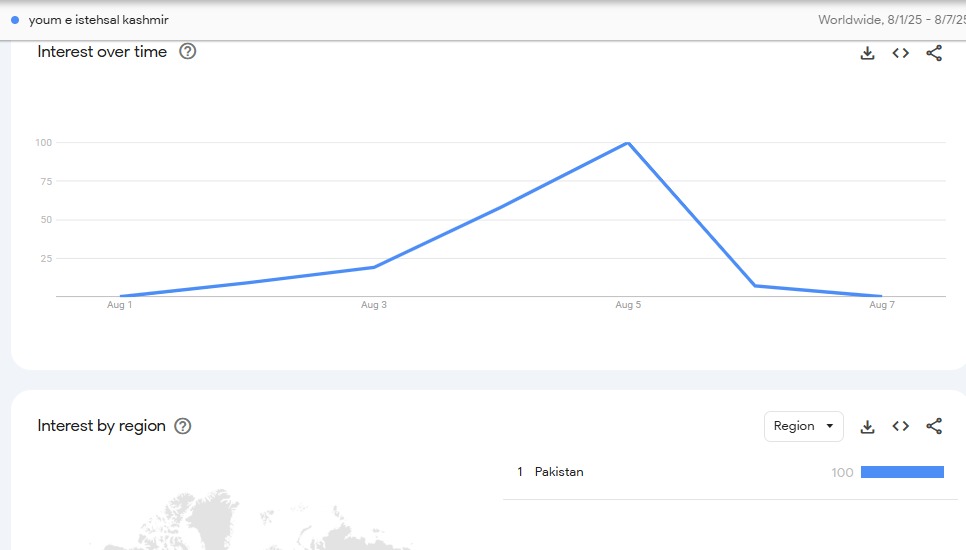
Perhaps most damaging is the complete loss of international resonance. Google Trends data for 2025 shows “Youm-e-Istehsal” search interest confined almost entirely to Pakistan, indicating the campaign has become irrelevant not just to international audiences but even to Pakistani diaspora communities worldwide.
Real Kashmiris Reject Pakistan
Javed Ahmad Beigh: An Authentic Kashmiri Voice
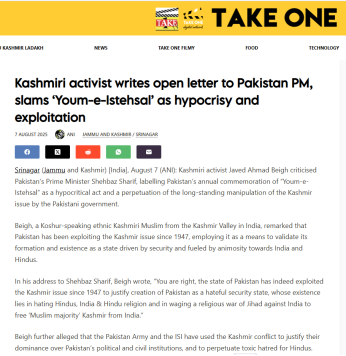
Javed Ahmad Beigh, a Koshur-speaking ethnic Kashmiri Muslim from the Kashmir Valley, has written a comprehensive rejection of Pakistan’s entire approach to Kashmir that directly contradicts everything Pakistan claims to represent.
Beigh’s background makes his criticism particularly powerful. As an ethnic Kashmiri Muslim who speaks the traditional Kashmiri language, he possesses the authentic cultural credentials that Pakistan claims to defend. His opposition cannot be dismissed as Indian propaganda or Hindu nationalism because he represents the very community Pakistan claims to support.
The letter Beigh wrote to Pakistani Prime Minister Shehbaz Sharif systematically dismantles every major element of Pakistan’s Kashmir narrative. Rather than portraying Pakistan as Kashmir’s protector, Beigh accuses Pakistan of exploiting the Kashmir issue since 1947 to justify what he calls Pakistan’s existence as a “hateful security state” whose survival depends on “hating Hindus, India & Hindu religion.”
This represents a fundamental challenge to Pakistan’s entire strategic premise. If authentic Kashmiri voices reject Pakistan’s role and identify Pakistan as an exploiter rather than a protector, then both digital campaigns and diaspora advocacy operations lose their basic legitimacy.
Why Both Approaches Are Failing
Both digital campaigns and diaspora operations are failing for the same fundamental reason: they are attempting to advocate for people who do not want their advocacy and are publicly rejecting their representation.
Conclusion:
Pakistan has quietly changed how it advocates for Kashmir internationally. Instead of running large social media campaigns, the country now focuses on Pakistani communities living abroad, especially in the UK, with people like Raja Fahim Kayani leading these efforts.
The annual “Youm-e-Istehsal” campaign, which once tried to get people worldwide talking about Kashmir online, has lost much of its impact. Today, these digital efforts mostly rely on artificial boosting and participation from Pakistani diaspora communities rather than genuine grassroots support.
But here’s the problem that keeps coming up: whether it’s through social media campaigns or diaspora activism, real Kashmiris still aren’t the ones telling their own story. This missing piece continues to weaken Pakistan’s efforts, no matter which approach they try.