Executive Summary
In the present realm of social media, the trend to upload AI-created content is in full throttle. The AI-generated videos and images hold a massive cyberspace, even when the materiality of this content is erroneous. The trend continues to inculcate a large audience on social media about Indian street food. A recent course of posting AI-created videos to gain followers targeting Indians and their street food was examined by our team. In the wake of posting humorous content online, these videos not only deteriorate India’s image but also create an unsound stereotype for Indian culture, cuisine, and hygiene standards.
Table of Content
- Context Behind
- TikTok
- X (Twitter)
- Reasons for the “Viral”
- Conclusion
Context Behind
Recent years have seen a rapid flooding of content specifically targeting Indians online. Predominantly, this content is associated with hate speech, racial slurs, and ethnophaulism. Content on Indian street food caught the most attention for users to derogate Indians. The reason behind this is, as assessed in this report, people online find it humorous and intriguing to gain followers for the handlers. Other reasons include like a swift change in Western countries regarding race-based employment and wealth. What was seen in the conception as a new trend on social media escalated to become a campaign of hate against Indians. The wider fact that India is still a developing country, quickly narrowed down its meaning to singling out Indians as unhygienic, uncivilized, and uneducated.
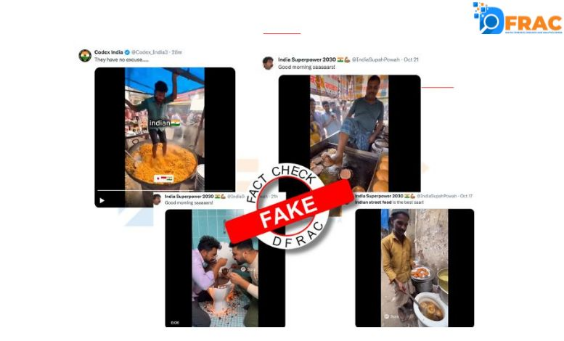
Social Media handles like @IndiaSupahPowah and @Codex_India3 on X (formerly known as Twitter) have been active in this race. Notably, their project on inciting hostility against Indians is on track. Frequently, they post to promote prejudice and use AI-generated clips targeting Indians. But the recent trend that we noticed is that creating an AI video of a street vendor in India would bring you a substantial increment in your reach online. Many accounts on TikTok and other social media platforms, when posting content not related to India, were on their demise, concerning their reach. Their content suddenly started popping up on others’ feeds when they posted an AI-flagged video of Indian street food, where a typical Indian street view is shown, and an unhygienic seller is serving food.
TikTok
With over 2 billion users worldwide, TikTok serves as the most influential platform in generating this type of content. The Western countries, primarily the U.S., rely heavily on it for entertainment, news, political discourse, and marketing. When an account posts an AI video of an Indian street vendor on hygiene standards, people usually can identify that it is not real because an AI watermark is visible, and the bio would generally mention it. But when the same video is carried forward to other platforms like X and Instagram, many suppose it to be real. The traction that these videos receive is immense, which only brings hate, humiliation, shame and a negative stereotype for Indians.
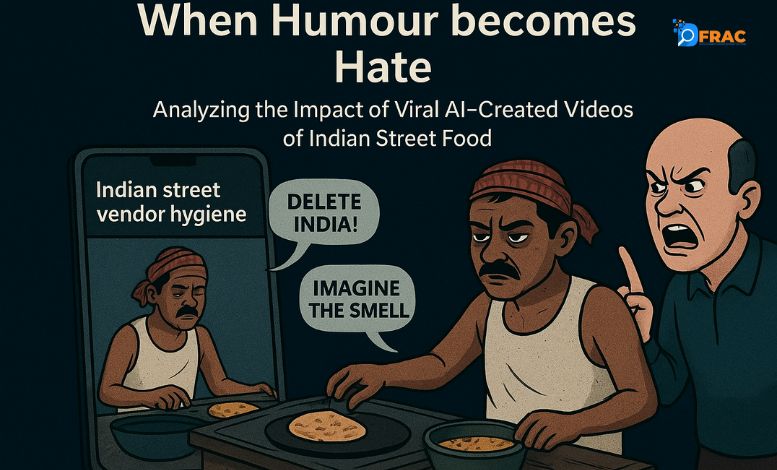
The Comments on these videos exemplifies this hate, for example, “delete India”, “imagine the smell”, “food crimes”, “reused food oil”, and “bare-handed food preparation” are some of the comments.
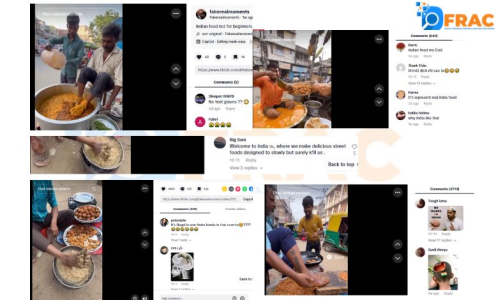
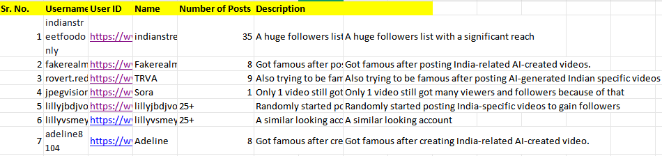
We dug deeper into this trend and found some of the accounts on TikTok that have a huge fan base merely because they share such videos. One such account was revealed as @indianstreetfoodonly. The video posted by this handle only focuses on such content. With over 35k followers, the views on videos posted by it are more appalling, with one reaching over 40 million plays. Other accounts that we noticed are @fakerealmoments and @rovert.red, who started getting views after posting different kinds of AI-created Indian street food-specific videos.
X (Twitter)
A platform that serves its users to share their opinions and views through short messages, using features like hashtags, reposting, and replies. However, in the wake of posting humorous content, it has become a tool for targeting Indians and their cultural habits. Content on AI-created videos of Indian street vendors usually emanates from TikTok and takes a derogatory turn on X to form a generalisation of Indians. This generalisation often misleads many, internationally and domestically, to derogate India and its cuisine, culture and hygiene standards.
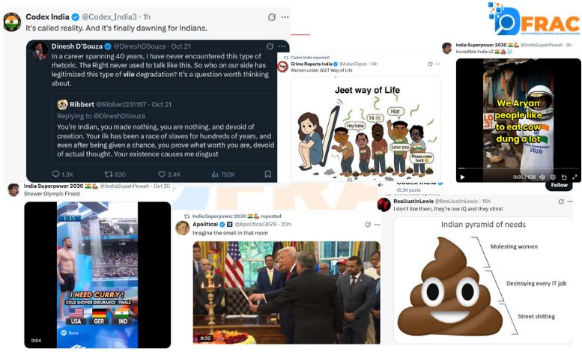
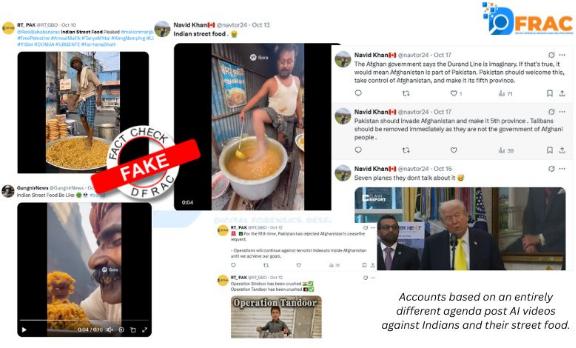
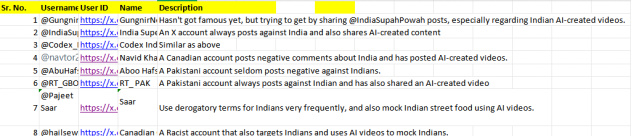
The specific accounts like @IndiaSupahPowah and @Codex_India3 are detrimental to the image of India. Repeatedly, they explore new ways to mock Indians. Both accounts play a formidable role in crumbling the image of India and promoting prejudice. Using AI-created videos is a part of their campaign. Other accounts like @navtor24 and @GungnirNews are also pitching in to serve a trend against Indians. Often, they use AI-created videos of Indian street food and other related issues to mock Indians. After getting familiarised with these accounts, one could say that their whole agenda is based on a different matter (like some of the accounts mentioned advocate the support for Pakistan), but to achieve it, they target Indians negatively. Not only Indians, but some accounts from the West are also indulging in promoting antisemitism and other racial xenophobia, like @hailsewell. The account hails from the U.S. and self-advocates for promoting racism.
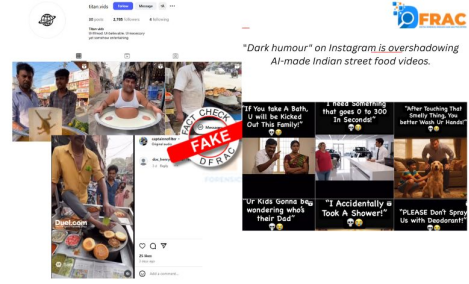
The dawn of dark humour first stepped into Instagram. Multiple handles started sharing content that was not appropriate for a larger audience. Worldwide, Instagram serves the Indians most, but this majority does not help; instead, it turns detrimental for the Indian-sentiment. The online hatred against Indians spread over Instagram is sometimes termed as “dark humour”, and to gain followers, it is shared very frequently. The content includes the AI-created videos of an Indian street vendor, which are shared in the reels section of Instagram, and finds a large audience, often amplifying the hate against Indians. From TikTok to X, and then Instagram, the content shared online builds a narrative against overseas Indians that eventually leads to an outburst of hate against them (often witnessing aggregation).
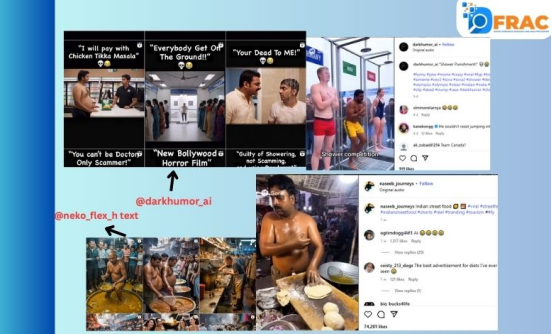
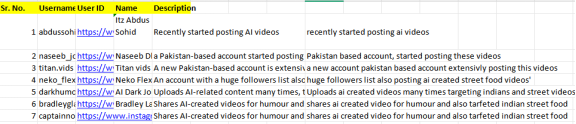
Accounts with large follower lists sharing this type of content are @captainnofilter and @darkhumor_ai. Both are picked out because of their AI-flagged content that not only targets Indians and their street food, but also bolsters the hate for other communities or a certain type of people, for the sake of “humorous content”. Another account, @neko_flex_, shares only AI-generated videos of Indian street food with a huge following. Many handles that are continuously posting to create a negative stereotype against Indians, but have not succeeded yet, as their followers have not shot up, such as @titan.vids. This newly formed account hails from Pakistan and is extensively posting AI videos of Indian street food. Another Pakistan-based account, @naseeb_journeys, has managed to gain viewers by posting an AI-generated video of Indian street food.
The prevalence of such content on this site shares a similar resemblance to Instagram because the handles share a direct link from accounts on both social media apps. This resemblance intensifies the anti-Indian sentiment. Many users, particularly seniors, who are not active on Instagram or any other social media apps, find this funny and develop a prejudice against Indians. An unsettling nature of this part is that the young users are diminishing their presence on Facebook, and the seniors are passive in identifying an AI-flagged video, which leads them to believe the online India-related hate content.
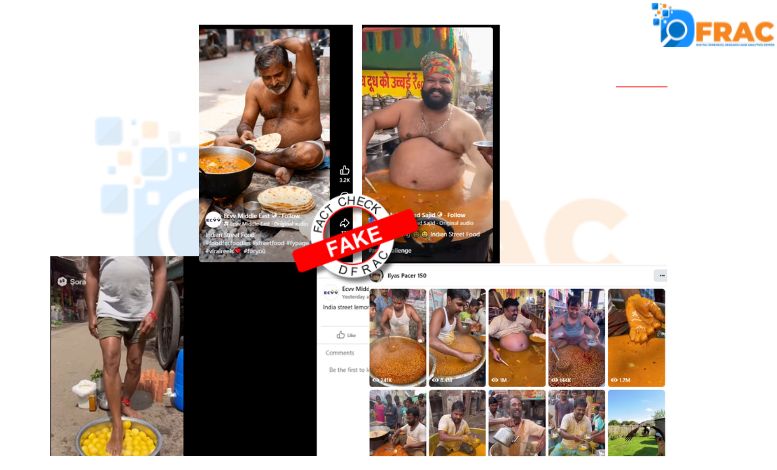
The effect of a trend that coagulated on TikTok and X has also been witnessed on Facebook. The pages like Ilyas Pacer 150 and Muhammad Sajid have started posting the AI-created videos of Indian street food. These accounts also enjoy a large following. Other pages like Ecvv Middle East have also started to exploit India’s global image for the sake of followers.

Reasons for the “Viral”
- The foremost reason is the chase for humour and comedic appeal by content creators to gain followers and algorithmic reach.
- Tools like Midjourney, Runway, and Gen-3 make it easy to create hyper-realistic videos without cultural awareness.
- The accountability of such accounts is not verified, and such pages choose to remain anonymous, even avoiding an AI-label.
- Many are not familiar with Indian street culture and are fed with some specific types of street videos, leading to a generalisation.
- The online hate adds up with a domestic “Anti-Immigration” campaign which has been witnessed in the West.
Conclusion
What begins as harmless “AI humour” can quickly become a vehicle for stereotyping when it mocks specific communities. The ongoing trend of depicting “dirty Indian street food” through AI exaggeration is not just comedic experimentation; it contributes to the erosion of cultural dignity and fuels distorted global perceptions.
Recognizing and responding to this trend is essential to protect cultural identity while promoting responsible use of AI in content creation. Humour need not come at the cost of respect, and social media audiences benefit when creativity is paired with cultural awareness.