The Pro-Khalistan movement has established a significant operational presence in Social Media. This analytical report explores the role of algorithm driven social media platforms namely TikTok, Instagram, and YouTube in the propagation and popularization of the Khalistan narrative. These platforms, with their unique content recommendation systems and virality mechanics, have become powerful tools for ideologically driven campaigns. The report studies content patterns, platform behavior, and user engagement trends, supported by visual data representation.
The Khalistan movement, a separatist campaign seeking to establish a sovereign Sikh state, has witnessed sporadic support across decades. Traditionally centered in Punjab and supported by certain diaspora communities, the movement has found renewed vigor online. Social media, particularly TikTok, Instagram, and YouTube, has catalyzed this resurgence. Algorithms not only amplify content but also engineer emotional engagement, helping fringe ideologies reach mainstream audiences.
Understanding the Platforms and Their Algorithms
1. TikTok: TikTok’s “For You” page is powered by machine learning models that predict user preferences based on watch time, likes, shares, and replays. Content that triggers high emotional or controversial responses tends to get disproportionately amplified. Khalistan-themed content using evocative music, nationalistic symbols, and dramatic imagery often goes viral.
2. Instagram: Instagram Reels and Stories rely on hashtag trends, follower engagement, and location-based targeting. Influencers and diaspora accounts propagate Khalistani messaging under the guise of cultural pride or historical awareness, often avoiding overtly political hashtags to evade moderation.
3. YouTube: YouTube’s recommendation engine favors long watch time and click-through rates. Channels promoting Khalistani ideology often frame their videos as documentaries or news segments. Content chaining, through end screens and auto-play, keeps users within ideological bubbles.
Graphical Analysis
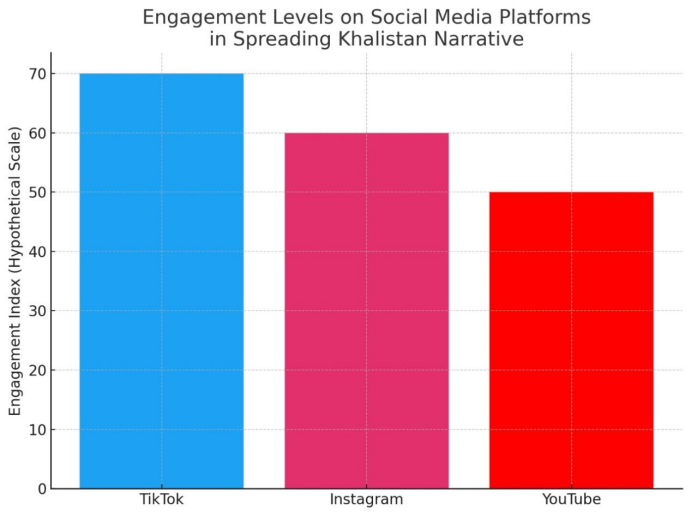
The bar graph above shows hypothetical engagement metrics across TikTok, Instagram, and YouTube. TikTok leads due to its high-speed virality mechanics, followed by Instagram and YouTube.
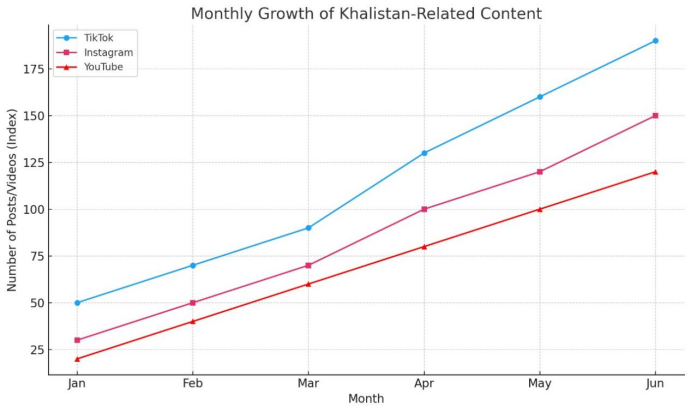
Monthly Growth of Khalistan-related Content
This line chart depicts the increase in Khalistan-tagged or themed content over six months, highlighting a sustained and strategic campaign across platforms.
Tactics Used to Amplify the Narrative
Hashtag Hijacking: Pro-Khalistan creators often hijack trending or unrelated hashtags to widen their reach. This method helps bypass moderation algorithms.
Visual Symbolism and Emotional Appeal: Content features visuals of protests, martyrdom, and historical revisionism designed to evoke outrage, solidarity, and nostalgia.
Influencer Amplification: Diaspora-based influencers play a central role in internationalizing the movement. These influencers present Khalistan as a civil rights issue rather than a secessionist movement.
Algorithm Gaming: Creators strategically post during peak hours, use coordinated comments and likes, and utilize video duets to manipulate algorithmic visibility.
Audience Demographics and Diaspora Involvement: The movement finds substantial support among younger users aged 18–25, especially in Canada, the UK, and Australia. Cultural alienation, identity politics, and grievances against Indian state policies create fertile ground for such content.
Social media algorithms are not neutral; they are engines of influence. In the case of the Khalistan narrative, they serve as multipliers of ideology, emotional mobilizers, and community builders. Without regulatory oversight, these platforms risk becoming echo chambers for destabilizing movements.
(The Author is the Managing Editor of Digital Forensics Research and Analytics Center, he writes on a wide range of issues, including, Public Policy, Geopolitics and Information Warfare.)