Executive Summary
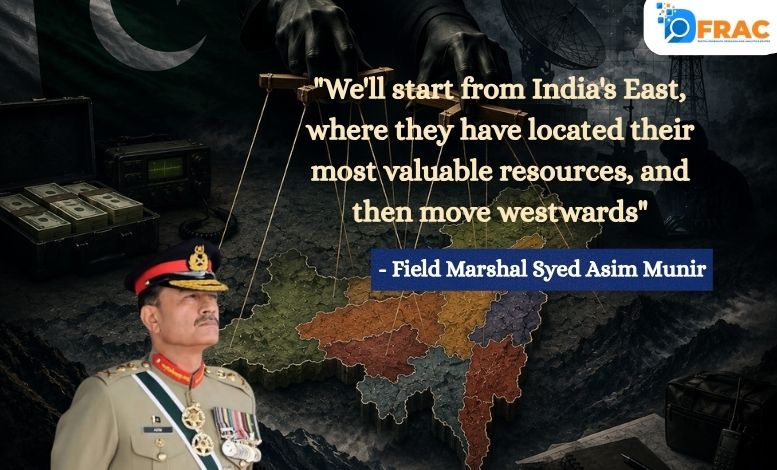
Pakistan’s information and propaganda ecosystem appears to be increasingly focusing on India’s Northeast, particularly Manipur and Arunachal Pradesh, while simultaneously amplifying narratives that align with China’s strategic interests in the region. A year after Pakistan’s Army Chief Field Marshal Asim Munir said that “We’ll start from India’s East”, the propaganda does not seem to be dismantled but to keep evolving. It is raising concerns about the growing importance of India’s eastern frontier in Pakistan’s information strategy.
The campaign reportedly combines fake-news networks, coordinated social-media activity, impersonation accounts, and narratives surrounding ethnic unrest and territorial disputes. The experience gained from propaganda surrounding the Manipur unrest appears to have been extended to Arunachal Pradesh, where misleading posts have sought to create perceptions of Chinese incursions, unrest, and instability.
The Role of Pakistan-Linked Propaganda Networks
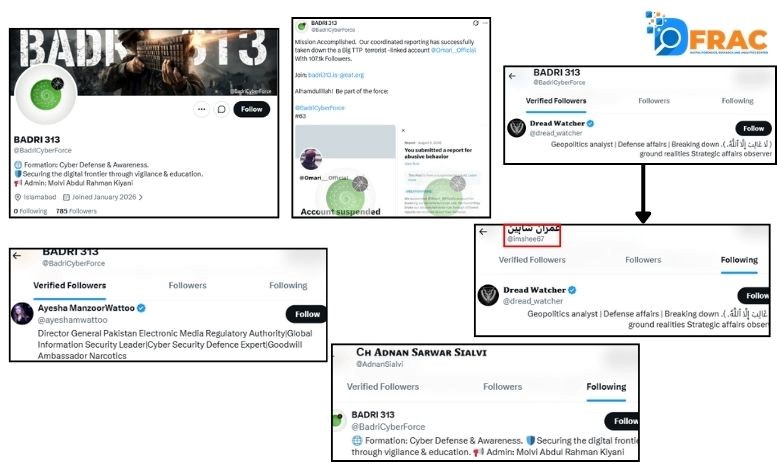
The @BadriCyberForce account has been officially formed by Pakistan’s Inter-Services Public Relations (ISPR) and the Pakistan Muslim League-Nawaz (PML-N), with its activities reportedly involving the targeting of fake-news accounts and mass reporting of anti-Pakistan content.
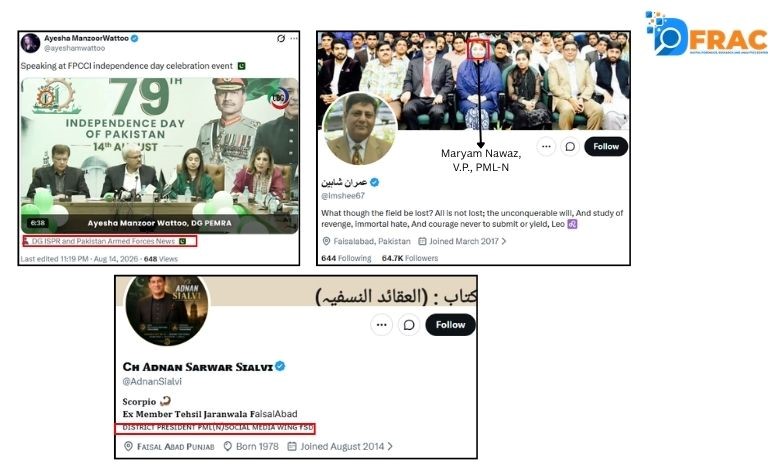
The account is also reportedly followed by prominent individuals associated with the PML-N, including social-media operators Imran Shaheen and Ch Adnan Sialvi, as well as Ayesha Manzoor Wattoo, Director General of the Pakistan Electronic Media Regulatory Authority (PEMRA), which operates under Pakistan’s Ministry of Information and Broadcasting.
These connections are significant because they indicate how social-media networks, political actors, and information-related institutions can overlap within Pakistan’s wider online ecosystem.
Shift Towards India’s Northeast
Over recent months, Pakistan-linked propaganda accounts reportedly known for spreading misleading information have increasingly shifted their attention towards India’s Northeast.
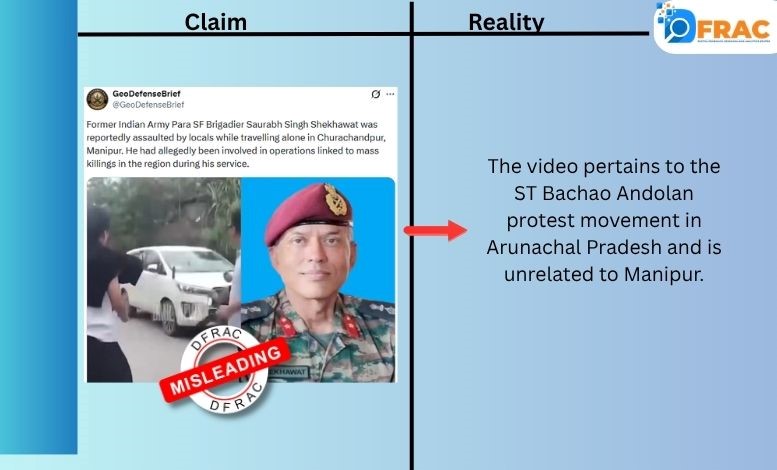
The recent unrest in Manipur became a major focus. Accounts presenting themselves as sources of information about the conflict were reportedly created or repurposed to circulate narratives favourable to Pakistan’s propaganda objectives.
One such example is Mir Abdul Wasae, described as a PML-N member, who reportedly changed his X username to @ManipurPost5 and began amplifying content relating to Manipur.
Other accounts, including @MANIPURTI, @FreeManipur_ and @TheNewManipur, have similarly been identified as part of this broader online campaign and have reportedly been linked to PML-N-associated networks.
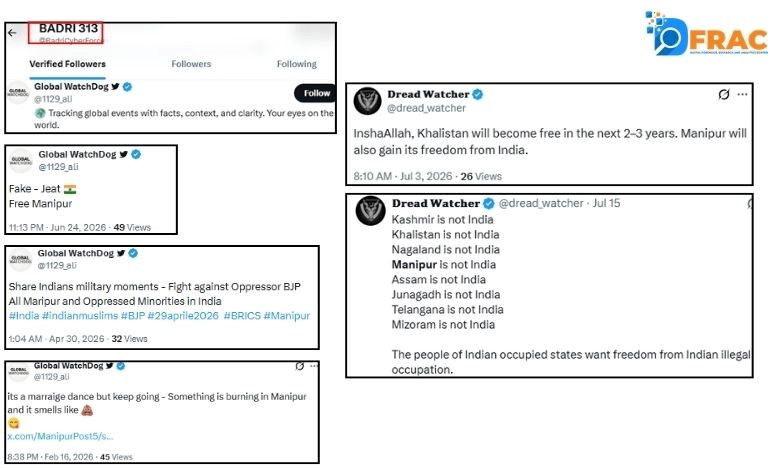
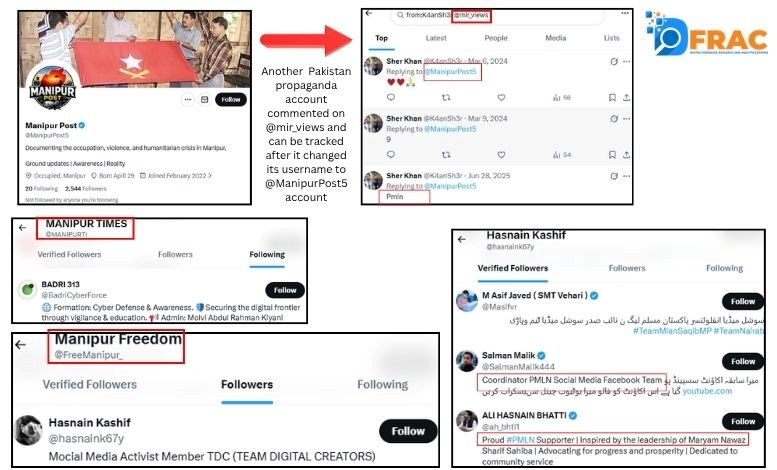
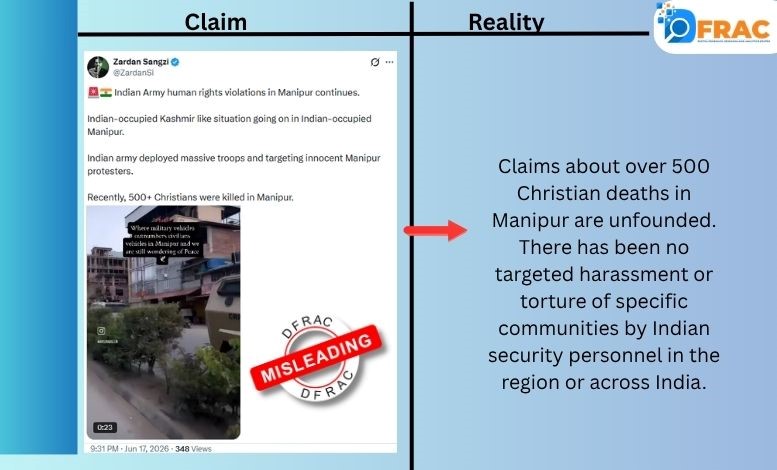
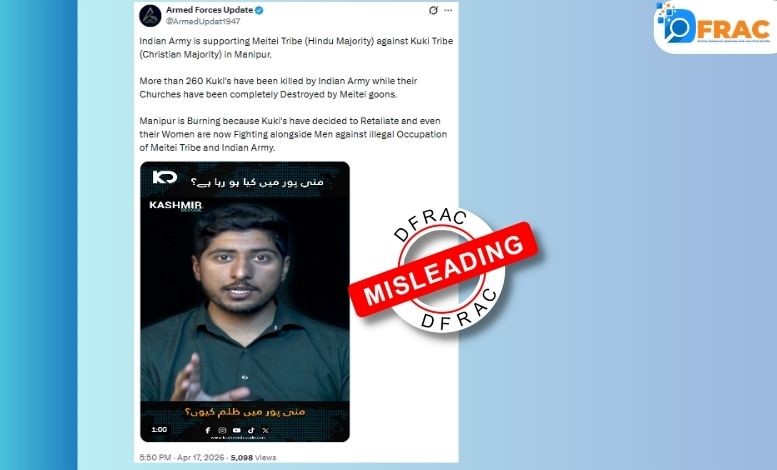
Some main propaganda accounts, based in Pakistan, spread misinformation regarding the situation in Manipur:
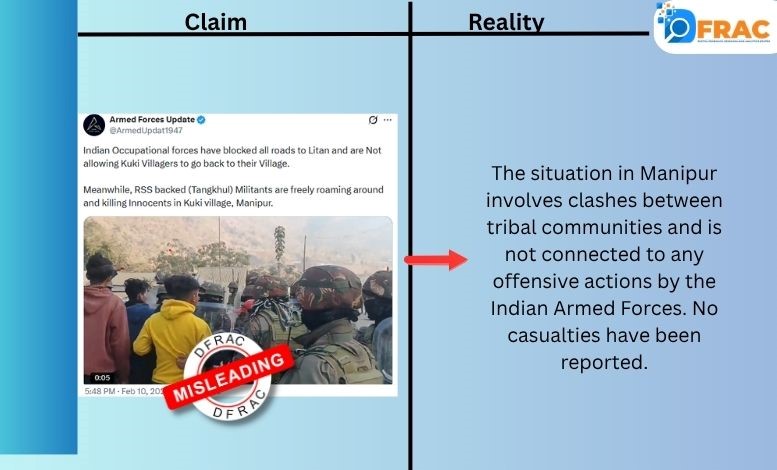
Turning Local Conflict into an International Narrative
A key feature of the campaign is reportedly the attempt to transform local disturbances into an international geopolitical story.
Rather than simply reporting on developments in Manipur, these accounts have allegedly sought to amplify ethnic divisions, highlight grievances selectively, and present the conflict in ways that could deepen mistrust between different communities.
The ethnic conflict between Kukis, Meitis and Nagas is generalised, using religion to plunder their relations with the Indian government. The strategic concern of the Indian government is to include representation from these tribal communities in their talks for peace, while these accounts ignore it.
This approach also serves a wider strategic purpose: portraying India’s Northeast as an area of persistent insecurity while simultaneously creating material that can be amplified by foreign information networks.
Amplifying China’s Arunachal Narrative
The campaign reportedly extends beyond Manipur and increasingly incorporates China’s territorial narrative concerning Arunachal Pradesh.
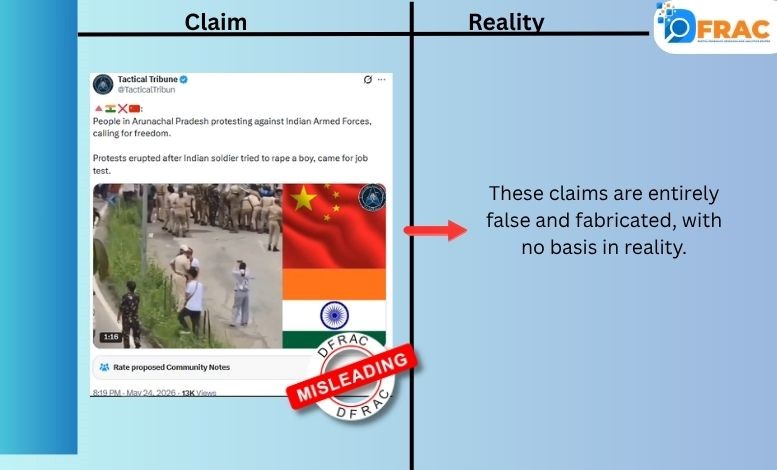
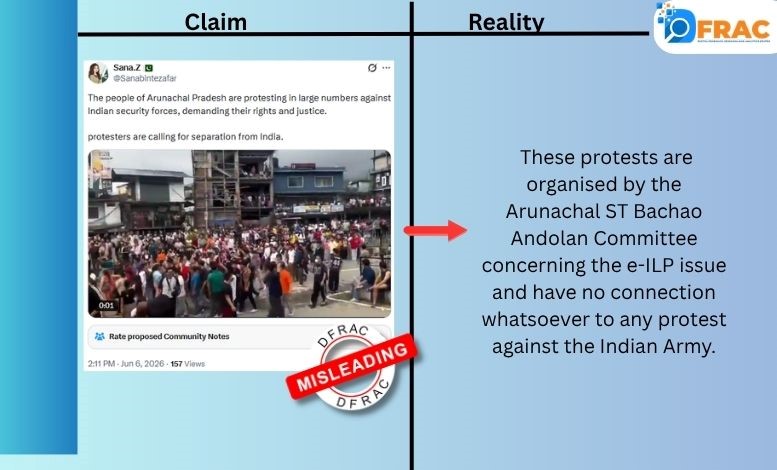
Several Pakistan-linked propaganda accounts have reportedly used keywords associated with India’s geopolitical and security challenges in Arunachal Pradesh. Misleading videos and images have been circulated with claims that Chinese forces had entered deep inside Indian territory or that protests and violence had erupted in the state.
Such content is particularly significant because it combines two separate narratives: Pakistan’s hostility towards India and China’s territorial claims against India.
By amplifying unverified claims of Chinese incursions or unrest, these accounts can create an impression of simultaneous instability along India’s eastern frontier and lend greater visibility to Beijing’s longstanding territorial claims.
The 27-Place Naming Issue
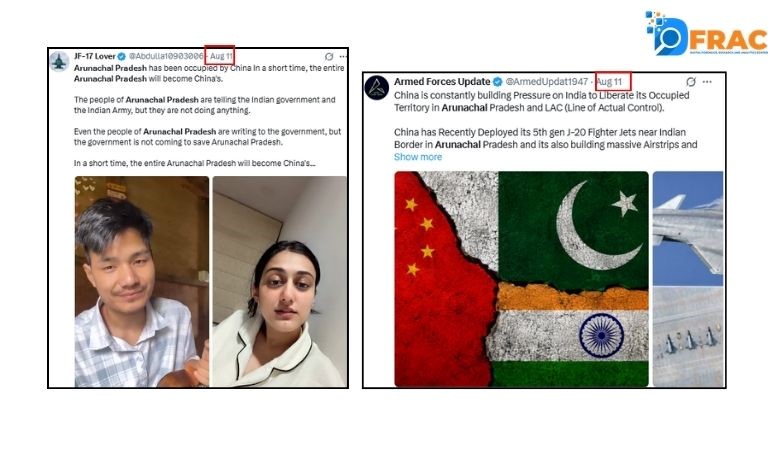
The campaign reportedly intensified following India’s recent decision to officially name 27 places in Arunachal Pradesh.
China has historically objected to India’s administration of Arunachal Pradesh and has sought to reinforce its territorial claims through its own naming practices. Against this backdrop, Pakistan-linked propaganda accounts reportedly launched coordinated online activity aimed at reinforcing China’s narrative and keeping the territorial dispute prominent in public discourse.
The timing is significant because social-media campaigns around territorial disputes can amplify geopolitical messaging well beyond traditional diplomatic channels. By repeatedly circulating content related to Chinese claims, Pakistan-based accounts can effectively provide additional visibility to Beijing’s position.
Impersonation and the Appearance of Local Armed Movements
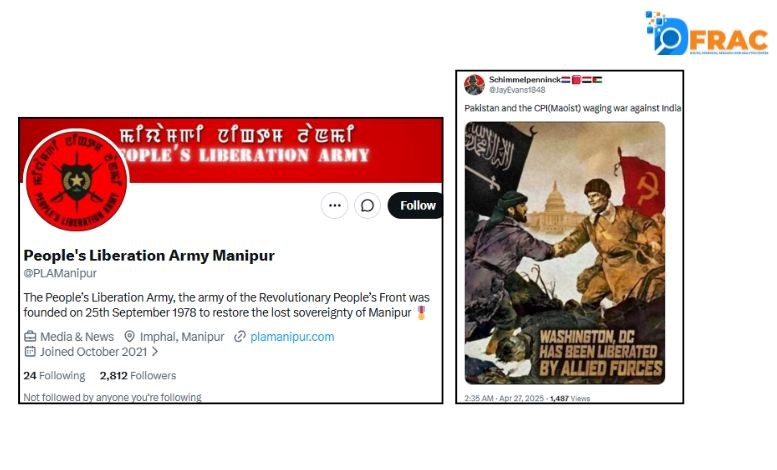
Another concerning feature of the campaign is the reported use of accounts that appear to represent armed or separatist movements originating in Arunachal Pradesh.
Accounts such as @JayEvans1848 and @PLAManipur reportedly claim to represent an armed struggle against the Indian government. These accounts have also reportedly expressed allegiance to Pakistan.
The use of such accounts can create a false impression of indigenous armed resistance or widespread separatist mobilisation. By presenting externally operated accounts as representatives of local movements, propaganda networks can manufacture an appearance of domestic unrest while simultaneously promoting an external geopolitical narrative.
The Emerging China–Pakistan Narrative Nexus
The developments outlined above indicate an emerging convergence between Pakistan’s anti-India information operations and narratives that serve China’s strategic interests in India’s Northeast.
The campaign reportedly follows a recurring pattern:
Local unrest → misinformation → ethnic polarisation → international amplification → geopolitical narrative.
Manipur provides one example of how local tensions can be exploited for wider propaganda purposes. Arunachal Pradesh presents another opportunity, particularly because of China’s longstanding territorial claims and sensitivity surrounding India’s eastern border.
The involvement of Pakistan-linked accounts in amplifying such narratives raises questions about whether India’s Northeast is becoming a deliberate target for coordinated information operations designed to exploit existing vulnerabilities.
Conclusion
The reported activities point towards a broader shift in Pakistan’s information strategy towards India’s Northeast. What initially appears to be social-media commentary on local events can, when viewed collectively, contribute to a larger narrative portraying the region as unstable, divided, and vulnerable.
The repeated focus on Manipur, followed by narratives surrounding Arunachal Pradesh and Chinese territorial claims, suggests an effort to exploit local sensitivities while simultaneously amplifying geopolitical messaging favourable to Pakistan and China.