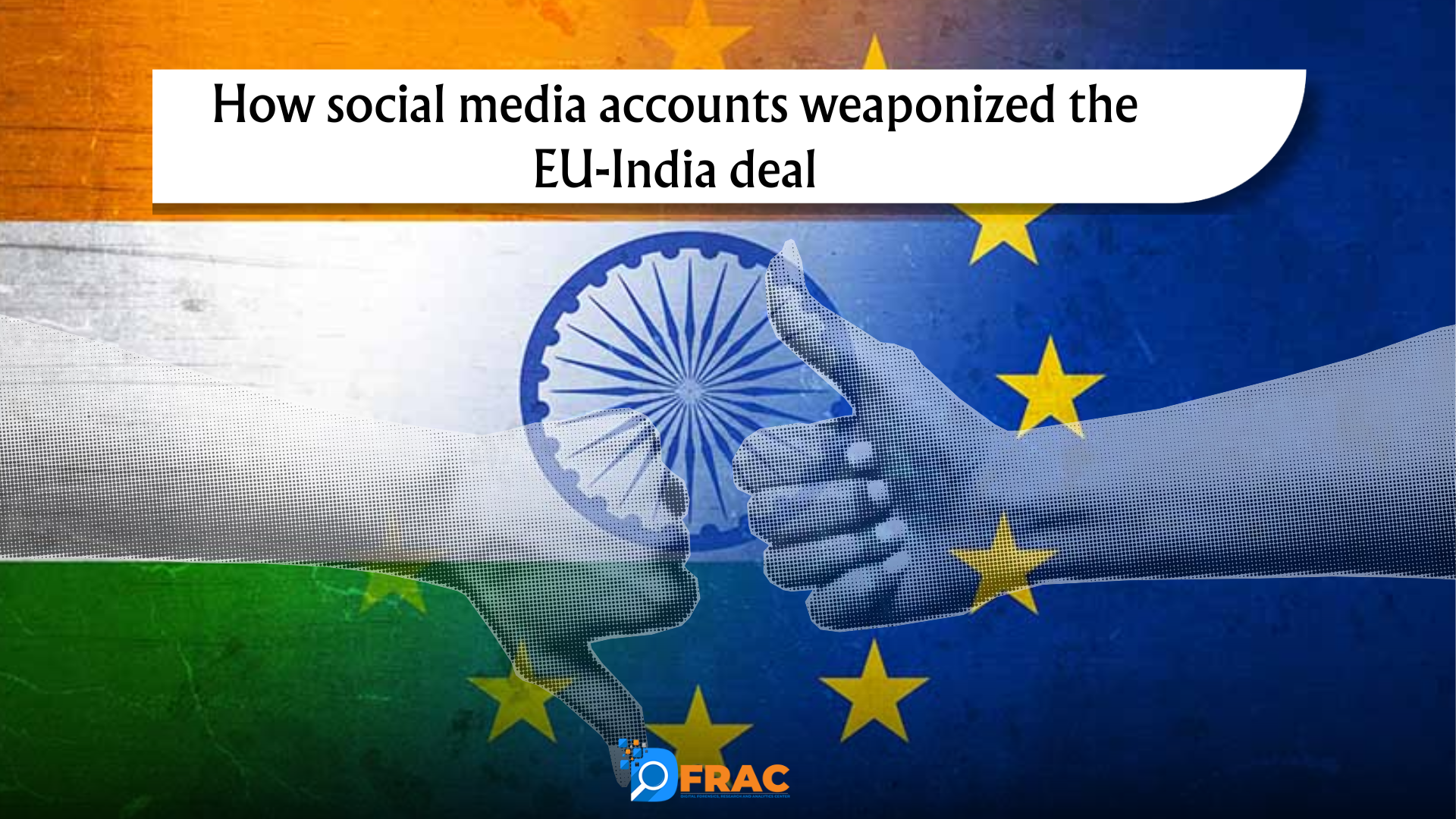
In January 2025, as European Commission President Ursula von der Leyen stood alongside Indian Prime Minister Narendra Modi to announce a historic free trade agreement, hailed as the “mother of all deals”, a sophisticated disinformation campaign was already underway across social media platforms. What appeared at first glance to be random racist outbursts was, in fact, a coordinated information warfare operation designed to undermine the credibility of India as a trade partner and generate public opposition to the agreement in Europe.
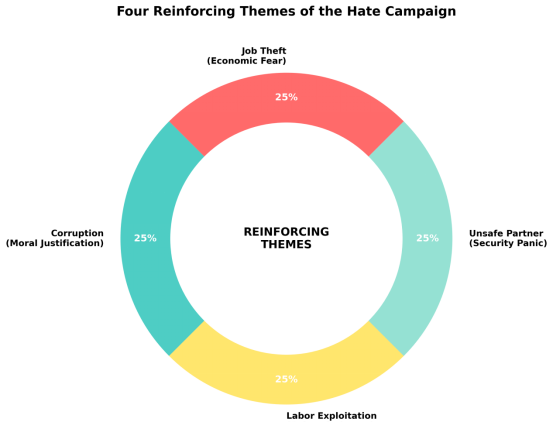
This investigation reveals a multi-platform, multi-actor campaign utilizing weaponized hate speech, AI-generated deepfakes, fabricated news stories, and coordinated messaging across Twitter/X and the Chinese social media platform Weibo. The operation systematically deployed four economic warfare narratives: “India steals jobs,” “India is corrupt,” “India exploits labor,” and “India is an unsafe partner.”
The Four Themes Working Together:
Together, these themes transformed a trade agreement into an existential threat. People weren’t just being asked to oppose a policy; they were being told that India and Indians represented danger to their jobs, their values, their culture, and their security.
TWITTER ACCOUNTS: WHO SAID WHAT
Eight main Twitter accounts spread hate through the four themes:
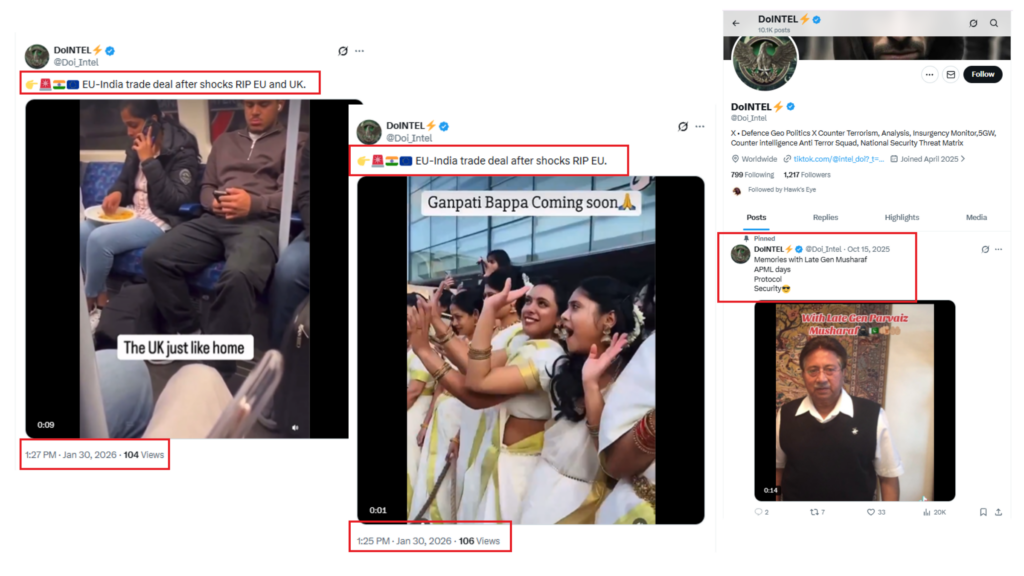
- @Doi_Intel – The Content Generator (Pakistan-based)
This account openly shares Pakistan-based news and anti-India content. Its main tactic was taking videos of Indians celebrating festivals in the UK and falsely claiming these were “aftershocks” of the trade deal. These videos were filmed before the deal even existed. By adding captions like “RIP EU,” it created a false story that the trade deal was flooding Europe with Indians.
Themes: Job Theft, Labor Exploitation, Unsafe Partner
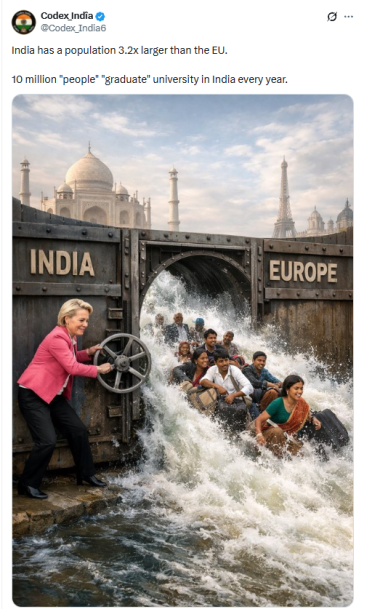
- @Codex_India6 – The Visual Hate Specialist
This account created dehumanizing graphics. The worst showed the EU Commission President opening a valve with Indians being flushed into Europe like sewage. It depicted human beings as waste. It also used scare quotes when writing about Indian graduates, suggesting they’re neither real people nor real graduates.
Themes: Job Theft, Labor Exploitation, Unsafe Partner
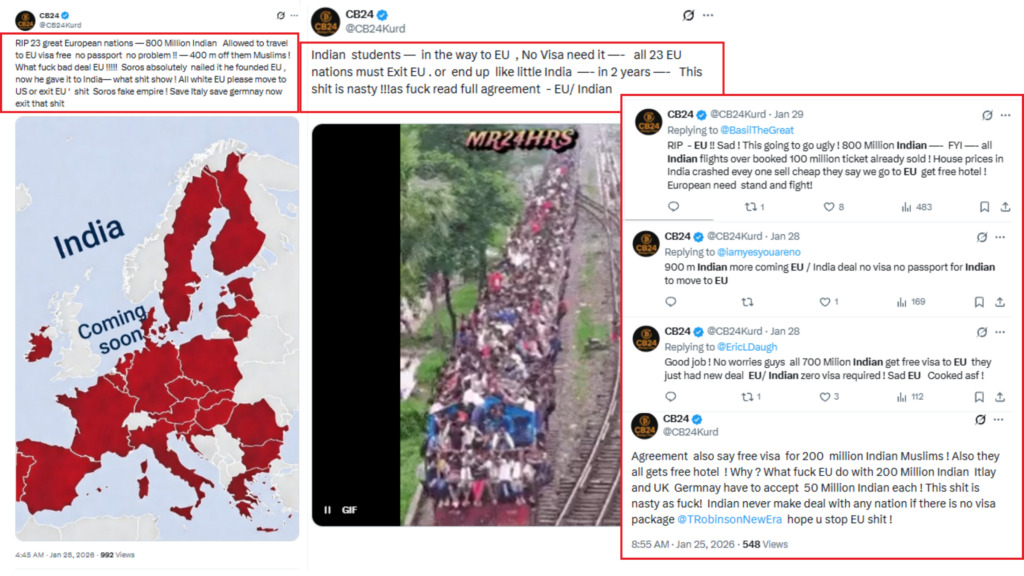
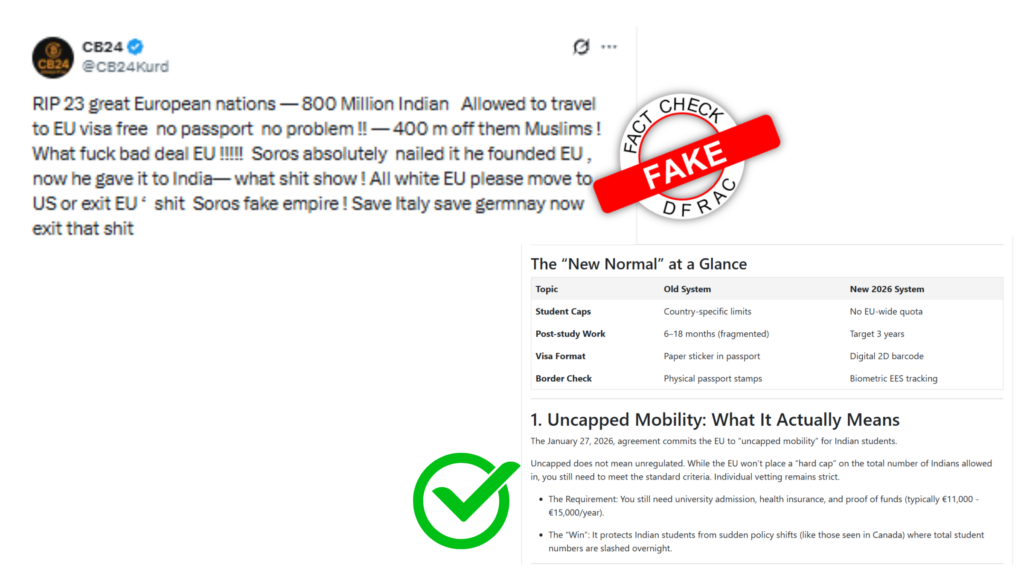
- @CB24Kurd – The Conspiracy Amplifier
This account spread one of the campaign’s biggest lies: that 800 million Indians would get visa-free EU travel, including “400 million Muslims.” Completely false, the trade deal had no such provisions. This activated fears about Indian and Muslim immigration simultaneously.
Themes: Job Theft, Corruption, Unsafe Partner
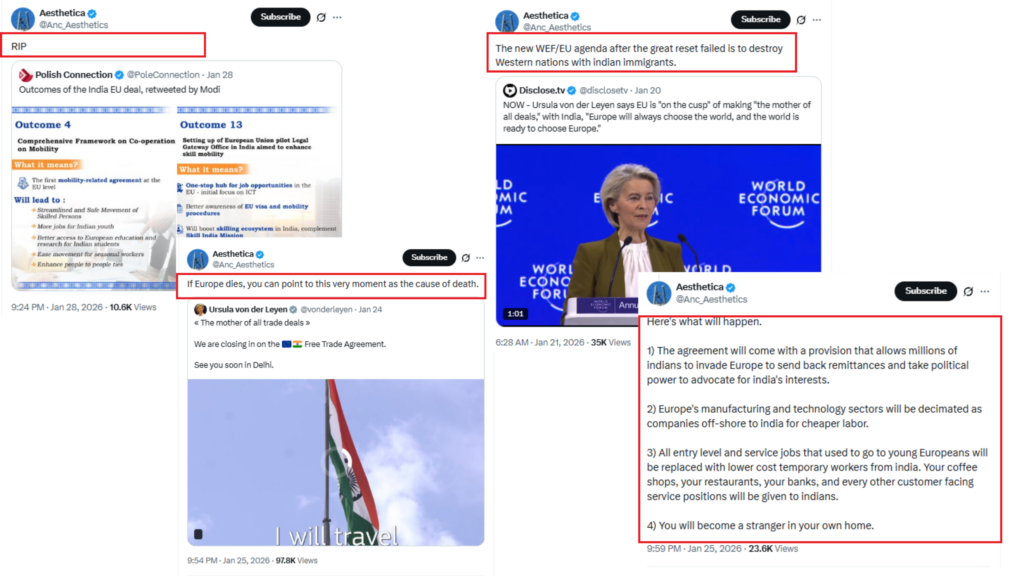
- @Anc_Aesthetics – The Apocalyptic Voice
This account created detailed fear scenarios: manufacturing would be decimated, Indians would invade Europe, all entry-level jobs would go to Indians, Europeans would “become a stranger in your own home.” It connected the deal to WEF conspiracy theories and called it “destroying this with infinity Indians” and “a crime against nature.”
Themes: ALL FOUR
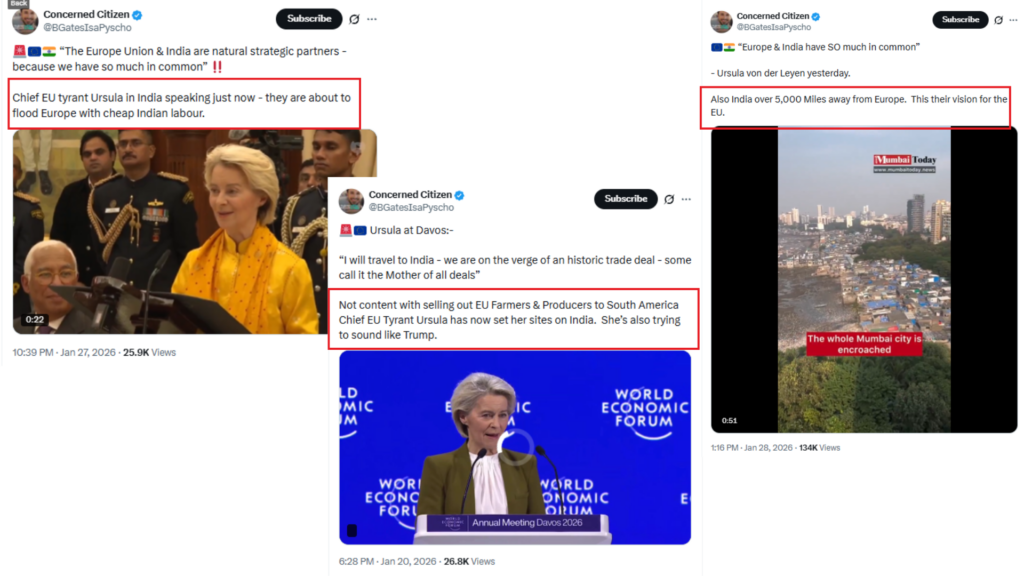
- @BGatesIsaPyscho – The EU Official Attacker
The user focused hate on Ursula von der Leyen, calling her “Chief EU Tyrant.” It mocked her statement that “Europe & India have SO much in common” by sharing videos of “unhygienic scenes from India” meant to disgust viewers.
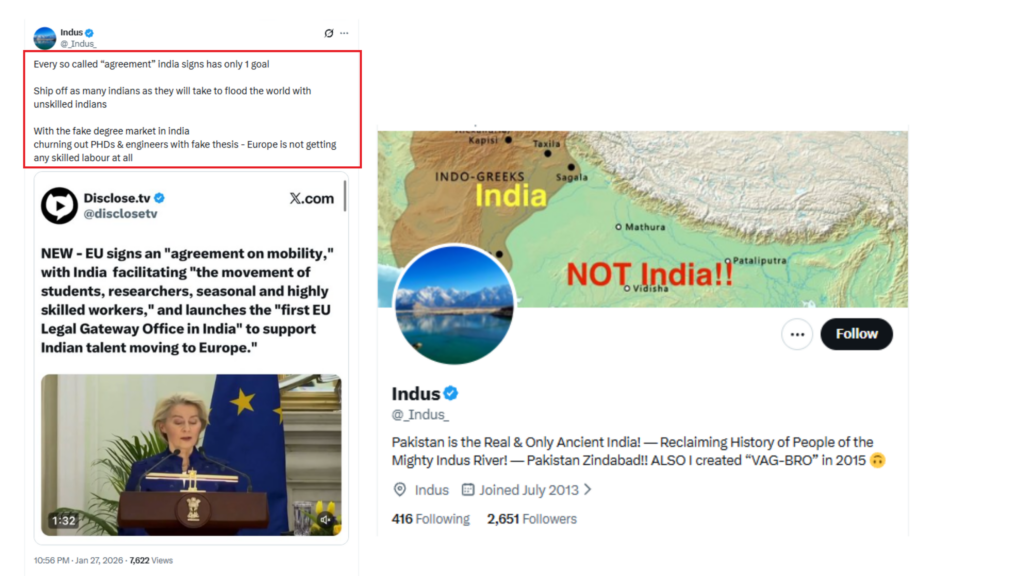
- @_Indus_ – The Credentials Attacker
Another Pakistan-based account claimed India has a “fake degree market churning out PhDs & engineers with fake thesis” and that India’s only goal is to “flood the world with unskilled Indians.” This undermined Indian professionals worldwide.
Themes: Job Theft, Corruption, Labor Exploitation
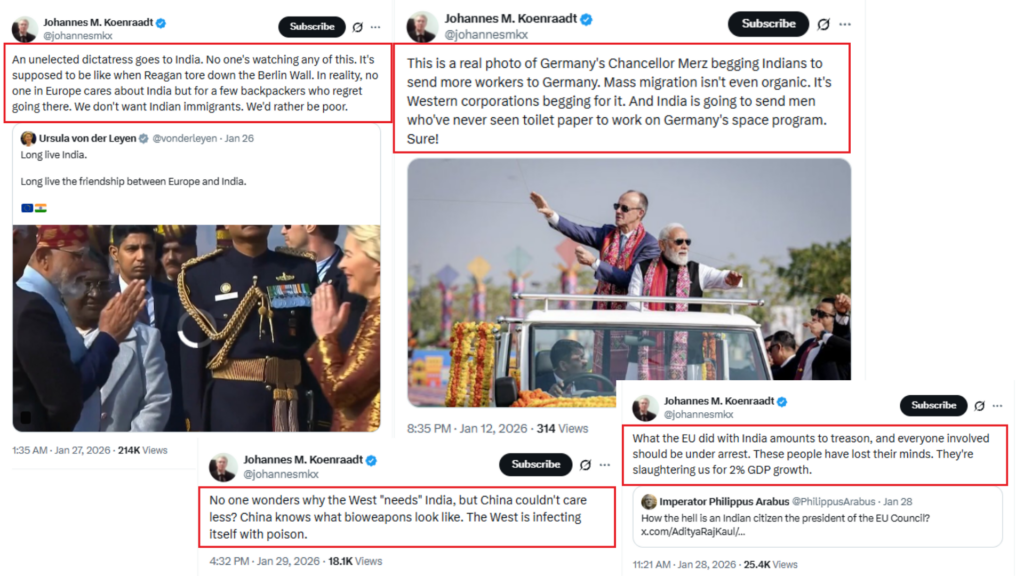
- @johannesmkx – The “Intellectual” Voice (MOST ACTIVE)
By far the most active and dangerous account. It posted 9+ lengthy messages covering all four themes. Used educated-sounding language to make extreme racism sound intellectual, calling Indians “dirt eaters easily satisfied with a daily bowl of peas,” “bioweapons,” and “poison infecting the West.” The user said, “We’d rather be poor” than accept Indian immigrants. Claimed EU officials committed “treason” and should be arrested for “slaughtering us for 2 percent GDP growth.” Mixed in conspiracy theories about Jewish control and suggested that Indians were barely human.
Themes: ALL FOUR extensively
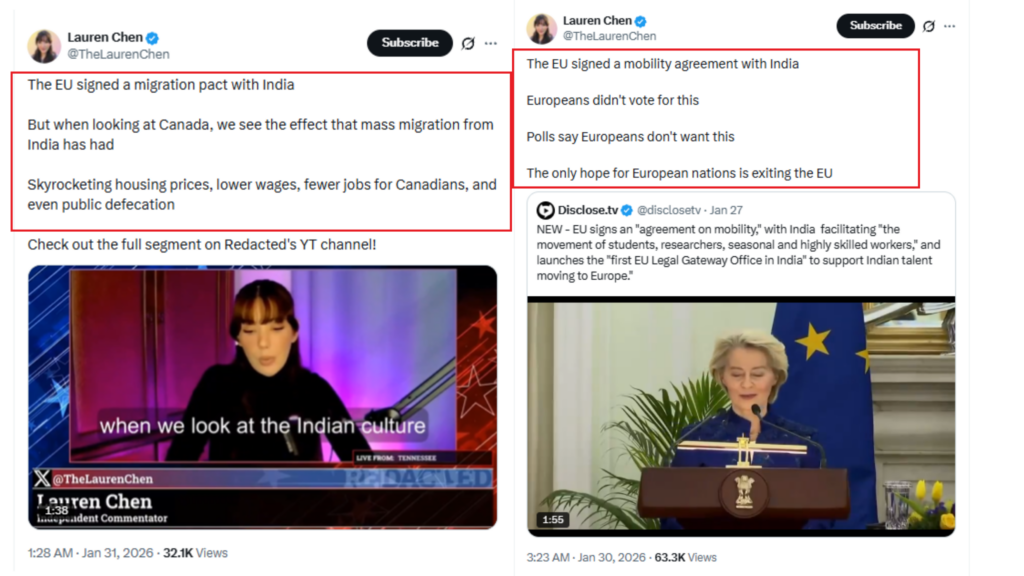
- @TheLaurenChen – The Canada Comparison
She used Canada’s immigration debates to scare Europeans, claiming Indian migration caused “skyrocketing housing prices, lower wages, fewer jobs, and even public defecation.” Weak connection to the actual EU-India deal since it didn’t include mass migration provisions.
Themes: Job Theft, Labor Exploitation, Unsafe Partner
WEIBO POSTS: THE CHINESE ANGLE
Chinese social media also had posts about the EU-India deal. These were longer and more analytical than Twitter, with a specific goal: make India look unreliable while promoting China.
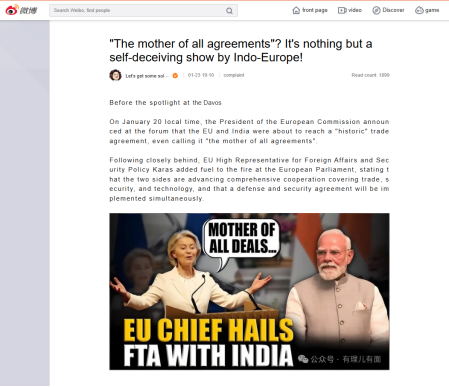
Post 1: “The Mother of All Agreements Is Self-Deceiving”
Mocked the deal as a “mutual support act by two players cornered by American hegemony.” Said the 20-year negotiation showed weakness and the partnership was “fragile as bubbles that can burst at the slightest touch.”
Themes: Corruption, Unsafe Partner
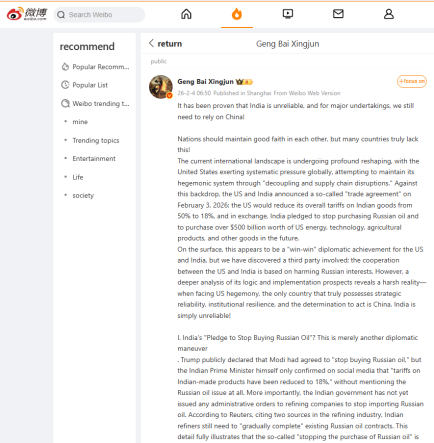
Post 2: “Trump Has Modi Under His Thumb”
Focused on supposed Indian dishonesty. Noted that Trump claimed Modi agreed to stop buying Russian oil, but Modi only confirmed tariff reductions without mentioning oil. Suggested India makes promises it won’t keep and plays all sides.
Themes: Corruption, Unsafe Partner
Post 3: “India Is Unreliable, We Need China” (LONGEST POST)
Made systematic argument that India can’t be trusted:
– Still imports 1/3 of oil from Russia despite promises
– Practices “fence-sitting” and won’t follow through on commitments
– Lacks “strategic autonomy” and is “opportunistic”
Then contrasted with China’s supposed reliability:
– “Strategic resolve” and complete industrial system
– Diversified energy, local currency settlements
– New energy vehicles reducing oil dependency
Concluded: “There is only one truly reliable, predictable, and dependable force—that is China!”
This wasn’t about the EU-India deal. It was Chinese state media using the deal to attack India and promote China.
Themes: Corruption, Unsafe Partner
Post 4: “The EU Has No Other Choice”
Dismissed the deal as doomed: “It will take at least three years, maybe five, for the two sides to break up.”
Themes: Unsafe Partner
THE FAKE NEWS SPHERE
Beyond hate speech, the campaign included outright lies designed to make the trade deal look worse:
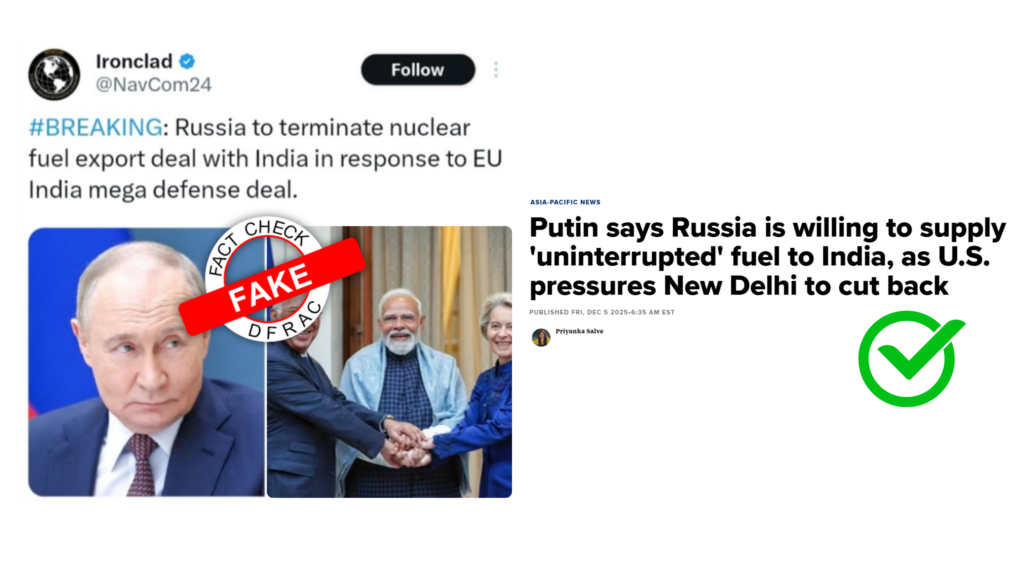
Russia Terminating Nuclear Deal – COMPLETELY FALSE
Pakistani accounts claimed Russia would end nuclear fuel exports to India over the EU deal. Zero evidence. Pure invention meant to make India look isolated. Russia-India nuclear cooperation continued unchanged.
Visa-Free Travel for Millions – COMPLETELY FALSE
The biggest lie. Multiple accounts claimed 800 million Indians would get visa-free EU travel. The actual trade agreement had NO such provisions. Completely fabricated to scare Europeans about being “flooded.”
The trade deal improves economic and mobility cooperation between India and the EU, but it does not create a visa-free regime for Indian citizens, nor does it open EU borders to hundreds of millions of Indians without visas. Any travel still requires visas under existing EU immigration and Schengen rules, although certain categories (students, professionals) may see facilitation or smoother processes.
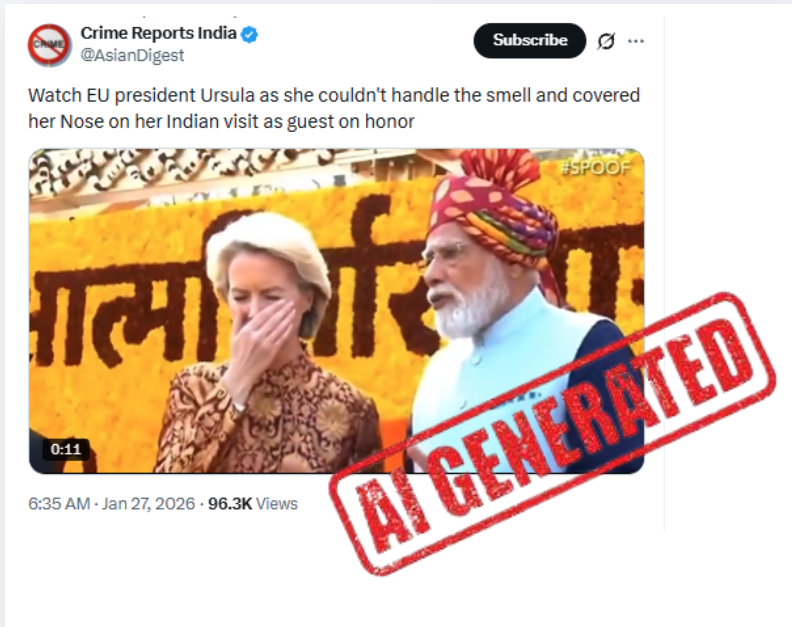
AI-Generated Republic Day Videos – FABRICATED
Deepfake videos of India’s Republic Day parade showed fake reactions from EU officials to undermine genuine diplomatic cooperation.
WHAT THE EVIDENCE SHOWS
Corruption appeared most frequently. Almost every account, both Twitter and Weibo, questioned India’s trustworthiness in some way. This wasn’t coincidental. By making Indians seem fundamentally dishonest, the campaign suggested that any deal with India was doomed and dangerous.
Twitter focused on immigration fears, cultural threats, and visual content designed to disgust. Weibo focused on geopolitics, comparing India unfavorably to China, and using more analytical language to reach educated audiences.
The accounts showed remarkable similarity in timing and messaging despite being from different countries and having different stated purposes. They all jumped on the trade deal at almost the same time and pushed overlapping narratives. Some coordination appears deliberate (Pakistan-based accounts working together), while other coordination may be opportunistic (different actors seeing the trade deal as useful for their own hate campaigns).
Conclusion:
This wasn’t just people being mean on the internet. It was a coordinated effort to turn economic policy discussion into hate speech, using four specific themes to make that hate seem legitimate. The campaign shows how real events can be weaponized, how lies can be strategically deployed to fill narrative gaps, and how different actors with different goals can amplify each other’s messages to create a force multiplier effect.
Together, these themes transformed a trade agreement into an existential threat. People weren’t just being asked to oppose a policy; they were being told that India and Indians represented danger to their jobs, their values, their culture, and their security.