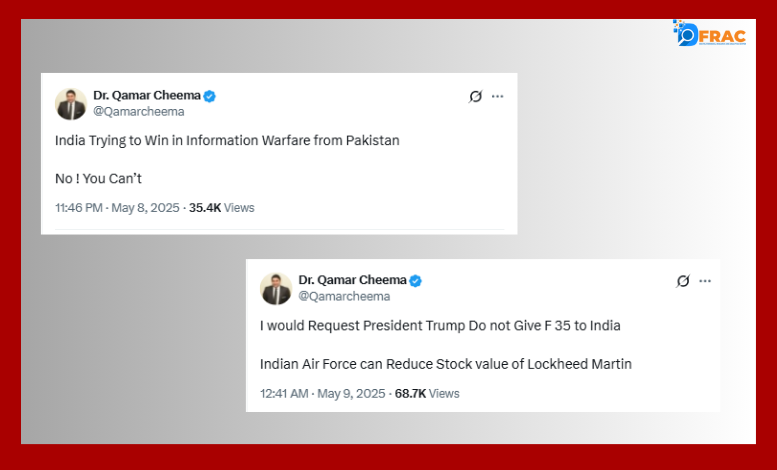
During Operation Sindoor, Qamar Cheema took to Twitter with a triumphant declaration: “India Trying to Win in Information Warfare from Pakistan No ! You Can’t.” While Cheema gleefully declared Pakistan’s supremacy in the battle for narrative control, he was busy proving India’s point by flooding Twitter with AI-generated fake news, passing off video game footage as real combat, and sharing fabricated stories about destroying Indian weapons systems. When you’re sharing screenshots from video games and calling it evidence of aerial victory, you’re not winning information warfare; you’re providing a masterclass in how to lose credibility. But here’s the truly remarkable part: Pakistan looked at this performance, at this carnival of misinformation and manufactured victories, and decided it deserved a medal.
Executive Summary
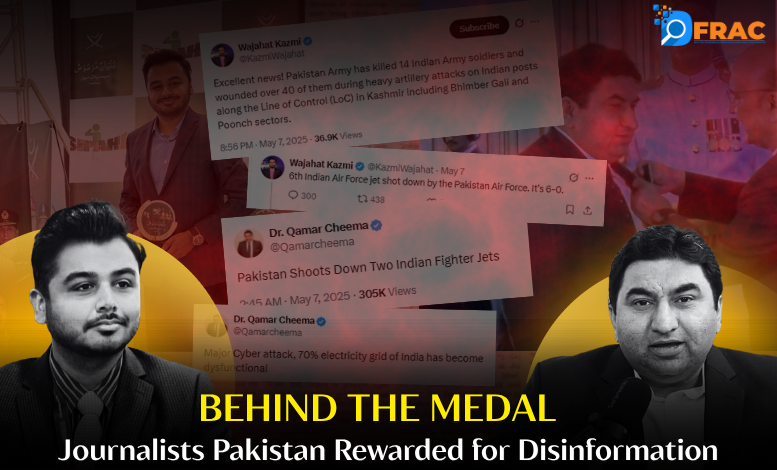
The Pakistan government handed out medals to two men who systematically deceived the public during Operation Sindoor. While officials praised Qamar Cheema and Wajahat Kazmi for their “pivotal media role” during what Pakistan called Operation Bunyad al Marsoos, our DFRAC investigation exposes a darker reality. These weren’t journalists serving the public interest. They were propagandists who flooded social media with fabricated military victories, shared video game footage as combat footage, and amplified narratives that served only the Pakistani military establishment.
Background: The Awards and Their Recipients
Wajahat Kazmi received a special commemorative award from the Chief Minister of Sindh for his role in the “Marka-e-Haq Operation Bunyanun Marsoos.” Qamar Cheema received the national civil award Tamgha-e-Imtiaz from the President of Pakistan for his media contributions.
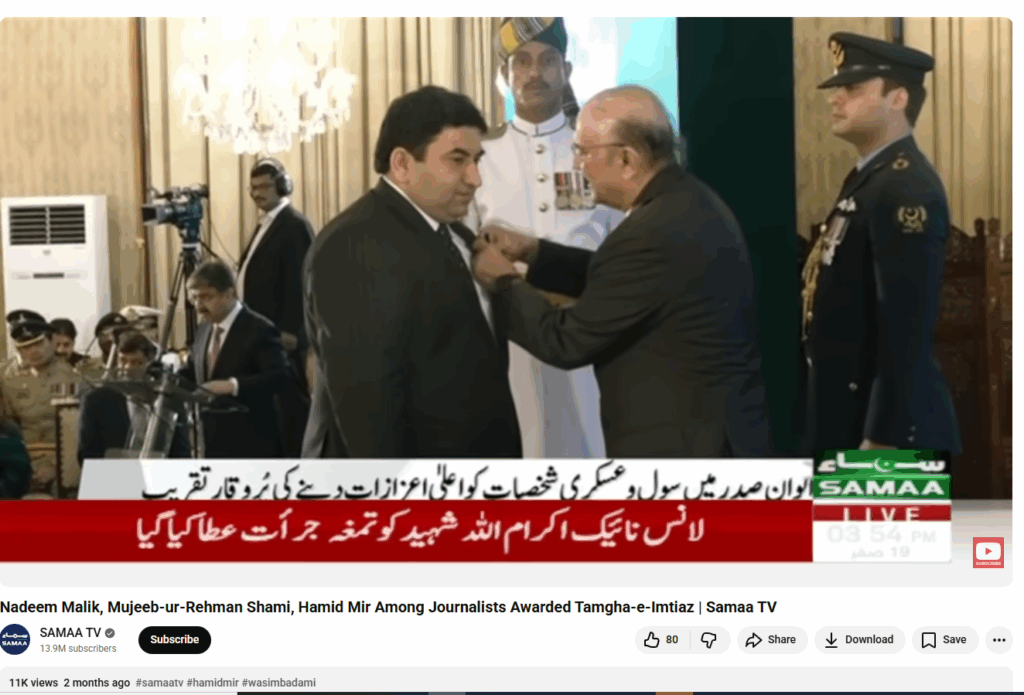
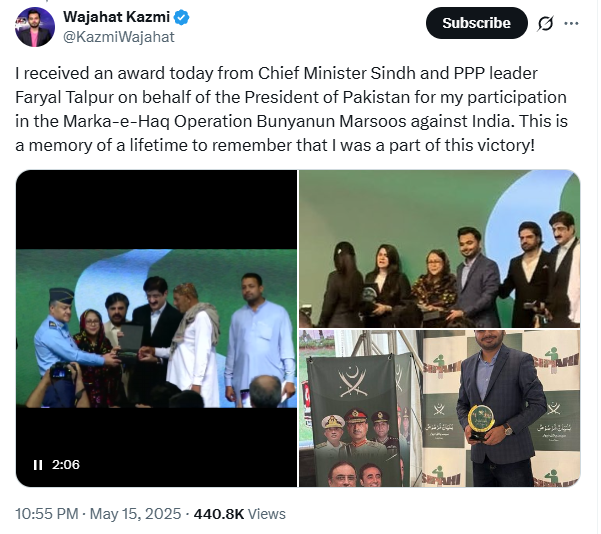
Qamar Cheema
Professional Profile and Public Persona
Qamar Cheema built his reputation as a security commentator and positioned himself at the head of the Sanober Institute in Islamabad. Television producers booked him as an expert. Audiences trusted him to explain complex security matters. The Pakistani government eventually decorated him for his media work during the military standoff.
Pattern of Deflection and Denial
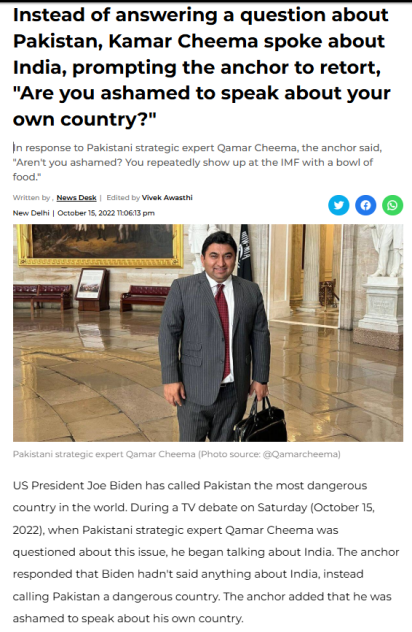
The investigation uncovered a documented pattern of deflecting criticism of Pakistan by redirecting discussions toward India. In a television debate broadcast on October 15, 2022, Cheema demonstrated this approach when confronted with statements by then-US President Joe Biden calling Pakistan “the most dangerous country in the world.” According to a report published by Jansatta, when questioned about Biden’s characterization, Cheema immediately pivoted the conversation toward India rather than addressing the concerns about Pakistan.
The exchange became particularly notable when the anchor challenged Cheema’s deflection tactics, pointing out that Biden had not made such statements about India but specifically about Pakistan. The anchor expressed what he described as shame about having to discuss his own country’s problems, while the strategic expert appeared to smile and deflect. The confrontation highlighted a concerning tendency to avoid substantive discussion of legitimate security concerns regarding Pakistan.
Controversial Associations: The Sanober Institute Roundtable
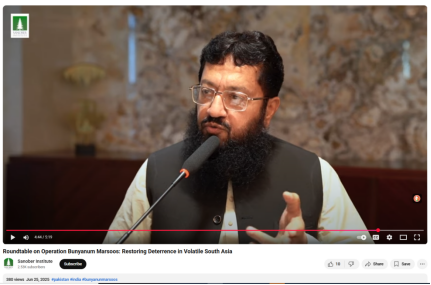
On June 25, 2025, the Sanober Institute, where Cheema serves as a board director, organized a roundtable discussion titled “Operation Bunyanum Marsoos: Restoring Deterrence in Volatile South Asia.” While such events are common in policy circles, the investigation revealed the presence of a deeply concerning participant: Qari Mohammad Yaqoob Sheikh.
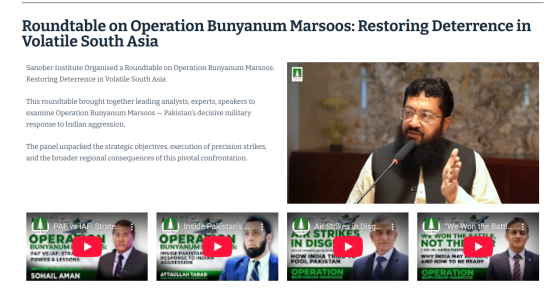
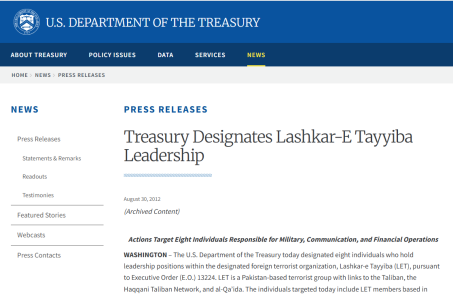
The significance of Sheikh’s attendance cannot be overstated. According to a 2012 press release from the US Department of the Treasury, Qari Muhammad Yaqoob Sheikh was designated as an individual holding a leadership position within Lashkar-e Tayyiba (LeT), an organization officially designated as a foreign terrorist organization by the United States government.
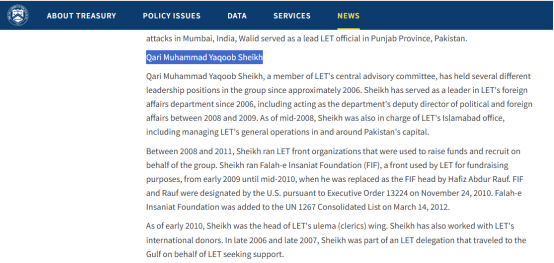
The Treasury Department’s documentation reveals Sheikh’s extensive involvement in LeT operations. He served as a member of LeT’s central advisory committee and held multiple leadership positions within the organization since approximately 2006. His roles included serving as a leader in LeT’s foreign affairs department, acting as deputy director of political and foreign affairs between 2008 and 2009, and managing LeT’s Islamabad office and general operations in and around Pakistan’s capital as of mid-2008.
Between 2008 and 2011, Sheikh operated LeT front organizations specifically designed to raise funds and recruit on behalf of the group. He ran the Falah-e Insaniat Foundation (FIF), which was used by LeT for fundraising purposes, from early 2009 until mid-2010. The FIF itself was subsequently designated by the US government pursuant to Executive Order 13224 on November 24, 2010, and was added to the UN 1267 Consolidated List on March 14, 2012.
Sheikh’s activities extended to international fundraising operations. As of early 2010, he headed LeT’s ulema (clerics) wing and worked directly with the organization’s international donors. In late 2006 and late 2007, he participated in LeT delegations that traveled to the Gulf region seeking support for the organization.
The fact that Cheema’s institute provided a platform for an individual with such documented ties to a designated terrorist organization raises serious questions about the judgment and affiliations of someone being honored for journalistic contributions.
False Flag Allegations: The Pahalgam Attack
Cheema’s analysis of the tragic Pahalgam attack in India demonstrates a willingness to promote inflammatory and unsubstantiated conspiracy theories. In a report to Pakistani media outlet Duniya News, Cheema characterized the incident as “a false flag operation by India,” claiming that “India tried to gain big benefits by killing its own people.”
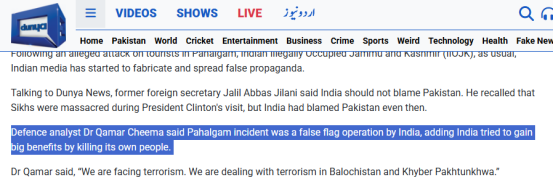
Cheema provided no evidence for his statements, yet his analysis was disseminated through mainstream Pakistani media channels.
Disinformation Campaign During Operation Sindoor
The investigation documented numerous instances of Cheema spreading unverified or demonstrably false information during Operation Sindoor through his social media channels and media appearances. The pattern of disinformation included:
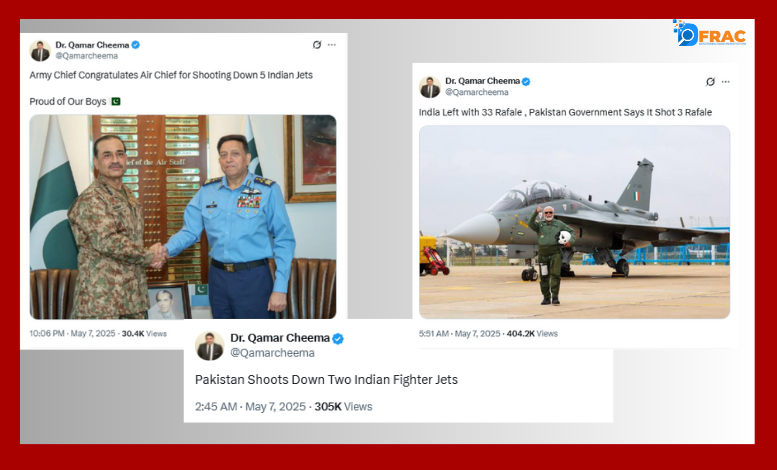
Unverified Military Claims: Cheema repeatedly amplified unsubstantiated claims about Indian military losses, including statements such as “Army Chief Congratulates Air Chief for Shooting Down 5 Indian Jets” and “Pakistan Shoots Down Two Indian Fighter Jets.” He also claimed that “India Left with 33 Rafale, Pakistan Government Says It Shot 3 Rafale.” These claims were presented as facts despite the absence of independent verification or acknowledgment from Indian authorities.
Inflammatory Commentary: His social media posts included provocative statements such as “I would Request President Trump Do not Give F 35 to India Indian Air Force can Reduce Stock value of Lockheed Martin” and “India Trying to Win in Information Warfare from Pakistan No! You Can’t.” Such commentary goes beyond analysis to engage in psychological operations and propaganda.
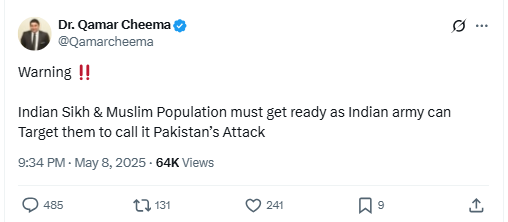
Dangerous Incitement: Perhaps most concerning was his warning that “Indian Sikh & Muslim Population must get ready as Indian army can Target them to call it Pakistan’s Attack.” This statement appears designed to sow discord among India’s religious communities and potentially incite civil unrest by suggesting the Indian military would target its own minority populations.
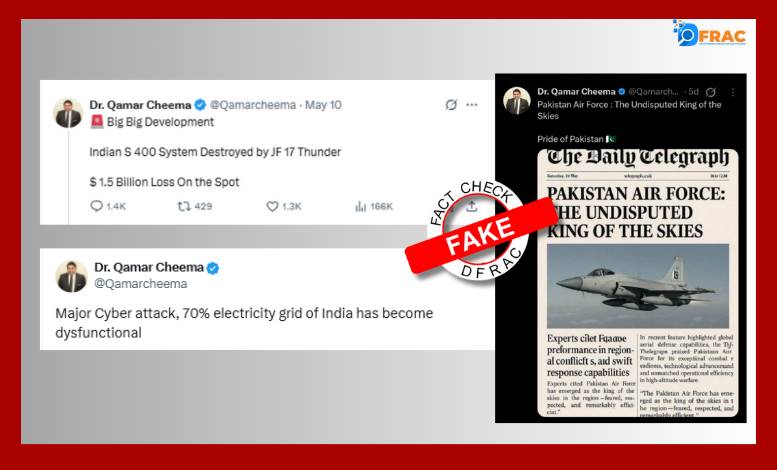
Fabricated News Stories: The investigation documented several instances of completely fabricated claims:
First, Cheema promoted a story claiming “Big Development Indian S 400 System Destroyed by JF 17 Thunder $ 1.5 Billion Loss On the Spot.” India officially denied that any such incident occurred, yet Cheema presented it as fact.
Second, he circulated claims that “according to the Pakistan army, a cyber attack was conducted by Pakistan, rendering 70% of India’s electricity grid inoperative.” No such incident was ever documented by independent sources, and no credible news outlets reported any such widespread power disruption in India during this period.
Third, Cheema shared artificial intelligence-generated images formatted to appear as legitimate news headlines, deliberately creating false documentary evidence to support his narratives.
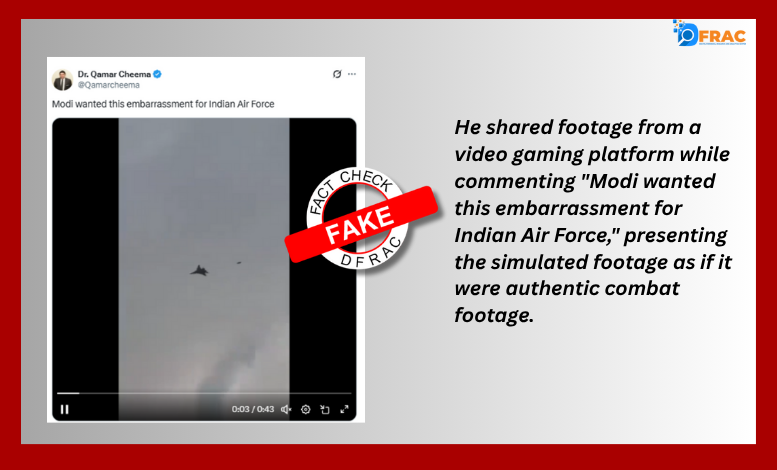
Video Game Footage as News: In one particularly egregious example, Cheema shared footage from a video gaming platform while commenting, “Modi wanted this embarrassment for the Indian Air Force,” presenting the simulated footage as if it were authentic combat footage. This represents a fundamental breach of journalistic ethics and a deliberate attempt to deceive his audience.
Wajahat Kazmi
Professional Background
Wajahat Kazmi, like Cheema, received a special commemorative award from the Chief Minister of Sindh for his role in the “Marka-e-Haq Operation Bunyanun Marsoos,”; his media role during the India-Pakistan military standoff. His professional profile includes work with numerous reputable institutions, including Samaa TV, Dawn, BBC, CNN, CTV, Huffington Post, DNA India, and International Business Times. This extensive resume lent credibility to his commentary during Operation Sindoor, making his propagation of false narratives potentially more influential and damaging.
History of Inflammatory Rhetoric
Prior to Operation Sindoor, DFRAC had documented Kazmi’s involvement in spreading divisive narratives, particularly around India-Pakistan tensions. A 2022 DFRAC report examined how Kazmi participated in amplifying a minor incident during a cricket match into a vehicle for promoting anti-India sentiment and religious division.
Following Indian cricketer Arshdeep Singh’s dropped catch during a match, numerous Pakistani social media users engaged in trolling, with some calling him an ISI agent or a Khalistani. Kazmi joined this chorus with a tweet stating: “First Shami and this time #ArshdeepSingh. One should learn from India how to label your players belonging to minorities as traitors. Shameful. Let sports be sports and keep your hatred and intolerance for other religions saved for other events.”
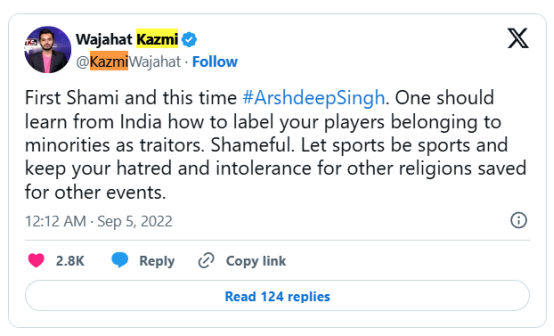
The irony of this statement was not lost on investigators. While accusing India of intolerance toward minorities, Kazmi was participating in exactly the behavior he purported to condemn, using a sports incident to fuel religious and national tensions between the two countries.
Deceptive Social Media Practices
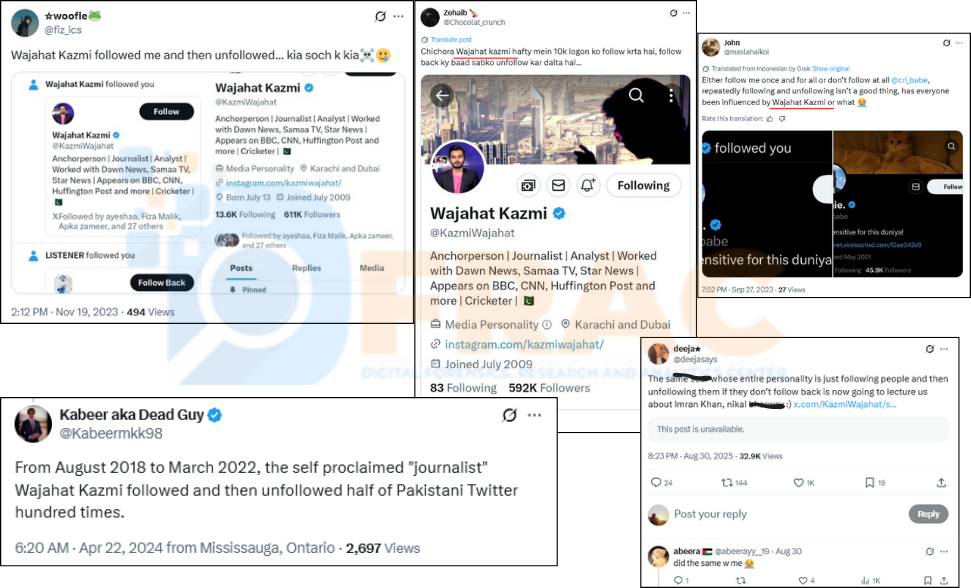
The investigation also uncovered evidence of manipulative social media tactics employed by Kazmi to artificially inflate his online influence. Multiple social media users reported that Kazmi engaged in “follow me, follow back” tactics, where he would follow users to encourage reciprocal follows, then unfollow them once he had gained their followership. This practice is designed to create an appearance of greater influence and reach than organically earned, raising questions about the authenticity of his social media presence.
Sexual Assault Allegations
The investigation uncovered serious allegations of professional misconduct that paint a troubling picture of Kazmi’s character beyond his journalistic work. On December 6, 2016, after a story detailing these allegations was published, Kazmi abruptly disabled his Facebook, Twitter, and Instagram accounts.
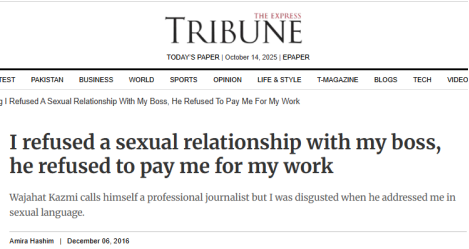
According to testimony published by Tribune.pk, a female journalist came forward with allegations of sexual harassment while working for Kazmi. The victim’s account describes how she was hired for what was presented as a freelance writing project for Kazmi’s blog. She stated that she trusted him based on his professional reputation and his work with major news organizations, including Samaa TV, Dawn, BBC, CNN, CTV, Huffington Post, DNA India, and International Business Times.
The victim explained that she agreed to work without advance payment when Kazmi claimed the amount exceeded his visa card limit. For a month, she wrote articles for his blog and managed his social media accounts. She described excelling at her job while hoping to develop a long-term professional relationship. According to her account, what she believed was a professional opportunity turned into something entirely different, though the specific details of the harassment were documented in the original Tribune.pk report.
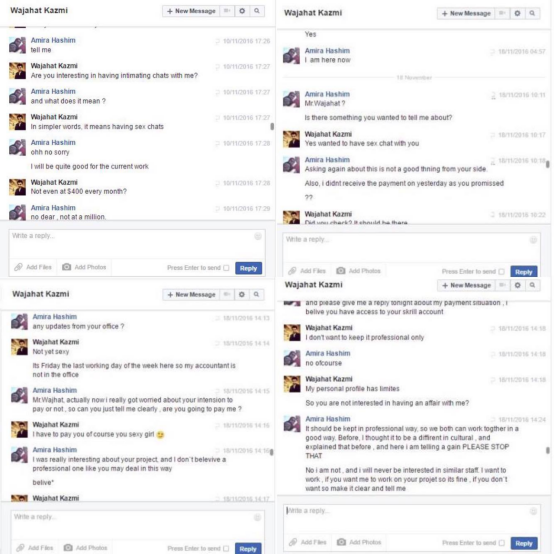
The timing of Kazmi’s deletion of all his social media accounts immediately following the publication of these allegations is significant. Rather than addressing the accusations publicly or defending himself, he chose to remove his online presence entirely, a response that many observers found telling.
These allegations raise serious questions about whether someone with such accusations in their background should be celebrated with a national honor, regardless of their media contributions during a military conflict.
Activities During Operation Sindoor
On April 22, he was among the first users to share the #FalseFlagOperation hashtag related to the Pahalgam Attack. His post gained significant traction, amassing over 57,000 views, and played a key role in amplifying the hashtag’s visibility and reach.
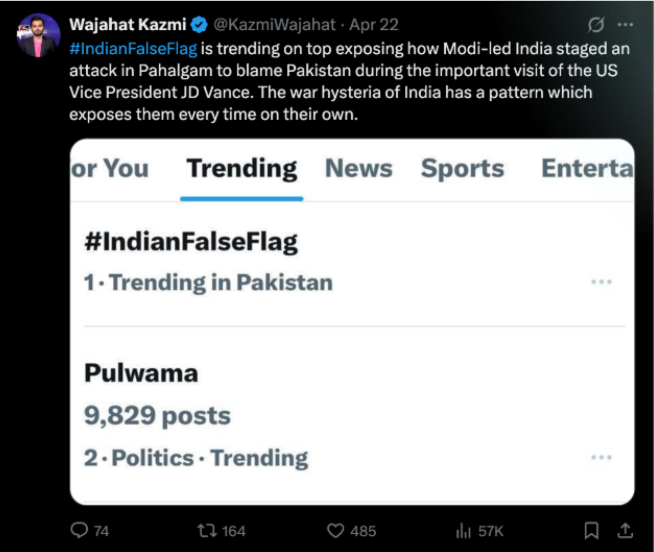
Similar to Cheema, Kazmi engaged in spreading multiple false narratives and unverified claims during Operation Sindoor.
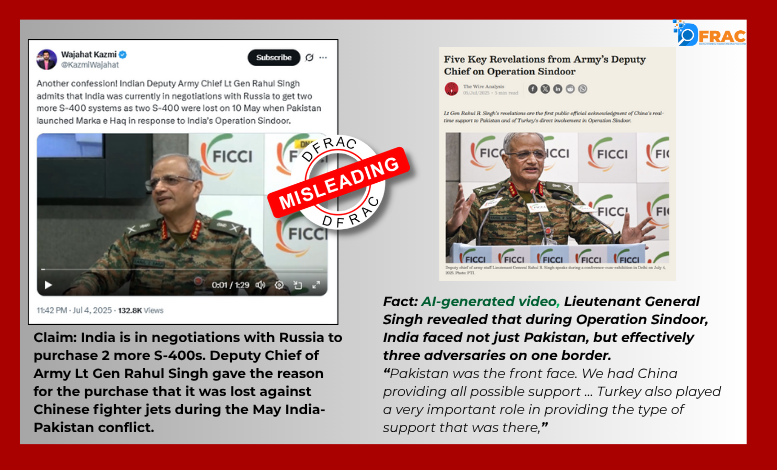
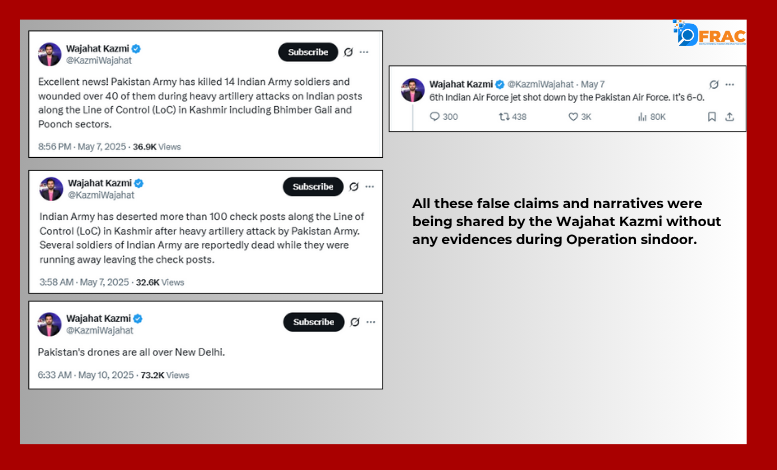
Conclusion
This investigation reveals that the two Pakistani journalists honored for their media contributions during Operation Sindoor engaged in systematic disinformation campaigns that prioritized propaganda over facts. Qamar Cheema’s association with individuals designated by the US Treasury as terrorist organization leaders, his promotion of conspiracy theories about false flag operations, and his spreading of fabricated military claims demonstrate a pattern of behavior fundamentally at odds with journalistic ethics.
Similarly, Wajahat Kazmi’s history of inflammatory rhetoric, manipulative social media practices, and serious allegations of professional misconduct raises significant questions about his suitability for national recognition. The fact that both individuals were spreading verifiable falsehoods during the conflict period for which they were honored suggests that the Pakistani government valued narrative control over truthful reporting.