
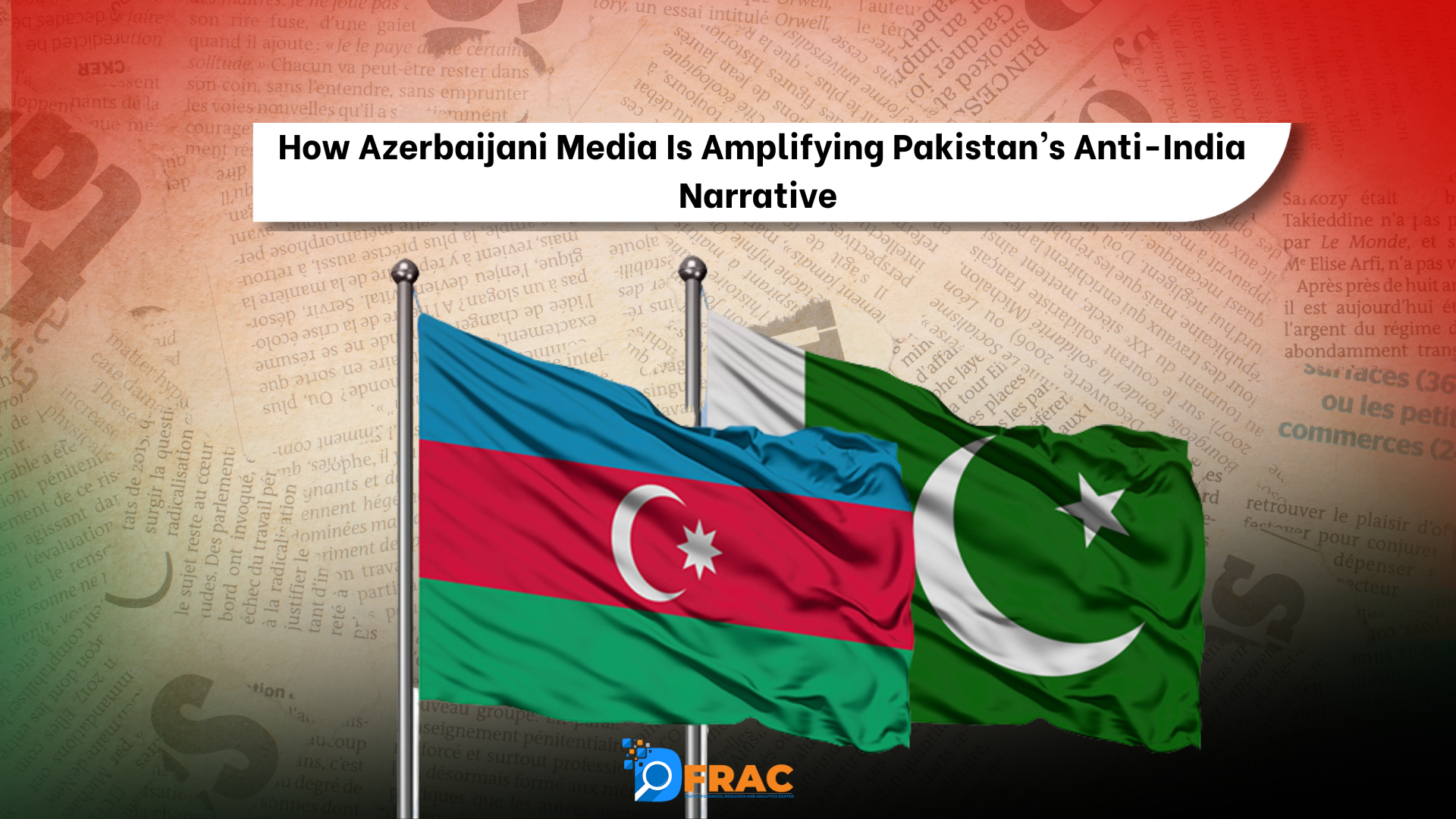
When Pakistani Prime Minister Shehbaz Sharif’s aircraft entered Azerbaijani airspace in June 2023, it received an escort from Azerbaijan’s Air Force fighter jets, a rare diplomatic honor typically reserved for the closest strategic partners. The gesture symbolized a relationship that, in recent years, has evolved beyond conventional diplomacy into coordinated political, defense, and informational alignment.
This report examines how that alignment manifests in the information domain, specifically through Azerbaijani media coverage of India–Pakistan relations and the Kashmir dispute. Based on a systematic review of Azerbaijani media content published between 2020 and early 2026, the analysis identifies consistent patterns of narrative amplification that closely mirror Pakistan’s official foreign policy positions, terminology, and advocacy calendar.
Rather than isolated editorial bias, the evidence suggests a sustained and structured alignment across outlets, platforms, and time periods.
Methodology
This analysis is based on a qualitative review of several dozen articles and broadcast segments published between 2020 and January 2026 by prominent Azerbaijani media outlets, including Azernews, Report.az, Caliber.Az, Oxu.az, Xezerxeber.az, and AnewZ TV. Content was examined for:
- Terminology used to describe Kashmir and India–Pakistan relations
- Selection and balance of sources
- Framing of agency, responsibility, and legitimacy
- Timing of publications relative to political or commemorative events
- Cross-platform reinforcement (print, television, think-tank events)
The report analyzes patterns of coverage and situates findings within Azerbaijan’s broader media and geopolitical environment.
Linguistic Indicators of Alignment: The Use of “IIOJK”
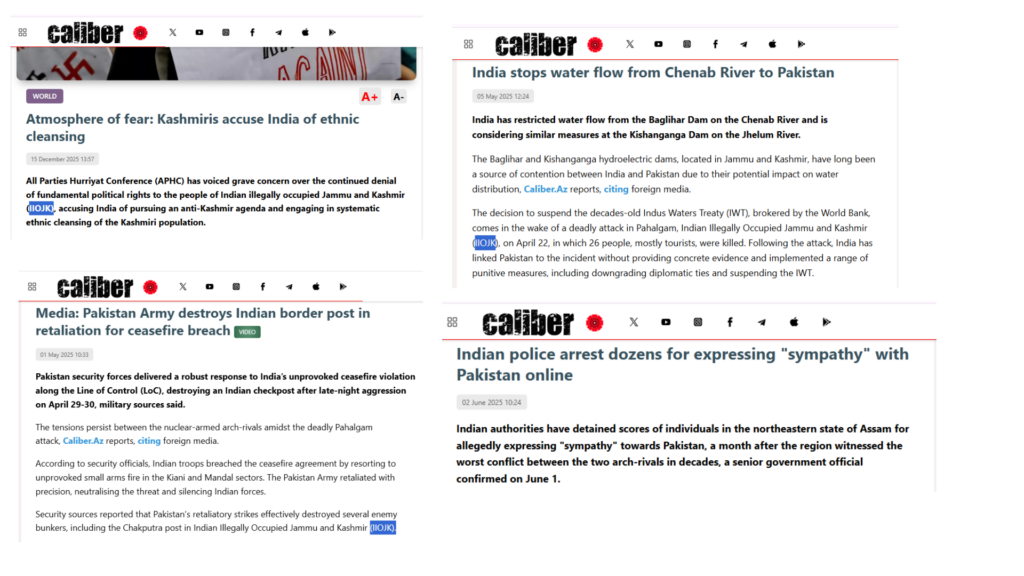
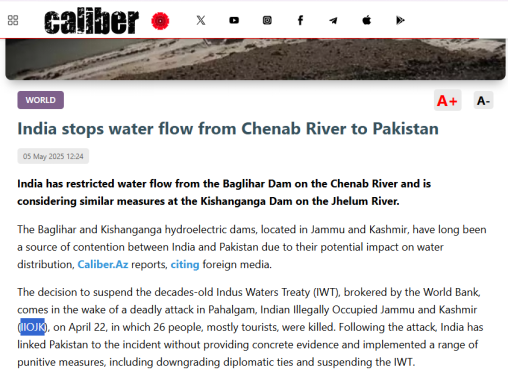
One of the clearest indicators of narrative alignment is the systematic adoption of the acronym “IIOJK” (Indian Illegally Occupied Jammu and Kashmir) across Azerbaijani media. This term is not neutral journalistic language; it is the official designation used by Pakistan.
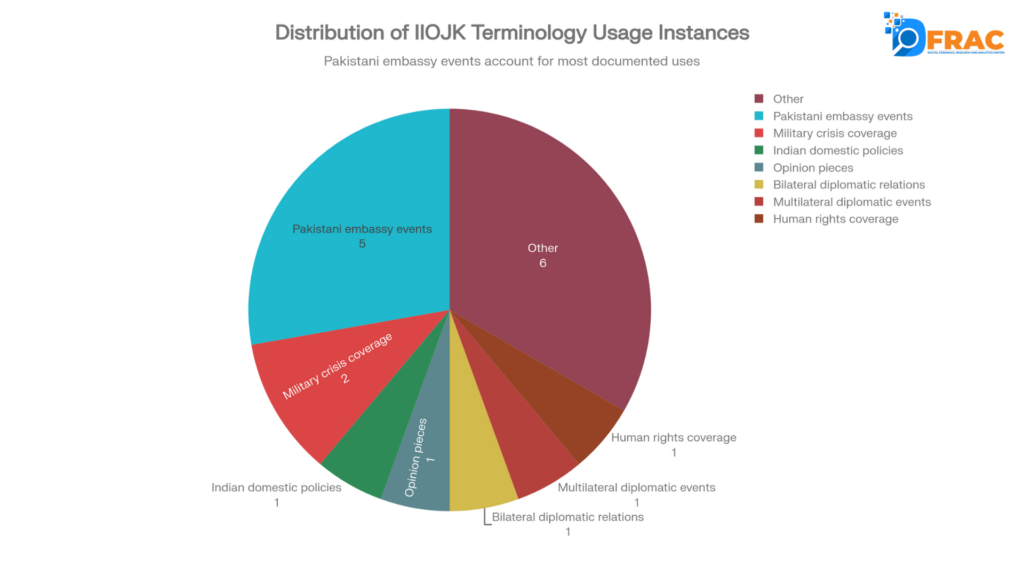
Between 2021 and 2026, the term appears in at least eighteen documented articles across five major Azerbaijani outlets. In every instance, it is used without qualification or attribution, presented as a factual geographic designation rather than a contested political claim.
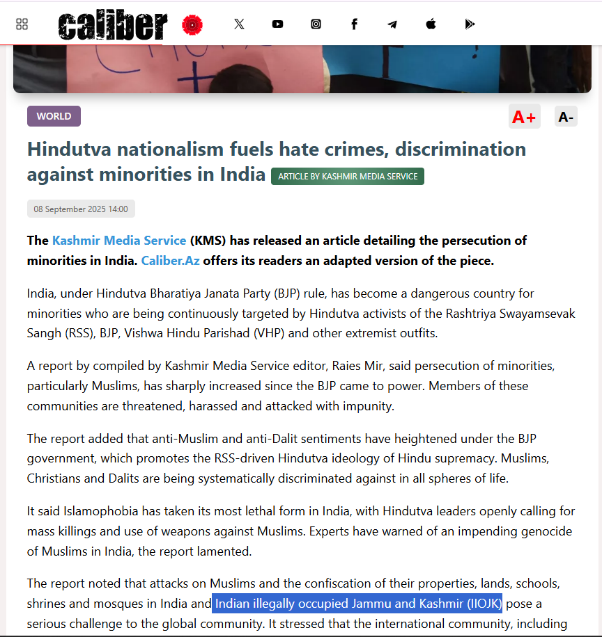
The earliest documented usage dates to July 2021, following a briefing by the Pakistani Embassy in Baku, during which a dossier on Kashmir was presented to Azerbaijani media representatives. Subsequent coverage increasingly reflected embassy language.
Editorial Calendar Synchronization with Pakistani Commemorations
A second pattern emerges through the timing of coverage. Azerbaijani media consistently publish Kashmir-related content aligned with Pakistan-specific commemorative dates, treating them as events of international relevance.
Examples include:
- October 27, 2023: Coverage of “Kashmir Black Day” events at Pakistan’s embassy in Baku (Azernews)
- July 13, 2022: Reporting on “Kashmir Martyrs’ Day” commemorations (Report.az)
- February 5, 2025: Coverage of “Kashmir Solidarity Day” (Oxu.az)
- August 5, 2025: An opinion piece titled “Kashmir’s longest siege: five years of silence, suffering, and struggle” (Azernews), published on the anniversary of India’s revocation of Article 370
These dates are not recognized by the United Nations or international humanitarian bodies; they are part of Pakistan’s annual advocacy calendar. Azerbaijani media coverage nevertheless treats them as globally significant, frequently centering embassy-hosted events and publishing opinion pieces that echo Pakistani official rhetoric.
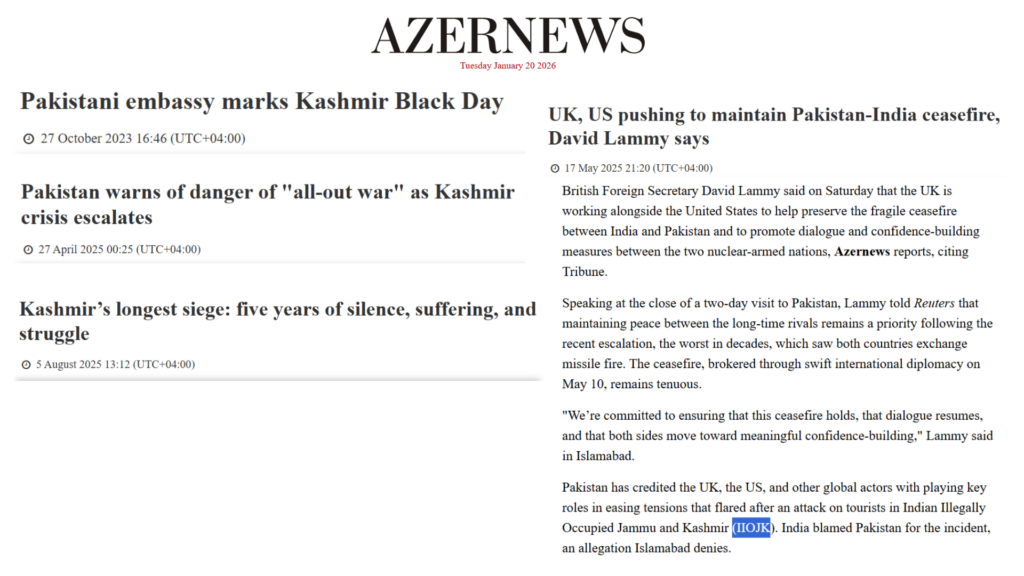
The August 5 opinion piece by Aydın exemplifies the coordinated timing. Published on the exact sixth anniversary of Article 370’s revocation, the article employs language that could have been lifted from Pakistani government statements: “brazen, disruptive,” “constitutional sleight of hand,” “strategic manoeuvre cloaked in nationalist populism.” It concludes with a direct call to action: “The world must not avert its gaze. The time has come to hold India accountable.”

These are not dates recognized by the United Nations or international humanitarian organizations. They are specifically Pakistani commemorations created to maintain international focus on the Kashmir issue. Yet Azerbaijani media cover them as though they were globally significant observances, providing detailed coverage of embassy events and publishing opinion pieces that align precisely with Pakistan’s annual advocacy campaigns.
The August 5 opinion piece by Aydın exemplifies the coordinated timing. Published on the exact sixth anniversary of Article 370’s revocation, the article employs language that could have been lifted from Pakistani government statements: “brazen, disruptive,” “constitutional sleight of hand,” “strategic manoeuvre cloaked in nationalist populism.” It concludes with a direct call to action: “The world must not avert its gaze. The time has come to hold India accountable.”
Source Asymmetry and Perspective Control
Analysis of sourcing across the examined articles reveals systematic privileging of Pakistani voices while Indian perspectives remain almost entirely absent.
Pakistani officials appear repeatedly and extensively. Ambassador Qasim Muhiuddin is quoted in multiple articles explaining Pakistan’s position. Senate Chairman Yusuf Raza Gilani provides commentary during his visits to Baku. Pakistani international affairs analysts Tarique Siyal and Khalid Taimur Akram offer expert analysis that consistently aligns with Pakistani government positions. Pakistani military sources are cited for information about border clashes.
Indian officials, by contrast, are almost never directly quoted. When Indian positions are mentioned at all, they appear in reported speech without direct quotation, often framed skeptically. One article notes that “India blamed Pakistan for the attack, an allegation Islamabad denies.” Another states that “while New Delhi presented the operation as a response to a terrorist attack, Islamabad views it as a direct act of aggression.”
There are no neutral third-country analysts offering independent assessments. The single Azerbaijani expert who appears, Vusal Guliyev from the Center for Analysis of International Relations, discusses only the economic implications of tensions, avoiding political analysis of the underlying disputes.
Framing the April–May 2025 Crisis
The pattern becomes particularly stark in coverage of the April-May 2025 military escalation between India and Pakistan, triggered by an attack in Pahalgam that killed twenty-six people on April 22.
The Pahalgam incident receives minimal attention in Azerbaijani coverage. Articles mention it briefly, providing the death toll but no details about the victims, no exploration of the attack’s impact on Indian public opinion, and no sympathy for those killed. Instead, coverage moves quickly to India’s military response, which receives extensive and visceral description.
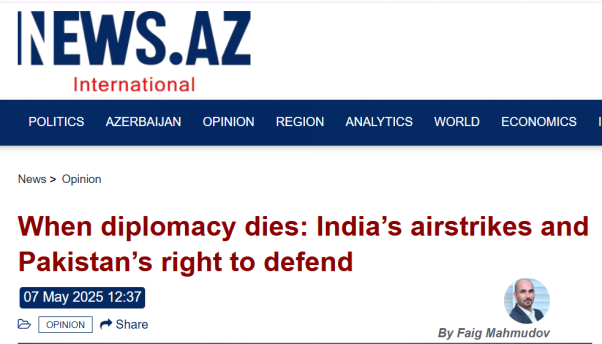
One article describes Indian strikes causing civilian casualties, damaged mosques, and injured children. Another focuses on damage to the Neelum Jhelum Hydroelectric Project and other civilian infrastructure, characterizing India’s actions as “applying its hybrid warfare concept” and deliberately targeting civilians. The sequencing makes India’s response appear disproportionate and primarily aimed at harming Pakistani civilians, while the initial attack that triggered the crisis fades into the background.
Pakistan’s military response receives entirely different treatment. Where India “launches aggression” and “carries out strikes,” Pakistan “defends its sovereignty” and “delivers a robust response.” One headline reads “Media: Pakistan Army destroys Indian border post in retaliation for ceasefire breach,” framing Pakistani military action as justified retaliation. Another article highlights that Pakistan “shot down at least five Indian fighter jets,” presenting this as evidence of military capability rather than escalation.
The language of agency differs fundamentally throughout the coverage. India acts provocatively; Pakistan reacts defensively. This distinction appears so consistently across multiple articles and authors that it cannot be attributed to coincidental phrasing by individual journalists.
Pakistani analyst Tarique Siyal is quoted extensively explaining that “following the Pahalgam incident, while official Islamabad proposed an international investigation, India escalated the military situation and paved the way for war.” The framing positions Pakistan as reasonable and transparent, seeking international investigation, while India appears to oppose neutrality and prefers confrontation.
Multi-Platform Reinforcement
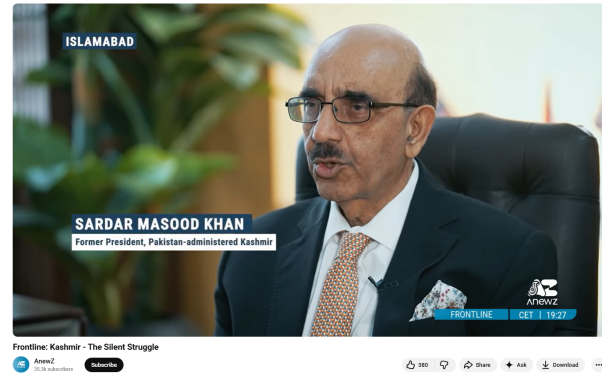
AnewZ TV, an Azerbaijani broadcaster, produced a full documentary titled “Frontline: Kashmir – The Silent Struggle,” involving travel to Kashmir, on-location filming, and interviews with Pakistani analysts and the former president of Azad Jammu and Kashmir, Sardar Masood Khan. The network described the documentary as offering “a comprehensive and nuanced exploration of the Kashmir conflict” and a “human-centred perspective on the struggles of the people caught in the crossfire.”
Yet the guest list reveals exclusively Pakistani voices. There are no Indian officials interviewed, and no independent international scholars offering comparative analysis.
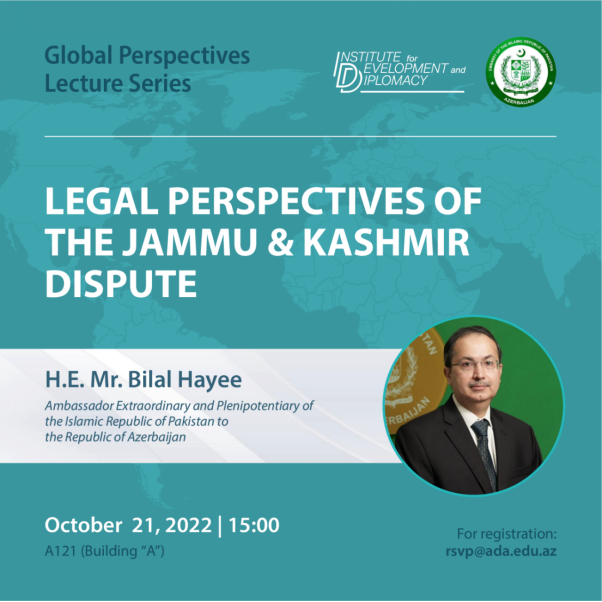
On October 21, 2022, an Azerbaijani research organization and think tank hosted Pakistani Ambassador Bilal Hayee to “discuss the legal aspects of the Jammu and Kashmir dispute from Pakistan’s perspective.” By providing an academic platform for Pakistan’s ambassador to present “legal aspects” of the dispute, the event lends scholarly legitimacy to governmental positions. There is no indication that Indian legal scholars were invited to present India’s interpretation of Kashmir’s legal status, or that neutral international law experts offered comparative analysis acknowledging that legal scholars disagree significantly about Kashmir’s status under international law.
Brotherhood Framing and Emotional Resonance
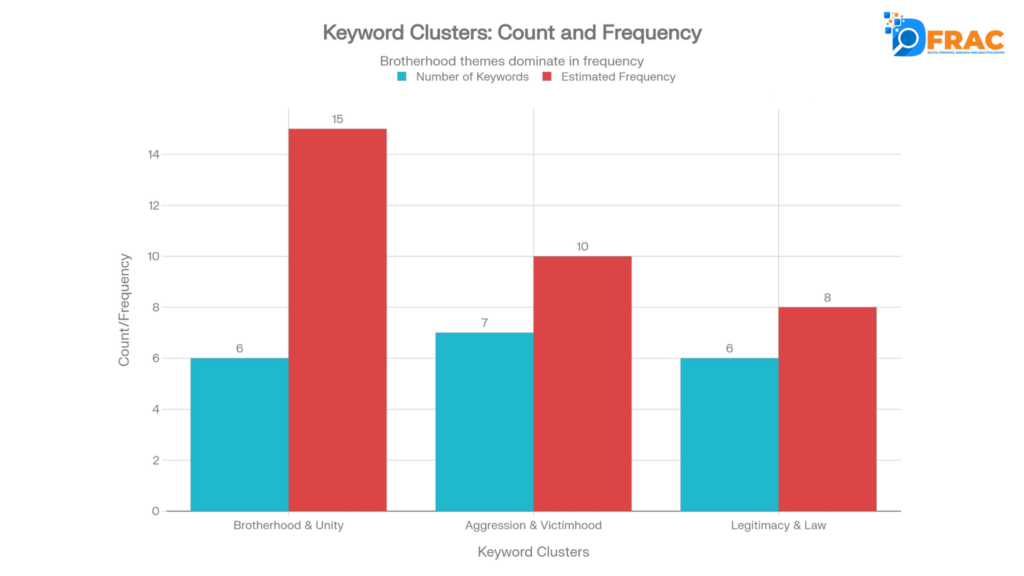
A recurring theme in Azerbaijani coverage is the language of kinship and shared struggle. Headlines reference “brothers beyond borders” and a “triangle of brotherhood” linking Pakistan, Azerbaijan, and Turkey. Pakistani officials explicitly draw parallels between Kashmir and Nagorno-Karabakh, framing both as experiences of occupation and resistance.
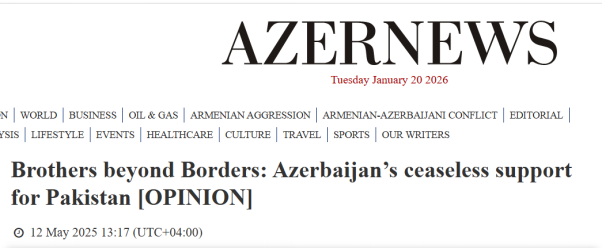
While emotionally resonant for Azerbaijani audiences, these parallels obscure significant historical and legal differences between the two disputes and reinforce identification with Pakistan’s position through affective rather than analytical means.
Strategic Partnership in Practice
To understand why this narrative alignment exists requires examining the broader Pakistan-Azerbaijan strategic relationship, which extends far beyond media coverage into defense cooperation, diplomatic coordination, and trilateral frameworks involving Turkey.
Pakistan recognized Azerbaijan’s independence in 1991 and crucially has refused to recognize Armenia as an independent state, citing Armenian occupation of Azerbaijani territories during the Nagorno-Karabakh conflict. This principled stance earned Pakistan deep gratitude in Baku. During Azerbaijan’s 2020 military operation to reclaim Nagorno-Karabakh, Pakistan provided vocal political support.
The defense partnership includes military training programs, with Pakistani instructors helping train Azerbaijani officers and Azerbaijani cadets studying at Pakistani military academies. Joint exercises like “Three Brothers – 2021” involving Pakistan, Azerbaijan, and Turkey demonstrate the operational dimension of the alliance.
When Prime Minister Sharif visited Baku in June 2023, he tweeted his gratitude for “Azerbaijan’s consistent support to Pakistan on IIOJK” and assured President Ilham Aliyev of “our steadfast support on Karabakh.” The explicit linkage, support for Kashmir in exchange for support on Nagorno-Karabakh, makes clear that media coverage serves this mutual validation framework.
For Pakistan, Azerbaijani media coverage provides what appears to be third-party validation of its Kashmir position. Articles can be cited as evidence that international media recognize India’s presence in Kashmir as an illegal occupation. The fact that this coverage originates from a strategically aligned state with coordinated messaging becomes obscured when articles circulate internationally.
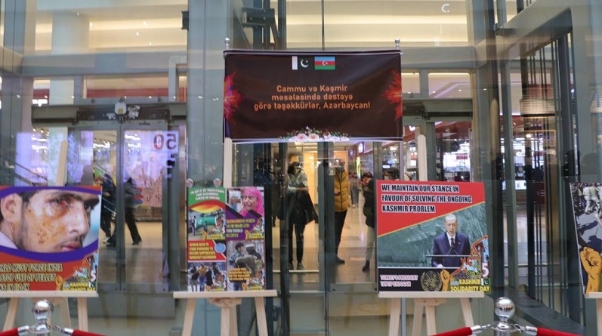
For Azerbaijan, supporting Pakistan’s position on Kashmir strengthens the partnership with a significant Muslim-majority nation, reinforces the trilateral relationship with Turkey, and establishes a precedent for international solidarity on territorial disputes that Azerbaijan can invoke for its own regional concerns.
Azerbaijan promoting Khalistan
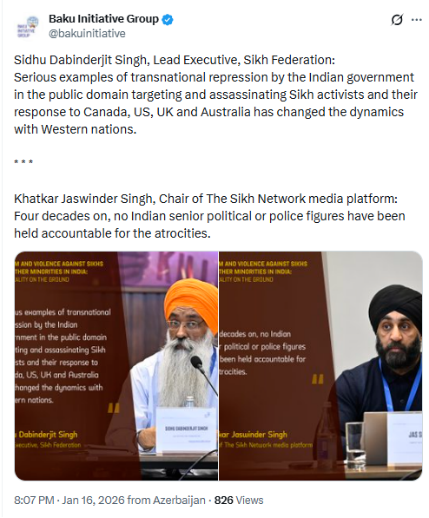
On January 16, 2026, the Baku Initiative Group organized an international conference in Baku, Azerbaijan titled:
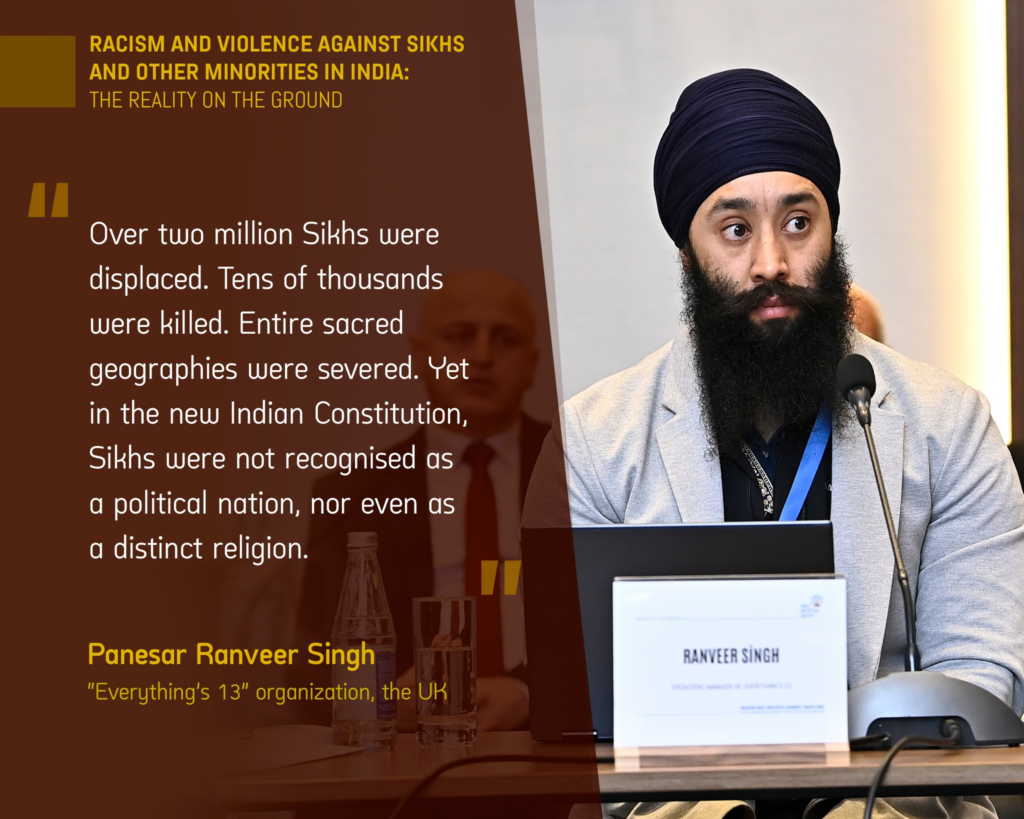
“Racism and Violence Against Sikhs and Other National Minorities in India: The Reality on the Ground”.
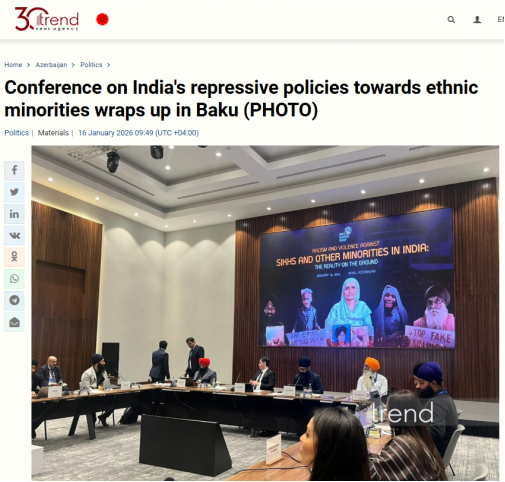
This was described as the first time such a conference has been held in Azerbaijan, focused on this topic.
- Officials, including Ramesh Singh Arora (Punjab’s Minister of Human Rights and Minorities),
- Sikh community leaders from Canada, the UK, and the US,
- Academics and activists on ethnic minority issues.
- The event focused on historical and contemporary grievances of Sikh communities, including issues that are central to parts of the Khalistan movement’s narrative (e.g., historical massacres, police actions, and ongoing arrests of Sikh activists)
- The post-conference statement, issued jointly by the Baku Initiative Group and the Sikh Federation International, includes language that aligns with parts of the broader Khalistan discourse. In particular, it frames ongoing advocacy for Sikh rights as being unjustly labeled “extremism” by Indian authorities and emphasizes the struggle for recognition of past atrocities and continued activism.
It also recounts historical events such as Operation Blue Star (1984) and frames it as a catalyst for the Khalistan movement and associated struggle for autonomy/sovereignty.
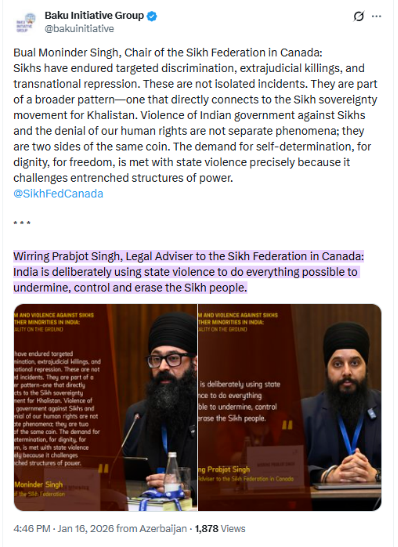
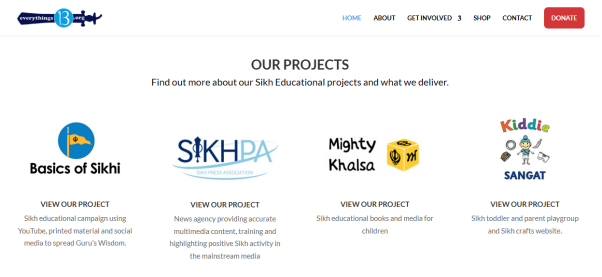
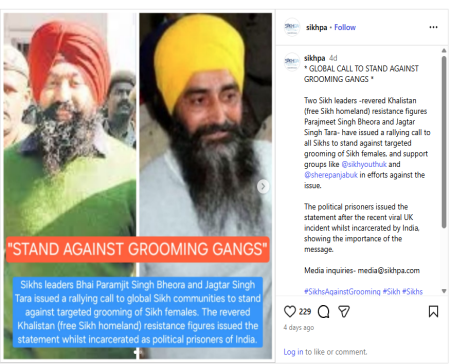
One of the participating entities was Everything 13, which represents multiple Sikh-based organizations. Among these, a particularly notable organization was the Sikh Press Association.
Individual Amplifiers
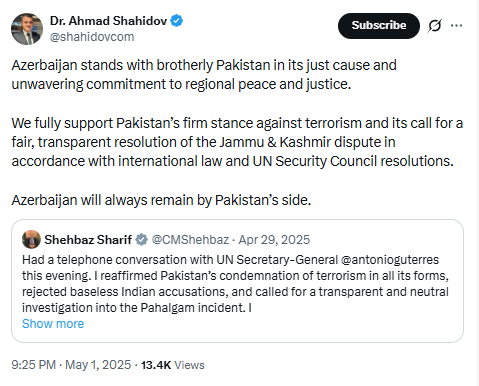
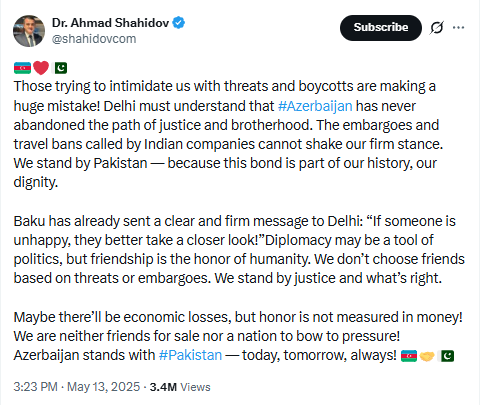
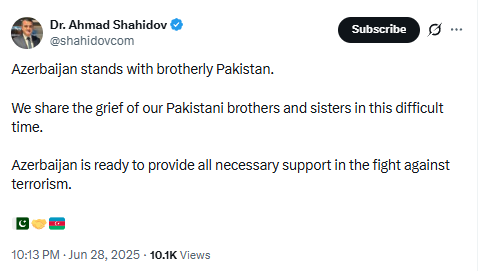
On Twitter, there has been a large amount of support during the May crisis for Pakistan. One of them is Ahmad Shahidov. He, identified as the Chairman of the Azerbaijan Institute for Democracy and Human Rights and a journalist, publicly stated that Azerbaijan “firmly stands with Pakistan” in the context of India–Pakistan tensions and social media calls (from some Indian tourism companies and commentators) to boycott Azerbaijan and Turkey for backing Pakistan. He said Azerbaijan would not abandon this stance and that its friendship and values transcend economic pressure.

Conclusion
The patterns documented in this report indicate that information has become a strategic asset within the Pakistan–Azerbaijan partnership. Azerbaijani media coverage does not merely reflect sympathy toward Pakistan’s position; it consistently adopts Pakistani terminology, prioritizes Pakistani sources, synchronizes with Pakistan’s advocacy calendar, and frames events in ways that reinforce Islamabad’s official narratives.
For Pakistan, such coverage provides third-party validation of its Kashmir position. For Azerbaijan, it reinforces strategic partnerships and establishes precedents of international solidarity that can be invoked in its own regional disputes.
The result is a sustained ecosystem of narrative amplification that operates alongside diplomatic and military cooperation, illustrating how modern alliances increasingly extend into the informational domain.