
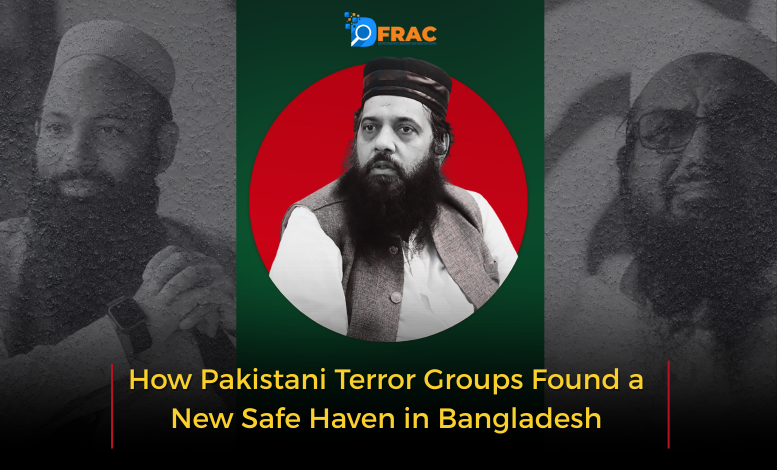
In the border districts of Bangladesh, Pakistani clerics held secretive meetings with local extremists and banned militant operatives. And connecting these two distant points was a network involving Lashkar-e-Taiba commanders, Bangladeshi Salafi organizations, and a Pakistani preacher with deep ties to the masterminds of the Mumbai attacks.
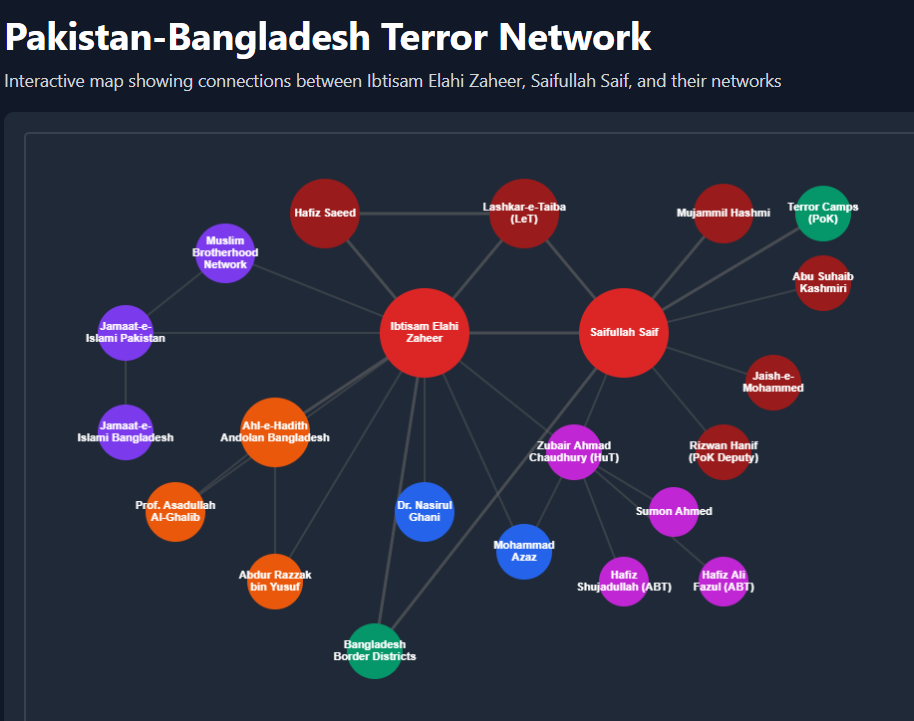
This investigation reveals how Pakistan’s terror organization (Lashkar- e -taiba) is exploiting Bangladesh’s political upheaval to construct what it calls an “eastern front” against India. At the center of this web sits Lashkar-e-Taiba operational commander Saifullah Saif, who publicly declared in October 2025 that LeT operatives are “active in Bangladesh and ready to respond to India.” Working alongside him is Ibtisam Elahi Zaheer, a Pakistani cleric and associate of LeT founder Hafiz Saeed, who has made multiple trips to Bangladesh to forge connections with local extremist networks. Together, they represent a strategy to open a new theater of their operations from the east.
Key Points:
- LeT, JeM, and PoK Unite for the Bangladesh Strategy
1.1 The Resurrection of Terror Camps
1.2 Saifullah Saif and POK Deputy Chief Meeting - Ibtisam Elahi Zaheer: The Man With the Legacy of Terrorism
2.1 Family Background and LeT Connection
2.2 Ideology
2.3 The October-November Tour: Mapping the Network
2.4 People Ibtisam Elahi Zaheer Engaged in Bangladesh
2.5 Reception for Ibtisam Elahi Zaheer by Bangladesh Jamiat Ahl-e-Hadith
2.6 The Digital Amplification - Pakistan Accounts Defending Zaheer
- The Return to Pakistan: Connecting to the Muslim Brotherhood Network
- Bangladesh After Hasina: A Window of Opportunity
- Comparison with Past LeT Footprints in Bangladesh
- Conclusion
LeT, JeM, and PoK Unite for the Bangladesh Strategy
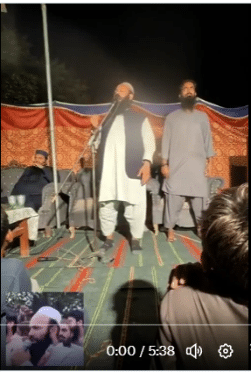
On October 30, 2025, at the Defense Companions and Wahlibat Conference in Basti Ali Di Goth, Khairpur Tamewali, Pakistan, Lashkar-e-Taiba commander Saifullah Saif stood before a charged crowd and made a declaration, “Our people are active in East Pakistan (Bangladesh) and are ready to respond to India,”. The speech grew more provocative as Saif continued. “That Bengal which Indira Gandhi said had drowned the two-nation theory in the Bay of Bengal – today, by Allah’s grace, lions like Allama Ibtisam Elahi Zaheer are roaring inside Bangladesh,” he declared, directly naming Zaheer and celebrating his presence in Bangladesh as a victory for the jihadist cause.
The Resurrection of Terror Camps
After India’s Operation Sindoor (May 2025) destroyed nine terror camps across Pakistan, Lashkar-e-Taiba chose to resurrect two of its oldest and most notorious facilities. The Abdullah Bin Masood Terror Camp and Chella Bandi Training Camp, both shuttered since India’s 2019 Balakot airstrikes, came back to life in June 2025.
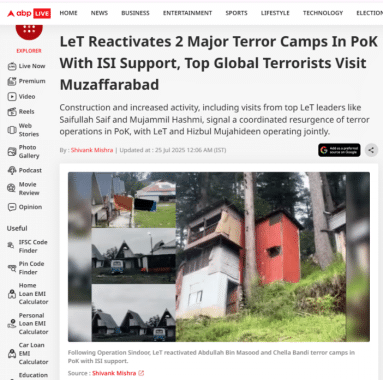
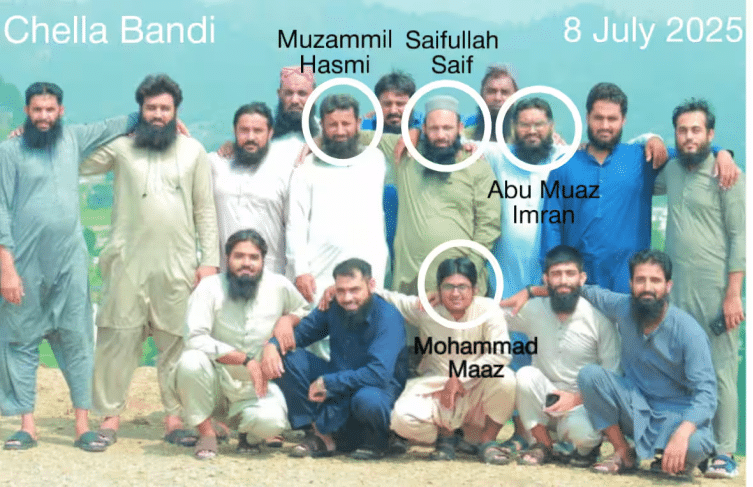
On July 7, 2025, a convoy of senior terror commanders made their way to the Abdullah Bin Masood Camp. Among them was Saifullah Saif, the head of LeT’s Bahawalpur Markaz and a key figure in the organization’s operational command. He was joined by Mujammil Hashmi, a US-designated global terrorist who leads LeT’s operations in Karachi, and Abu Suhaib Kashmiri, a veteran Hizbul Mujahideen commander who has been coordinating Kashmir operations since 2002.
The conversations at that mountain camp in July were about opening new fronts, exploring new routes, and finding new vulnerabilities in India’s defenses.
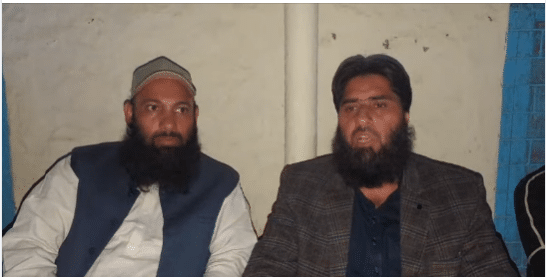
Operational ties between Lashkar-e-Taiba and Jaish-e-Mohammed, with a meeting between Saifullah Saif and Pakistan-occupied Kashmir deputy Rizwan Hanif confirming joint coordination, were highlighted. Most alarmingly, Saif has been working to activate LeT infiltration routes from Bangladesh into Northeast India, opening a potential new front that could stretch India’s security apparatus in dangerous new directions.
Saifullah Saif and POK Deputy Chief Meeting
Operational ties between Lashkar-e-Taiba and Jaish-e-Mohammed, with a meeting between Saifullah Saif and Pakistan-occupied Kashmir deputy Rizwan Hanif confirming joint coordination, were highlighted. Most alarmingly, Saif has been working to activate LeT infiltration routes from Bangladesh into Northeast India, opening a potential new front that could stretch India’s security apparatus in dangerous new directions.
Ibtisam Elahi Zaheer: The Man With the Legacy of Terrorism
Family Background and LeT Connection
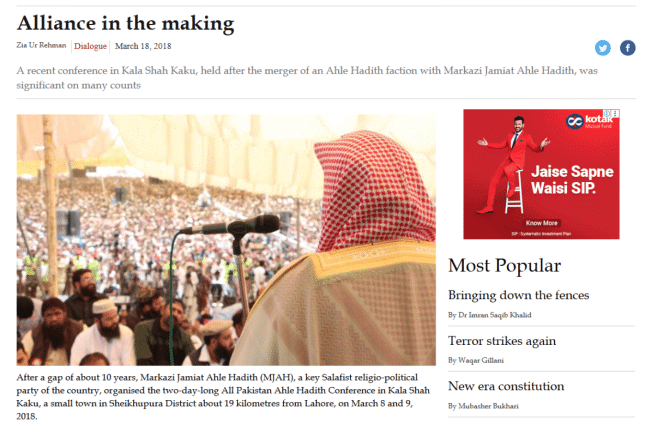
Ibtisam Elahi Zaheer’s father, Allama Ehsan Elahi Zaheer, was a founding intellectual influence on Markaz-ud-Dawa-wal-Irshad (MDI), the parent organization of Lashkar-e-Taiba. Though he died in a bomb blast in March 1987, before LeT was formally established, Ehsan Elahi Zaheer’s ideology and networks laid crucial groundwork for the jihadist infrastructure that would follow. Allama Ehsan Elahi Zaheer had traveled extensively through Bangladesh and India in the 1970s and 1980s, building connections within the Ahl-e-Hadith community.
Idealogy
The biggest contention between MJAH (Ibtisam’s group) and JuD (Hafiz Saeed’s group) lies in their doctrinal outlook toward jihad. MJAH considers jihad to be “fardh kifaya” (a non-compulsory collective obligation), while JuD considers it “fardh-e-ain” (a compulsory individual obligation). Despite these theological differences, both groups share the goal of promoting Salafi ideology and opposing what they view as Western and Indian influence in the region.
Ibtisam Elahi Zaheer
Ibtisam inherited more than just his father’s name. As the General Secretary of Markazi Jamiat Ahl-e-Hadith and Chairman of the Quran and Sunnah Movement Pakistan, he commands strong influence within Pakistan’s Salafi circles. His educational background – a degree in engineering and a master’s in English literature – allows him to deliver articulate speeches in Urdu, English, and Arabic, making him effective with diverse audiences. His Facebook page has over 152,000 followers, and his YouTube lectures attract thousands of views.
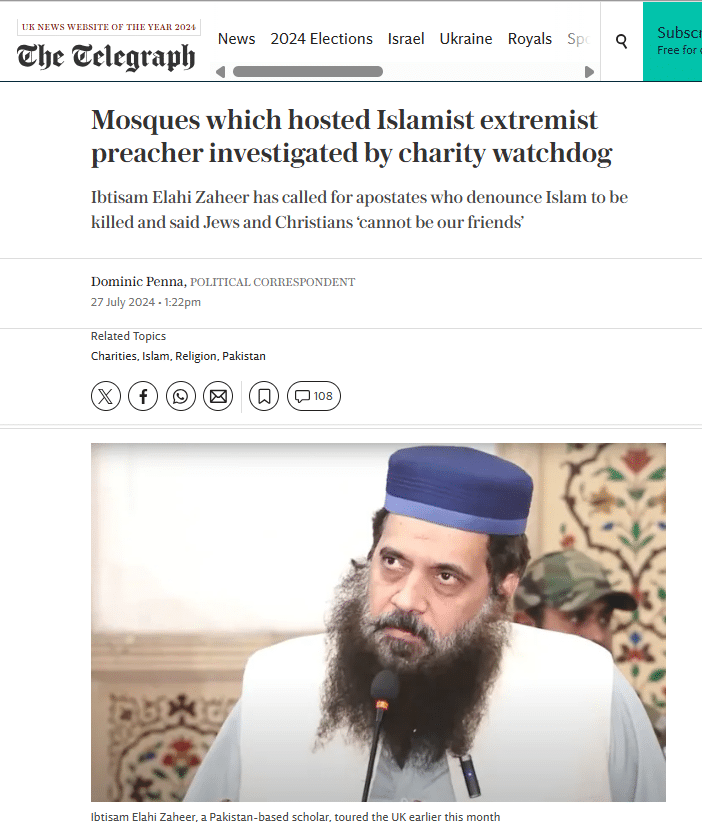
He has long been associated with Hafiz Saeed. His travels to the United Kingdom in 2024 raised such concerns that the British government’s Charity Commission launched investigations into four mosques that had hosted him. His previous statements calling for apostates who denounce Islam to be killed, defending the use of sexual slaves by Muslims, and saying that Jews and Christians “cannot be our friends” had prompted calls from the UK government’s extremism adviser for him to be banned from entering Britain for the sake of public safety.
The October-November Tour: Mapping the Network
This was not Zaheer’s first visit to Bangladesh in 2025. He had already made a trip in February, testing the waters in the changed political environment following Sheikh Hasina’s ouster. The visit (Oct 25–early Nov 2025) involved over 12 days of events in Dhaka, border areas, and northern districts, under the guise of “religious tours”.
Zaheer’s influence centers on Bangladesh’s Salafi/Ahle Hadith ecosystem, which shares ideological ties with Pakistan’s Ahl-e-Hadith (a Salafi strain with LeT overlaps).
His primary hosts were members of Ahle Hadith Andolan Bangladesh (AHAB), a Salafi movement founded in 1994 that has long maintained ideological and financial ties with Pakistani groups.
Individuals who attended/hosted Zaheer’s visit in Bangladesh
| Entity/Person | Role/Affiliation | Connection to Zaheer/Saifullah |
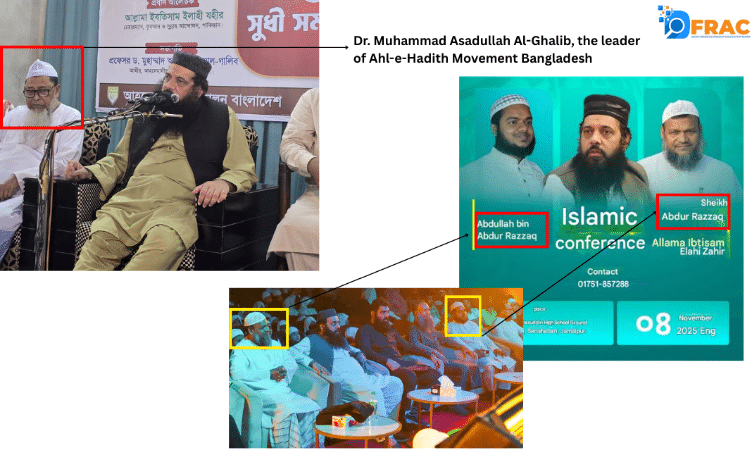
| Professor Dr. Muhammad Asadullah Al-Ghalib | Ameer (Leader), Ahl-e-Hadith Andolan Bangladesh (AHAB); Professor at Rajshahi University | Chaired Zaheer’s November 6 Rajshahi conference at Markazi Jame Masjid, where Al-Ghalib declared Bangladesh “not independent” and a “loyal subordinate of India.” Influenced by Zaheer’s Salafi ideology, AHAB promotes cross-border unity against “Indian secularism.” |
| Abdur Razzak bin Yusuf | Prominent AHAB cleric; Salafi preacher | Chaired an early-November program where Zaheer urged Bangladesh-Pakistan reunification as essential for “Muslim unity.” Yusuf’s UK tours (2023) promoted similar hardline Salafism; his networks overlap with Pakistani Salafi groups via shared media (e.g., Peace TV). |
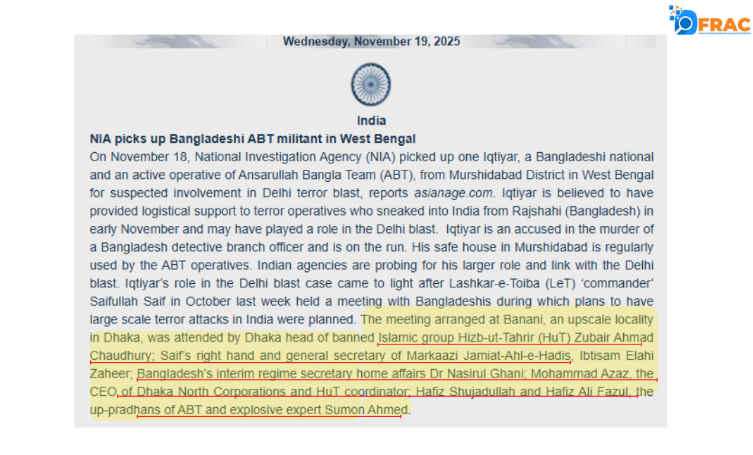
| Zubair Ahmad Chaudhury | Dhaka head, Hizb-ut-Tahrir (HuT; banned Islamist group) | Attended October-end Dhaka meeting with Zaheer (Saifullah joined virtually); coordinates HuT’s Salafi-jihadist outreach. |
| Mohammad Azaz | CEO, Dhaka North City Corporation; HuT coordinator | Attended the same Dhaka meeting; uses municipal role for extremist networking. |
| Dr. Nasirul Ghani | Secretary, Home Affairs, Yunus interim government | Attended the Dhaka meeting; provides tacit state cover for Zaheer’s visits. |
| Ahl-e-Hadith Andolan Bangladesh (AHAB) | NGO-like Salafi movement; operates madrasas and mosques | Primary host; influenced by Salafis for decades. Zaheer’s tour promoted AHAB’s “revivalist coordination” with Markazi Jamiat Ahl-e-Hadith. No direct student leaders identified, but AHAB madrasas target youth radicalization. |
{ He was reportedly welcomed by Abdur Rahim bin Abdur Razzaq, a member of Al Jamia As-Salafia, which is linked to Bangladesh’s Ahl-e-Hadith movement. He is the younger son of Abdur Razzak bin Yusuf. Abdur Razzak’s elder son, Abdullah bin Abdur Razzak, was also present on the journey. }
Provocative claims in speeches:
- In Chapainawabganj, a district that sits directly across from India’s Malda district in West Bengal, he urged his audience to “be ready to sacrifice your children for Islam” and to “confront secular and liberal forces.” He spoke repeatedly about Muslim unity stretching “from Pakistan to Bangladesh,” calling for the erasure of the 1971 independence that created Bangladesh as a separate nation.
- On Kashmir, he made provocative remarks: he said that Kashmiris are being oppressed, and implied that Kashmir should or will be part of Pakistan.
- He called for Muslim unity across Pakistan and Bangladesh (“from Pakistan to Bangladesh, all Muslims will unite against the seculars”).
People Ibtisam Elahi Zaheer Engaged in Bangladesh
Zaheer’s itinerary (Oct 25–Nov 7) included 10+ events; engagements focused on radical clerics and LeT proxies. Key meets:
· Clerics/Organizers: Asadullah Al-Ghalib (Nov 6 chair); Abdur Razzak bin Yusuf (early Nov program); local AHAB imams in Jamalpur/Rajshahi conferences.
· Militant Operatives: Zubair Ahmad Chaudhury (HuT), Hafiz Shujadullah & Hafiz Ali Fazul (ABT), Sumon Ahmed (explosives expert), all at Oct-end Banani meeting with Saifullah Saif virtual.
· Govt/Interim Regime Figures: Dr. Nasirul Ghani (Home Affairs Sec.); Mohammad Azaz (Dhaka North CEO, HuT coordinator), present at Banani meet, signaling tacit approval.
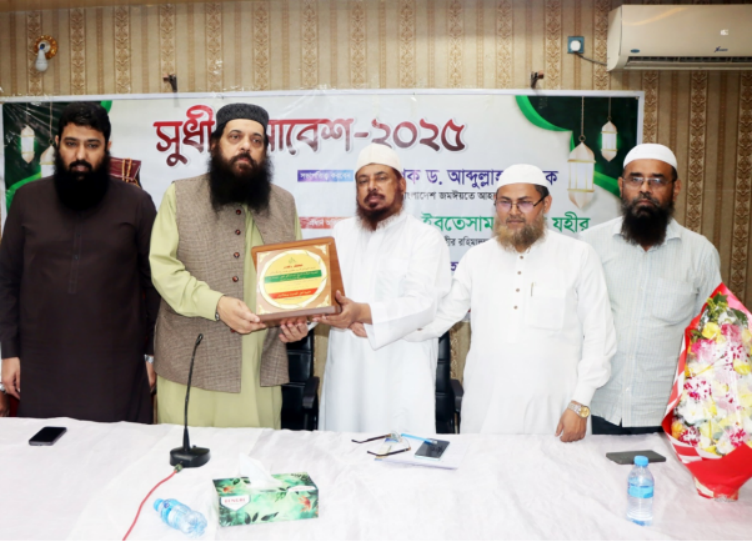
Reception for Allama Ibtisam Elahi Zaheer by Bangladesh Jamiat Ahl-e-Hadith
Bangladesh Jamiat Ahl-e-Hadith (a separate Salafi organisation from Asadullah Al-Ghalib’s Ahl-e-Hadith Andolan Bangladesh – AHAB) organised a formal reception and intellectual gathering in honour of Ibtisam Elahi Zaheer.
The organization expressed “strong commitment to further increase contact and cooperation between Pakistan Jamiat Ahl-e-Hadith and Bangladesh Jamiat Ahl-e-Hadith.” They called on all members to “remain united under the leadership of Jamiat Ahl-e-Hadith”. Despite being rival factions that have historically competed for influence, both AHAB (led by Al-Ghalib) and Bangladesh Jamiat Ahl-e-Hadith (led by Faruque) were united in providing Zaheer legitimacy, access, and institutional support.
The Digital Amplification
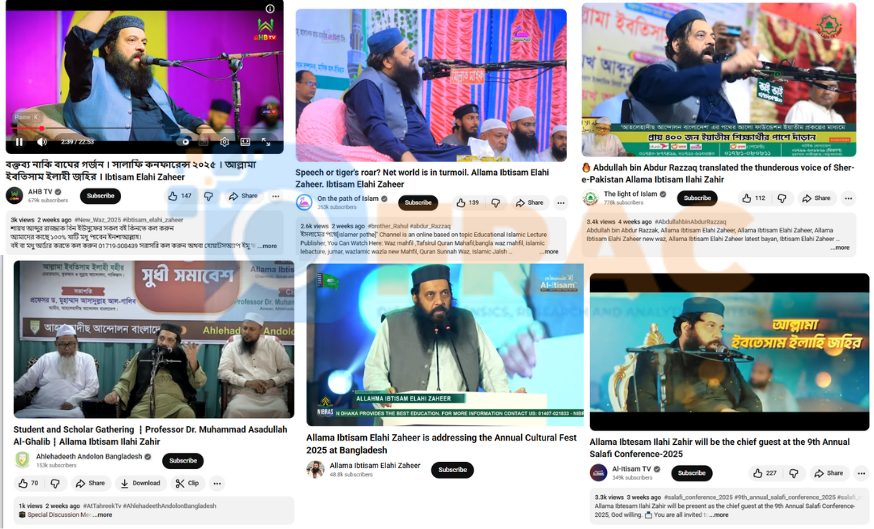
Key platforms involved in disseminating his content included:
- Al-Itisam TV, a prominent Salafi media outlet
- The official AHAB Facebook page
- Various pages related to the Salafi movement in Bangladesh
- YouTube channels associated with Ahl-e-Hadith organizations
Pakistan Accounts Defending Zaheer
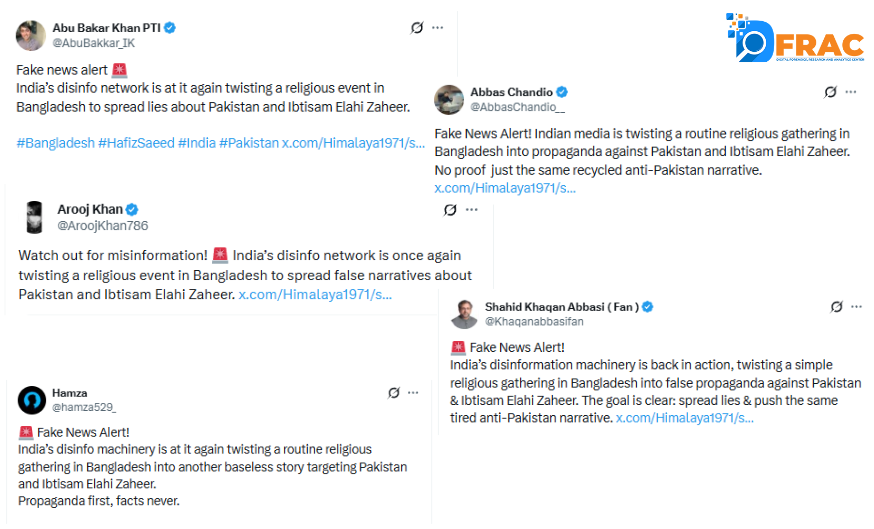
A coordinated disinformation response emerged from Pakistani social media accounts. Multiple users posted identical content claiming “India’s disinfo network is at it again, twisting a religious event in Bangladesh to spread lies about Pakistan and Ibtisam Elahi Zaheer.”
The Return to Pakistan: Connecting to the Muslim Brotherhood Network
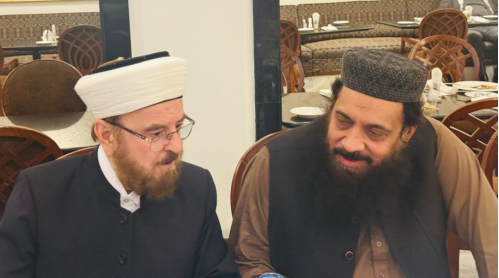
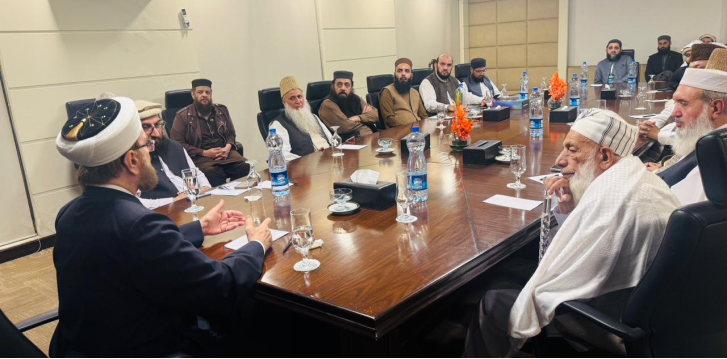
Shortly after his return, Zaheer participated in a high-level event at a local hotel in Lahore hosted by Jamaat-e-Islami. Among the key attendees were:
- Dr. Ali Mohiuddin Qara Daghi from Qatar – An internationally prominent Islamic scholar closely associated with Muslim Brotherhood networks and the International Union of Muslim Scholars.
- Professor Mujeeb-ur-Rehman, Deputy Amir of Jamaat-e-Islami Bangladesh
- Sheikh-ul-Hadith Maulana Abdul Malik – A disputed religious scholar whose participation lent traditional clerical legitimacy to the gathering.
- Maulana Abdul Khabir Azad – A prominent figure in Pakistan’s Extremist circles known for his fiery anti-India rhetoric.
Bangladesh After Hasina: A Window of Opportunity
In a speech delivered in Gujranwala, Pakistan, on May 28, 2025, Mujammil Hashmi – also known as Muzammil Hazmi – made a stunning and provocative claim. The US-designated terrorist leader and LeT’s Karachi chief boasted that Lashkar-e-Taiba had played a pivotal role in orchestrating the student-led uprising that toppled Hasina’s government.
Bangladesh’s traditionally strict scrutiny of Pakistani visitors, especially those with known extremist connections, evaporated almost overnight. The visa-on-arrival facility granted to Ibtisam Elahi Zaheer, a man banned from speaking in multiple British mosques due to extremist views, is seen.
The warming of Pakistan-Bangladesh ties post-Hasina created diplomatic space for increased exchanges, including religious delegations that could serve as cover for more sinister coordination.
Comparison with Past LeT Footprints in Bangladesh
LeT has used Bangladesh since the 1990s as a transit hub for smuggling arms and fighters through northern districts like Chapainawabganj and Joypurhat – the same areas Zaheer toured. In 2005, bomb blasts in Joypurhat exposed links between local groups like JMB and ABT with Pakistani handlers. In 2010, authorities dismantled an LeT cell smuggling explosives. As recently as May 2025, Indian police arrested two Pakistan-trained terrorists near the Bangladesh border.
What distinguishes the current phase is the brazenness. Past LeT operations relied on covert cells operating under threat of detection. Zaheer’s October-November 2025 tour happened in broad daylight – government officials attended meetings with Pakistani operatives, border districts hosted inflammatory speeches without interference, and major Salafi organizations competed to honor him. Where previous efforts focused on logistics, the current approach builds ideological infrastructure for long-term radicalization and recruitment.
| Aspect | Past LeT Footprints (1990s–2020) | Current Zaheer/Saifullah Activities (2025) |
| Entry/Visa | Freestyle via Dhaka; used HuT/ABT for cover (e.g., 2005 Joypurhat blasts). | Visa on arrival Oct 25; second trip in 6 months, no scrutiny under Yunus. |
| Focus Areas | Northern borders (Chapai-Nawabganj) for arms transit to Kashmir; Rohingya camps for ISIS links. | Same districts (Rajshahi, Joypurhat); youth training for “eastern front” vs. India. |
| Tactics | NGO fronts (e.g., fake madrasas); alliances with JMB/ABT for blasts (e.g., 2005 attacks). | Salafi conferences as cover; virtual-physical meets with ABT/HuT for explosives expertise. |
Conclusion
The reactivation of terror camps in Pakistan-occupied Kashmir, the renewed energy of terror networks following the Operation Sindoor, the political changes in Bangladesh that have created a more permissive environment, and the active work of figures like Ibtisam Elahi Zaheer to build bridges between Pakistani terror groups and Bangladeshi extremist networks all point toward a coordinated strategy.
At the tactical level, LeT is establishing infiltration routes from Bangladesh into Northeast India. At the operational level, multiple terror organizations – LeT, Jaish-e-Mohammed, and Hizbul Mujahideen – are coordinating under ISI guidance. At the strategic level, mainstream Islamist political parties in both Pakistan and Bangladesh are providing legitimacy and institutional support.
The shift in Bangladesh’s political environment following Sheikh Hasina’s ouster has been the critical enabler. Where her government maintained strict scrutiny of Pakistani visitors on border security, the current interim administration has shown troubling permissiveness.