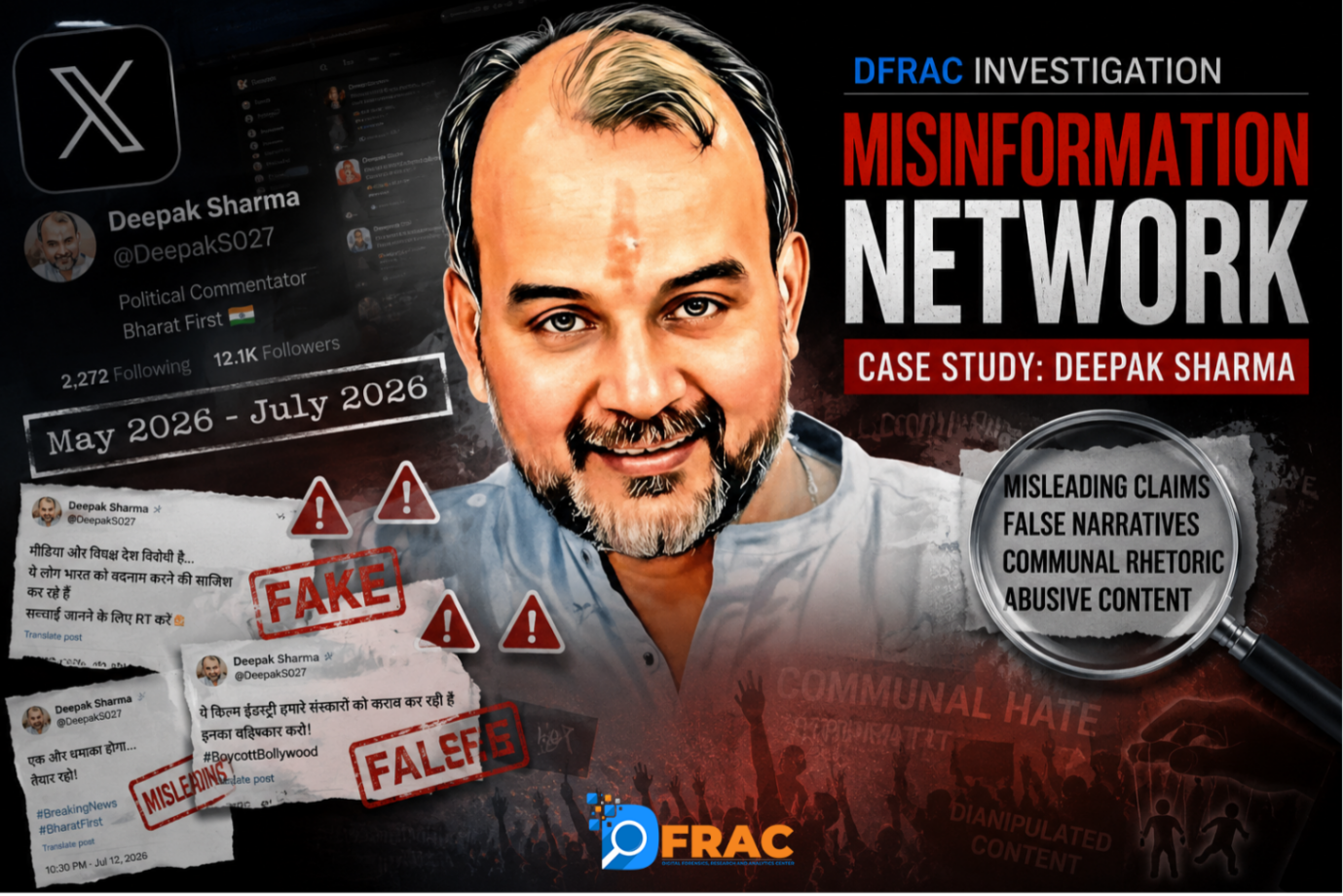
As part of its ongoing initiative to identify and document online misinformation networks, DFRAC conducted an investigation into the X (formerly Twitter) account operated under the name Deepak Sharma. The assessment covered a three-month period, from May 2026 to July 2026, during which the account’s posts, reposts, and overall online activity were systematically monitored and analyzed. The findings presented in this report are based on evidence collected during this investigation. DFRAC examined the nature of the content shared by the account, including instances of misinformation, misleading claims, inflammatory narratives, communal rhetoric, abusive language directed at public figures, and other forms of harmful online content, where supported by verifiable evidence.
The investigation identified a recurring pattern of sharing misleading or false information, particularly on politically and communally sensitive issues. Several posts analyzed in this report had previously been fact-checked by DFRAC and found to contain false, misleading, or manipulated claims. The report also documents instances of derogatory remarks against public figures, including women politicians and actors, as well as posts capable of amplifying communal tensions and online polarization.
Who is Deepak Sharma?
Deepak Sharma identifies himself on X as a “Journalist,” “Nationalist,” “Son of Bharat Mata,” and “Political Thinker.” He is also the founder of digital media platform Aapka Bharat. Although public records indicate that Sharma is based in Hathras, Uttar Pradesh, he has at times projected himself as being from Jaipur, creating confusion regarding his background.
Over time, Sharma has emerged as a prominent figure within right-wing social media ecosystems. His posts frequently focus on religious polarization, anti-Muslim narratives, political propaganda, and misinformation. Many of his posts contain inflammatory language, communal stereotypes, and misleading claims that have the potential to incite hatred and social division. His online activities have repeatedly attracted criticism for promoting disinformation and violating standards of responsible digital communication.
Key Points:
- Derogatory and abusive remarks against women
- Targeting Opposition Leaders using communal references
- Fake News and Misleading Information
1. Derogatory and abusive remarks against women
Targeting Women Public Figures
DFRAC observed multiple instances where Sharma used derogatory and offensive language against women in public life.
Swara Bhaskar
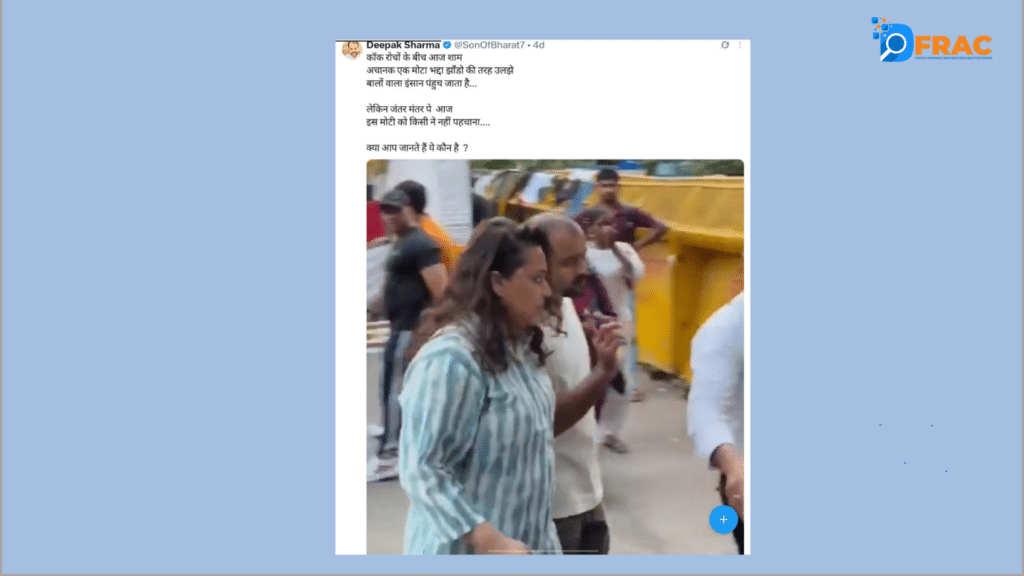
Swara Bhaskar visited Jantar Mantar to express solidarity with the protesting students. Following her visit, X user Deepak Sharma shared a post targeting the actor with abusive, derogatory, and body-shaming remarks. In the post’s caption, he mocked her appearance and referred to the protesters using the derogatory term “cockroaches,” asking his followers if they could identify her. The post exemplifies the use of personal abuse, demeaning language, and online harassment directed at a public figure for expressing support for a protest movement.
Sonakshi Sinha
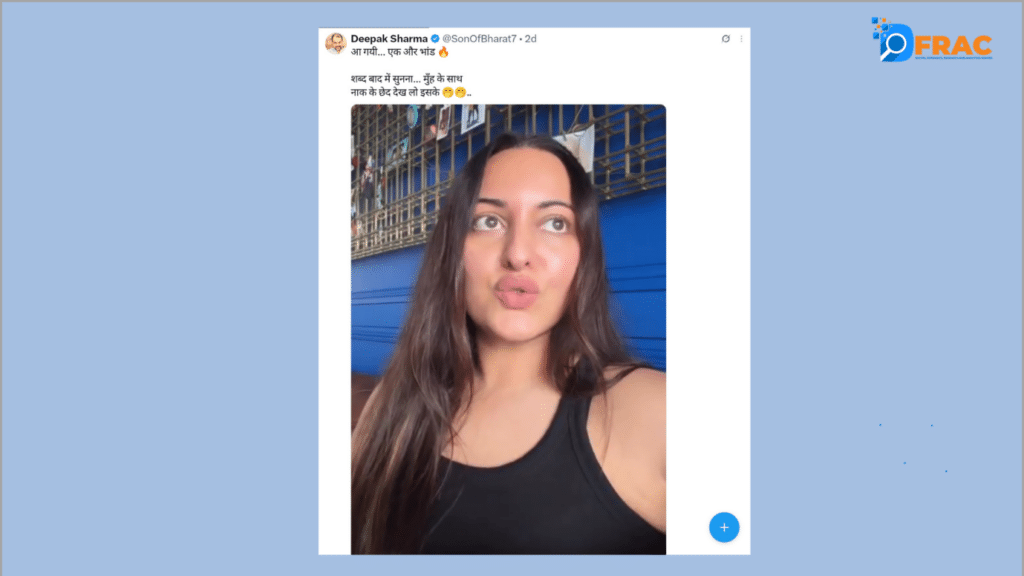
Deepak Sharma shared a post featuring actor Sonakshi Sinha after she voiced support for the students protesting at Jantar Mantar and urged the government to be held accountable. Instead of addressing the concerns raised in her message, he accompanied the post with a caption containing abusive, derogatory, and body-shaming comments directed at her appearance. The post sought to ridicule and demean the actor on a personal level rather than engage with her views, illustrating a pattern of online harassment and the use of insulting language against public figures expressing opinions on socio-political issues.
Dimple Yadav
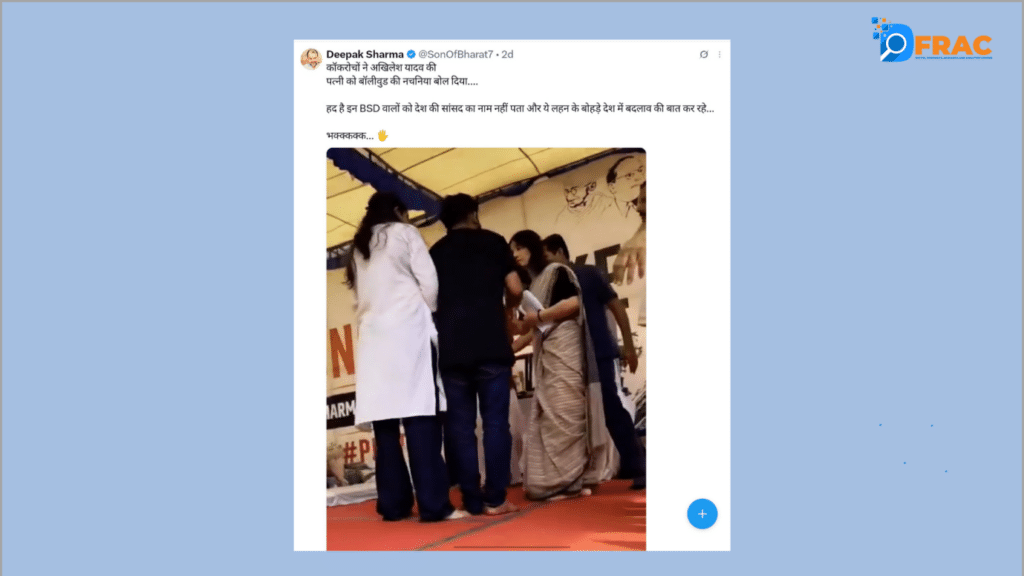
DFRAC documented another instance in which Deepak Sharma used derogatory and misogynistic language while referring to Member of Parliament Dimple Yadav. He shared a post showing her at Jantar Mantar and accompanied it with a caption that used offensive language, referred to the protesters as “cockroaches,” and included abusive remarks directed at those commenting on her. Although the post appeared to criticize others for misidentifying Dimple Yadav, its language remained inflammatory, insulting, and demeaning. This example reflects Sharma’s repeated use of abusive rhetoric and offensive expressions in political discourse, contributing to a hostile and toxic online environment.
2. Targeting Opposition Leaders using communal references
DFRAC’s analysis found that Deepak Sharma frequently shared posts targeting opposition leaders through communal narratives and derogatory language. A recurring theme across his posts is the portrayal of opposition parties and their leaders as “anti-Hindu” while associating them with Muslims, terrorism, or demographic change without providing evidence.
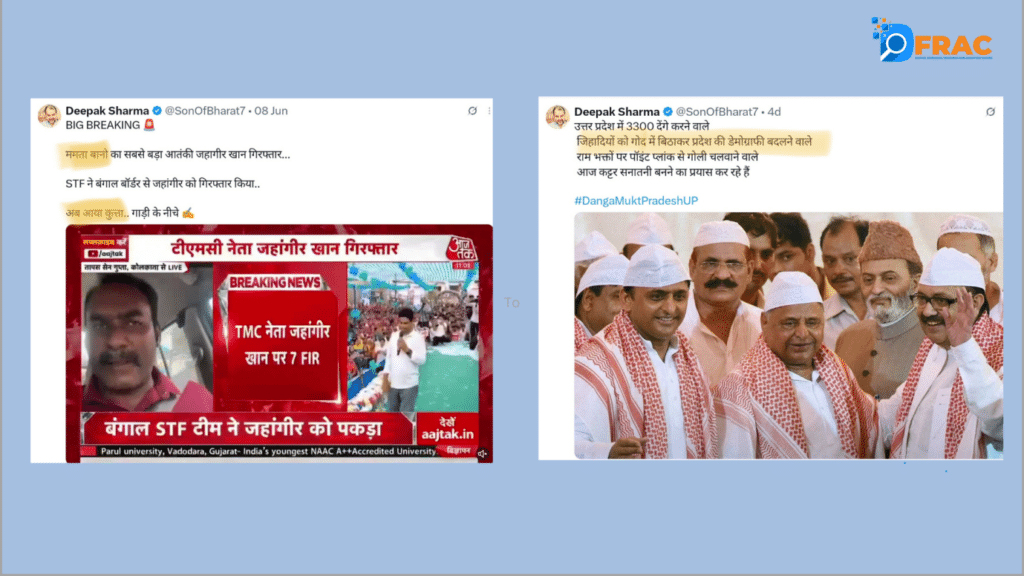
In one post, Sharma referred to a political figure as “Mamata Bano” instead of Mamata Banerjee, using a communal slur intended to portray her as aligned with Muslims. Sharing a news clip about the arrest of TMC leader Jahangir Khan, he wrote: “Mamata Bano’s biggest terrorist, Jahangir Khan, has been arrested… The STF arrested Jahangir near the Bengal border… Now the dog has finally come under the wheels.”
The post combines an unverified characterization of Jahangir Khan as a “terrorist” with abusive language (“dog”) and attempts to associate Mamata Banerjee with terrorism, thereby reinforcing a communal narrative.
In another post featuring Samajwadi Party leaders Akhilesh Yadav and the late Mulayam Singh Yadav, Sharma accused them of enabling communal violence and demographic change. The caption stated: “Those who allegedly enabled 3,300 riots in Uttar Pradesh, patronized ‘jihadis’ and changed the state’s demographics, and had Ram devotees shot at point-blank range, are now trying to portray themselves as staunch followers of Sanatan Dharma.”
The post frames opposition leaders as responsible for communal unrest and depicts their religious identity as politically opportunistic. Such content relies on sweeping allegations and religious polarization to discredit political opponents rather than presenting substantiated evidence. These examples illustrate a consistent pattern in Sharma’s social media activity, where communal rhetoric, inflammatory language, and unverified accusations are used to target opposition leaders and reinforce divisive political narratives.
3. Fake News and Misleading Information
A significant portion of Sharma’s content consists of misleading posts accompanied by fabricated captions or false contextual claims. DFRAC has previously fact-checked several such posts.
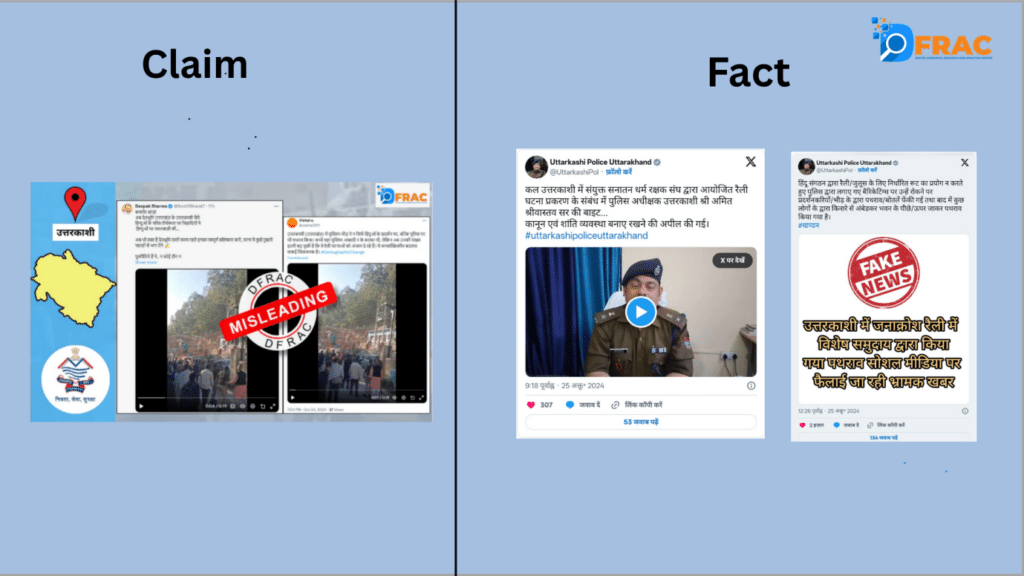
Case 1: False Communal Claim on Uttarkashi Stone-Pelting
Viral Claim
Sharma claimed that jihadists had pelted stones at Hindus during a religious gathering in Uttarkashi and urged people to boycott Muslims, portraying the incident as a communal attack.
Fact Check:
DFRAC examined official statements issued by Uttarkashi Police. Police clarified that the communal claim was false. According to authorities, the violence occurred after protesters deviated from the approved rally route and confronted police barricades. Stone-pelting took place during the confrontation, and police specifically stated that attributing the incident to any particular community was misleading.
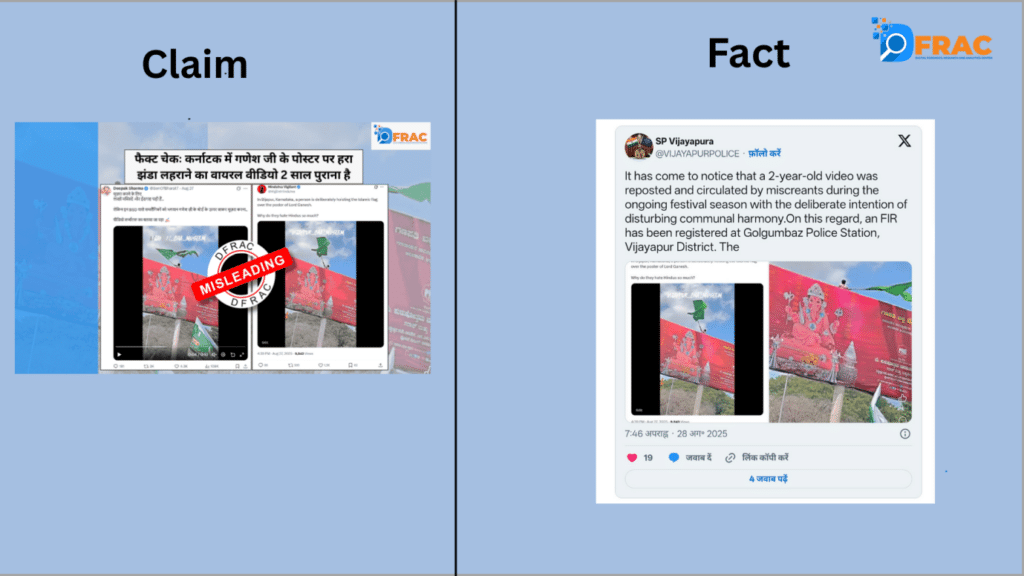
Case 2: Misleading Karnataka Video
Viral Claim
Sharma circulated a video alleging that individuals had insulted Hindu religious sentiments by dancing on a signboard of Lord Ganesha in Karnataka.
Fact Check
The Vijayapura Police confirmed that the video was approximately two years old and was being falsely presented as a recent incident. The viral claim therefore lacked factual context.
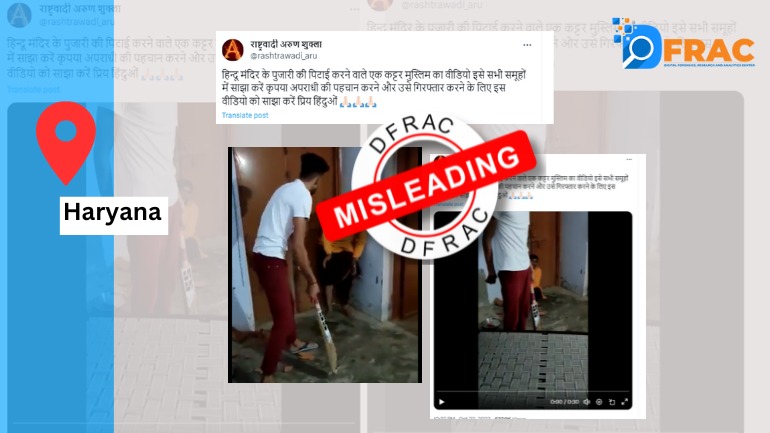
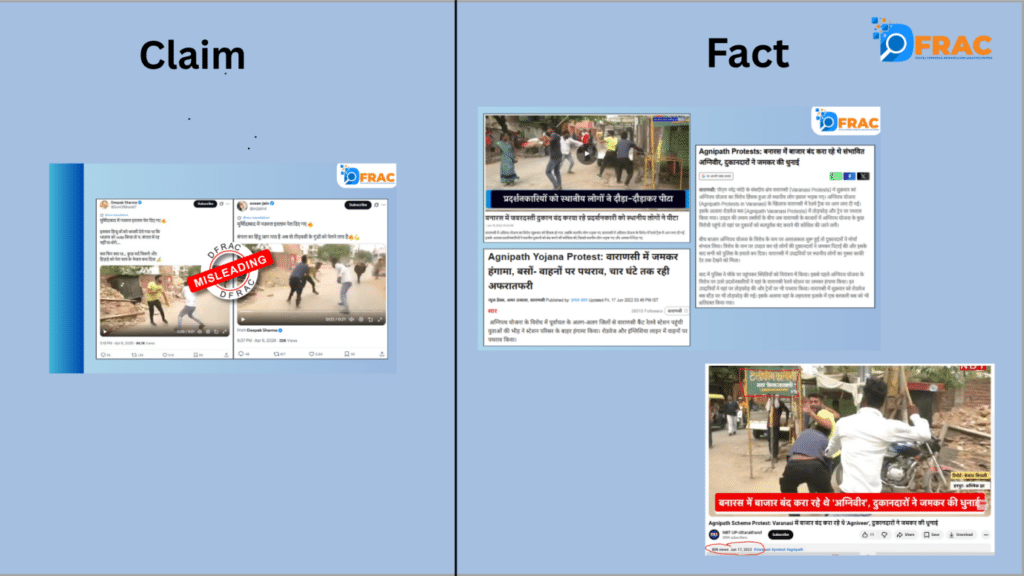
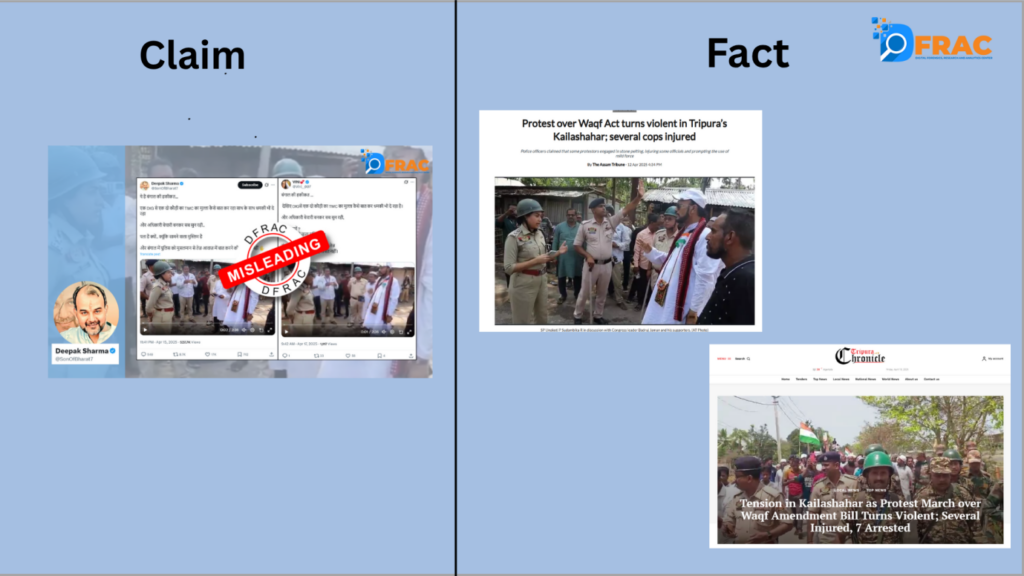
Case 3: False Communal Narrative About West Bengal
Viral Claim
Sharma claimed that a Muslim supporter of the Trinamool Congress threatened a DIG in West Bengal and suggested that police were unable to act because of the individual’s religion.
Fact Check
DFRAC established that the video was not from West Bengal. It actually originated from Kailashahar in Tripura, making the communal narrative entirely misleading.
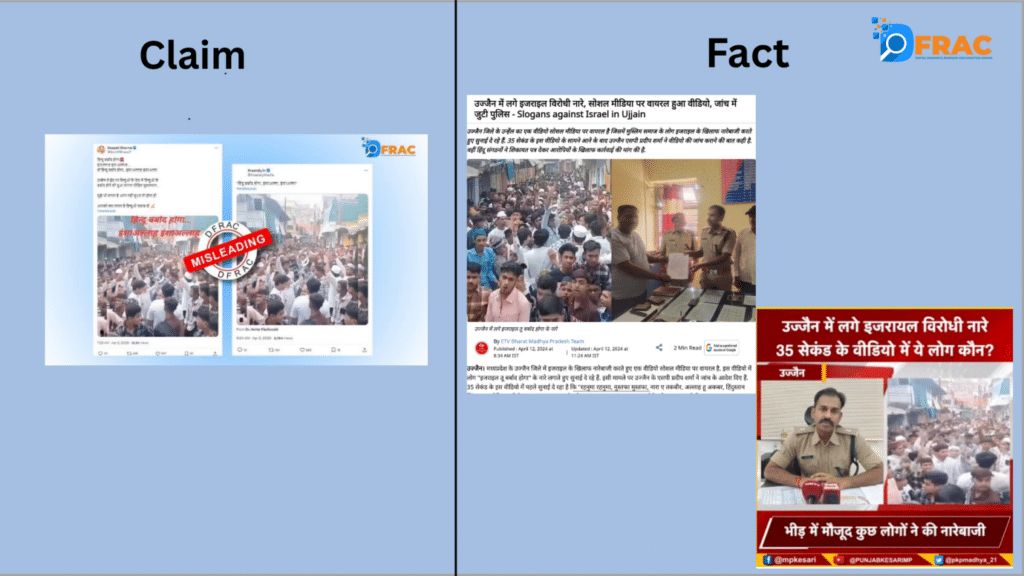
Case 4: False Translation of Religious Slogans
Viral Claim
A video was circulated claiming that Muslims in Ujjain were chanting slogans calling for the destruction of Hindus.
Fact Check
DFRAC verified that the slogans in the original video referred to Israel, not Hindus. The video itself was also approximately one year old. Sharma’s caption falsely translated and misrepresented the slogans to create communal tension
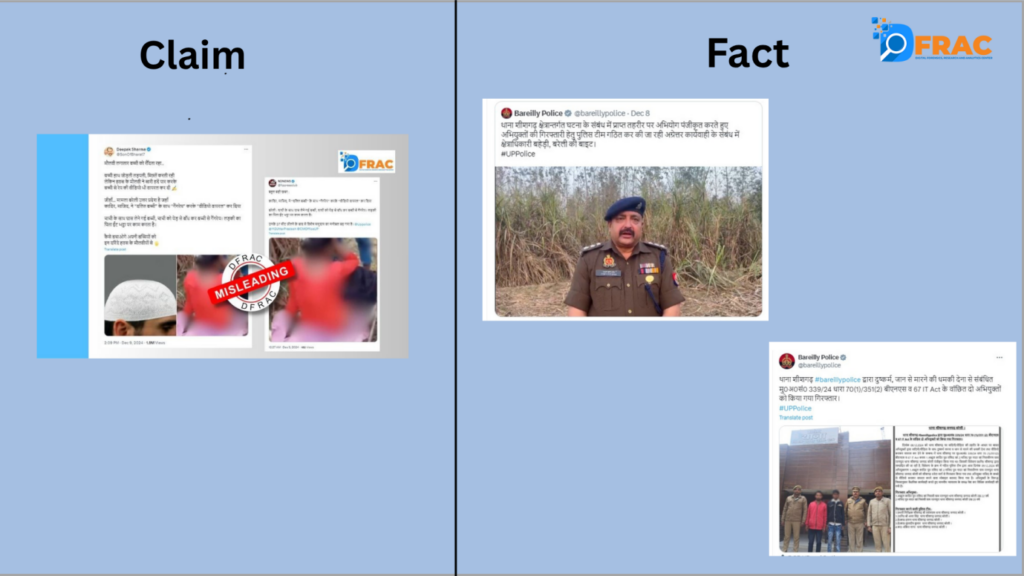
Case 5: False Claim About Bareilly Rape Case
Viral Claim
Sharma shared posts alleging that a Muslim cleric had raped a Dalit minor girl in Bareilly.
Fact Check
Bareilly Police clarified that both the accused and the complainant belonged to the same caste. Police also confirmed that provisions of the POCSO Act and the SC/ST Act were not invoked in the FIR, indicating that the victim was an adult and not a Dalit. The viral communal claim was therefore false.
Case 6: Misleading narrative with a viral post; the video is from Tripura not West Bengal.
Viral Claim
The viral post falsely claims that a TMC leader in West Bengal is threatening a DIG and alleges that the police remain silent because the individual is Muslim
Fact Check
DFRAC’s investigation found that the video is not from West Bengal. It actually originates from Tripura and has been shared with a misleading communal and political narrative to falsely portray the incident as taking place in West Bengal.
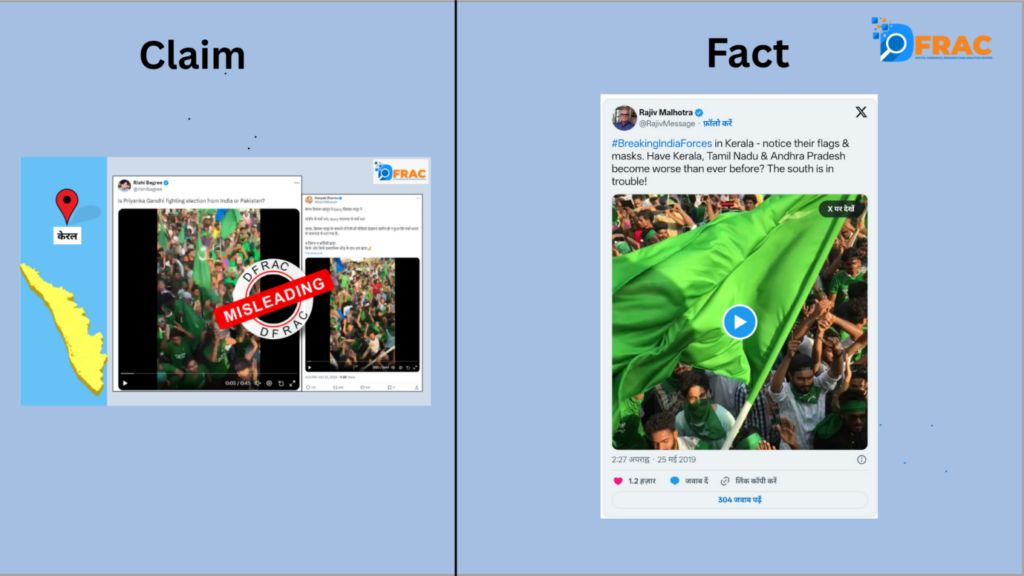
Case 7: Misleading Video Linked to Priyanka Gandhi
Viral Claim
Sharma claimed that a rally supporting Priyanka Gandhi in Wayanad consisted solely of an Islamic crowd carrying green flags, suggesting that the event resembled a gathering in Lahore rather than India.
Fact Check
DFRAC found that the viral video had no connection with Priyanka Gandhi’s campaign. It was actually recorded during an Indian Union Muslim League rally in Kerala in 2019. The video was falsely repurposed to spread political misinformation.
Conclusion
DFRAC’s investigation concludes that Deepak Sharma’s social media activity reflects a consistent pattern of spreading misinformation, communal propaganda, and abusive rhetoric. Multiple posts examined in this report relied on manipulated context, recycled videos, or false claims that were contradicted by official police statements and independent verification.Beyond misinformation, the report also documents repeated instances of derogatory remarks directed at opposition leaders, particularly women, alongside inflammatory narratives targeting religious communities. Such content contributes to online toxicity, undermines informed public discourse, and has the potential to exacerbate communal tensions.