The battle over the narrative of a sensitive and geopolitically crucial issue like Kashmir is no longer confined to the ground; it is being fought aggressively across digital platforms. In this digital ecosystem, a film titled ‘Saffron Kingdom’ has recently emerged, raising serious suspicions regarding its content and dissemination methods. On the surface, the film claims to present the story of Kashmir, but a deeper look reveals it to be a well-planned attempt at narrative construction.
Initial investigations reveal that events in the film are presented selectively, with more emphasis on establishing a specific ideology rather than sticking to facts. Even more significant is its digital distribution network—where the accounts promoting it, their activities, and their interconnected networks show patterns that diverge from normal organic trends. Based on these indicators, the question becomes even more pertinent: Is ‘Saffron Kingdom’ just a film, or is it part of a broader, orchestrated propaganda network? This report provides a detailed analysis. The key highlights of this report are:
1. What is the plot of the film ‘Saffron Kingdom’?
2. Who is behind the production and promotion of the film?
3. Who is Ghulam Nabi Mir, and what is his Pakistan connection?
4. Who is Ghulam Nabi Fai?
5. The connection with the Pakistani intelligence agency ISI!
6. The Ecosystem Illusion of anti-India propaganda
1. What is the plot of the film ‘Saffron Kingdom’?
The film ‘Saffron Kingdom‘, released in 2024, has been the subject of various discussions and controversies. The film describes itself as being based on the Kashmiri migrant community and the ongoing political tensions in the Valley, but serious questions have been raised regarding its presentation and production process. The story of the film revolves around a Kashmiri woman named ‘Masarat’, whose husband was allegedly kidnapped and becomes a victim. Following this, she is forced to flee the Valley with her son, ‘Rizwan.’ While the plot attempts to be emotionally impactful, there are serious questions regarding the credibility of the sequences and contexts portrayed. The most notable aspect is that in a film claiming to be based on a sensitive and complex socio-political issue like Kashmir, not a single Kashmiri artist has been cast. Instead, it features American and South Asian professional actors.
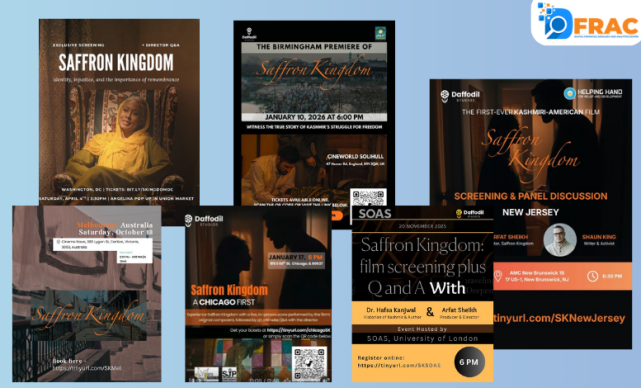
Furthermore, the film was shot in the city of Atlanta, USA. This deepens the suspicion that instead of depicting real conditions, the film is an attempt to craft a specific narrative. The film was promoted on a large scale in countries like the USA, UK, and Australia, making it clear that its target audience is international.
2. Who is behind the production and promotion of the film?
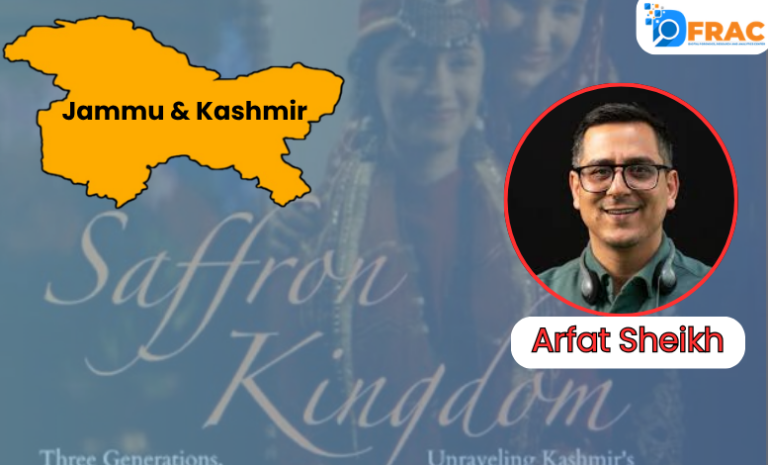
Looking at the creative and production side of the film ‘Saffron Kingdom,’ the roles of the individuals and organizations involved become a subject of serious discussion. The film is written and directed by Arafat Sheikh, while Mariam Khalid and Katie Lehman also played significant roles in developing the story. The most prominent name associated with the production of this film is Daffodil Studios, under whose banner the project was prepared. As soon as this studio’s name emerges, several new questions arise regarding the film’s background and objectives. The founder and president of Daffodil Studios is Dr. Ghulam Nabi Mir, who is a practicing gastroenterologist in the United States.
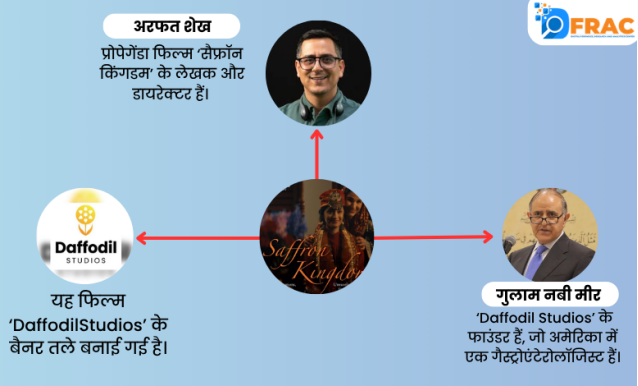
3. Who is Ghulam Nabi Mir, and what is his connection to Pakistan?
Born and raised in Kashmir, Dr. Mir moved to the United States in 1974 after completing his medical studies in Kashmir. During his early years in America, he served as the founding chairman of the ‘Islamic Society of North America’ (ISNA) Founders Committee. After retiring in 2019, he began working as the founder and president of the ‘World Kashmir Awareness Forum’ (WKA). According to information available on the WKA website, Dr. Mir currently holds the position of President. Additionally, WKA maintains several social media handles. When we checked the ‘About’ section of WKA’s X (formerly Twitter) handle, we found that the account is operated from Pakistan. Furthermore, we discovered that an individual named Ghulam Nabi Fai has identified himself as the Secretary General of the ‘World Kashmir Awareness Forum’ (WKA). Ghulam Nabi Fai is notorious worldwide as an ISI agent.
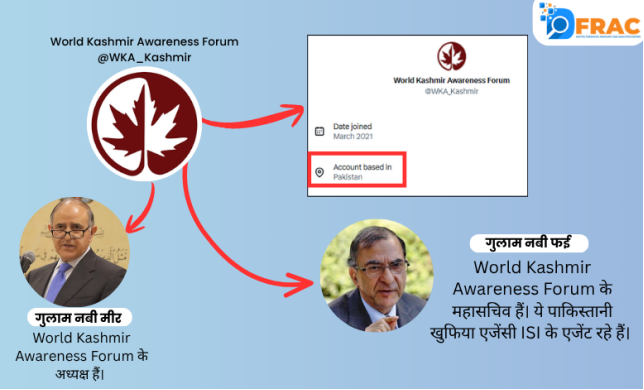
4. Who is Ghulam Nabi Fai?
The name Ghulam Nabi Fai has long been associated with active international lobbying regarding the Kashmir issue. He has been particularly known for his efforts to influence the discourse on Kashmir among American policymakers, think tanks, and international forums. However, serious questions have been raised about his activities from time to time, specifically based on investigative agencies and reliable media reports.
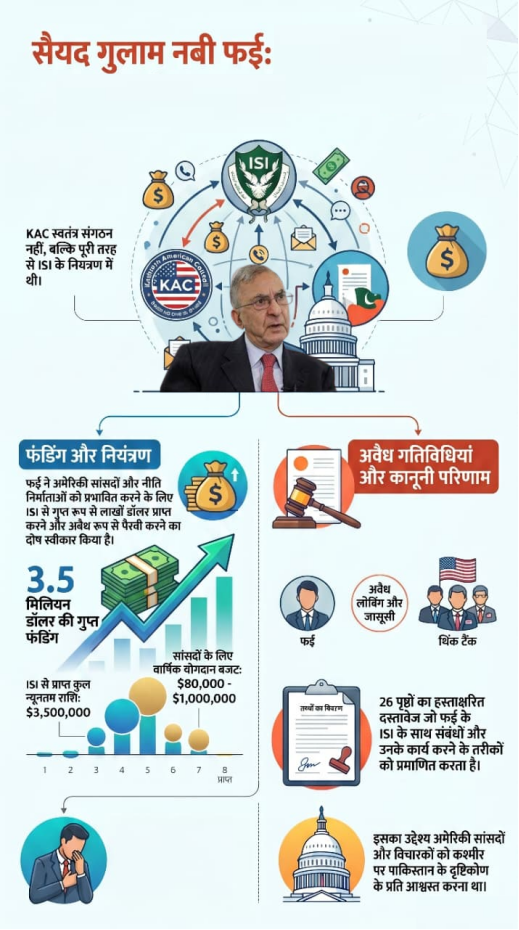
In 2011, disclosures made by the Federal Bureau of Investigation (FBI) brought this matter into the international spotlight. During the investigation, allegations emerged that Fai, through the Kashmiri American Council, was allegedly working at the behest of Pakistan’s intelligence agency, the ISI. The investigation also stated that Fai attempted to conceal foreign funding and his actual contacts, thereby violating American laws. According to the allegations, he organized seminars, conferences, and lobbying activities to present the Kashmir issue from a specific perspective, aimed at influencing American policymakers and public opinion. Following these revelations, Fai was arrested and later pleaded guilty to the charges in court.
5. The connection with the Pakistani intelligence agency ISI!
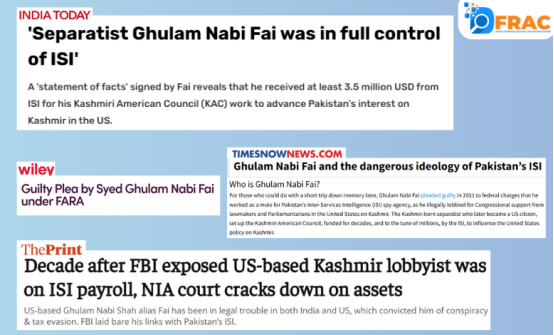
Legal documents and subsequent investigations also revealed that Fai used international platforms, conferences, and campaigns to push a unilateral and sponsored narrative on Kashmir. According to an India Today report dated December 9, 2011, new court documents show that separatist Syed Ghulam Nabi Fai and his Kashmiri American Council (KAC) were fully under the control of the ISI. They were operating as an extension of Pakistan’s spy agency to convince American lawmakers, officials, and thought leaders of their perspective on Kashmir. Fai was convicted on federal charges of spying for the ISI, influencing U.S. policy on Kashmir, and secretly receiving funds from the ISI.
Former Pakistani Foreign Minister Shah Mahmood Qureshi’s ties with Fai!
Ghulam Nabi Fai’s network was connected to Pakistan’s high-ranking political and diplomatic circles. In particular, questions have been raised regarding his relationship with Pakistan’s former Foreign Minister, Shah Mahmood Qureshi. A media report identified Fai as one of the prominent figures pushing an ISI-backed narrative, working to present Kashmir from a specific perspective globally through political support and strategic coordination. These links suggest that Fai’s activities were not merely individual initiatives but were operating with a broad network and political backing.
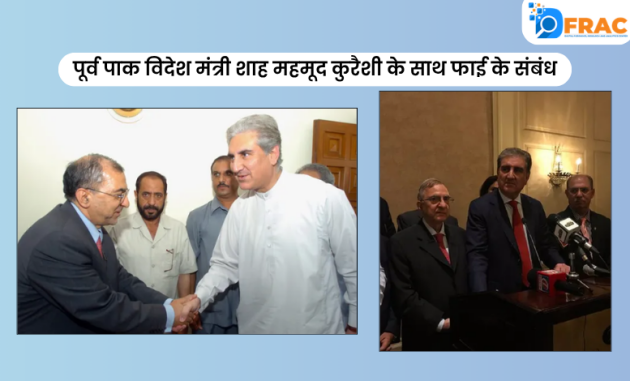
Ghulam Nabi Fai has been a favourite of the Pakistani government
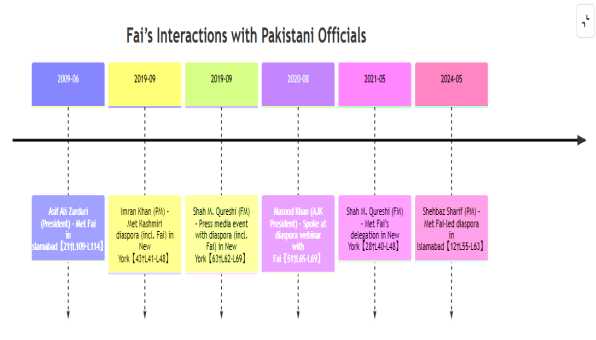
The timeline in this graph reveals the layers through which Ghulam Nabi Fai’s name has been linked to Pakistan’s top political and diplomatic leadership over the years. It highlights various points from 2009 to 2024. A mention of Fai’s meeting with then-President Asif Ali Zardari in 2009 offers an early glimpse into this network. Subsequently, claims regarding Fai’s relations or contacts with various Pakistani political and diplomatic figures have emerged across different years, indicating that his reach was not limited to a narrow circle.
The most recent point on the timeline suggests potential access to the current Prime Minister, Shehbaz Sharif, in 2024. These activities suggest that Fai may have been part of a long-standing, organised lobbying framework aimed at influencing international perspectives on sensitive issues like Kashmir.
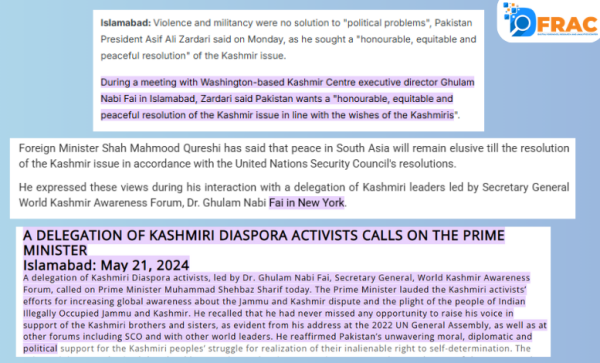
His presence with Imran Khan and Shah Mahmood Qureshi in New York in 2019 indicates that a coordinated narrative on Kashmir was being pushed on international platforms. Subsequently, the continuous contact and sharing of platforms in 2020 and 2021 further reinforce the continuity of this network. Most importantly, this trend does not stop but remains active through 2024. This deepens the question of whether Fai’s role was limited merely to expressing personal views, or if he was part of a larger, organised, and state-backed narrative machinery attempting to exert influence on a global scale.
6. The Ecosystem Illusion of Anti-India Propaganda
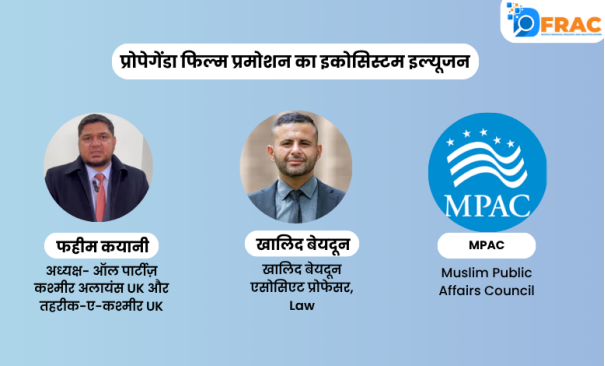
The promotion of ‘Saffron Kingdom’ was not limited to just film marketing; it was propelled through a structured institutional and intellectual network. This network reflects a joint participation of individuals, academic figures, and advocacy organisations. The most prominent role was played by the Muslim Public Affairs Council (MPAC), which not only hosted the film’s screening but also presented it as an ideological event. MPAC, in collaboration with Daffodil Studios and the Islamic Center of Southern California, framed the film within the context of “Kashmir’s truth” and a “global narrative.”
On the other hand, the presence of propaganda experts like Khaled Beydoun indicates that the film was linked with legal, human rights, and international discourse to serve a specific agenda. The DFRAC team has published a detailed report on Khaled Beydoun, which you can read here. This entire system operated like an organized international gang; consequently, outside the US, the film was promoted in the UK by Fahim Kayani, President of the All Parties Kashmir Alliance UK and Tehreek-e-Kashmir UK, who has long been involved in the game of crafting anti-India narratives. Viewed holistically, this entire ecosystem of institutions, academics, and activists collectively creates the “ecosystem illusion” of the film’s promotion.
Conclusion:
The film ‘Saffron Kingdom’ was used not merely as a movie, but as a tool to advance an anti-India and Kashmir-centric propaganda narrative. Under the leadership of Daffodil Studios, it was promoted internationally through associated names such as Ghulam Nabi Mir, the World Kashmir Awareness Forum, and Ghulam Nabi Fai. Additionally, through the Muslim Public Affairs Council and various academic and activist networks, the film was presented with a specific political perspective that appears to attempt to influence India’s global image and the Kashmir issue.