In the political and historical landscape of South Asia, the relationship between Bangladesh and India holds a special significance, influencing not only the region but also global geopolitics. Bangladesh is deeply connected to India not only because of geographical proximity, but also due to a shared history, culture, language, and struggles.
Bangladesh was born as a result of the 1971 Liberation War. Before independence, the people of Bangladesh faced political, economic, and cultural discrimination. During this difficult period, India not only understood their suffering but also adopted a humanitarian approach by providing shelter to millions of Bangladeshi refugees. India raised the issue of atrocities committed by the Pakistani army on international platforms and eventually played a decisive role in Bangladesh’s independence through military intervention in December 1971.
Even after independence, India continued to support Bangladesh and was among the first countries to recognize it as an independent nation. Over time, relations between the two countries have strengthened further. Today, cooperation between India and Bangladesh continues to grow in key areas such as trade, connectivity, security, and energy. Both countries have worked together for regional stability, peace, and development.
However, in recent times, tensions have emerged in India–Bangladesh relations. After the fall of Sheikh Hasina’s government, tensions between the two countries escalated significantly. Social media has also played it’s part in escalating these tensions, where fake and hate-driven narratives have been used to harm bilateral relations.
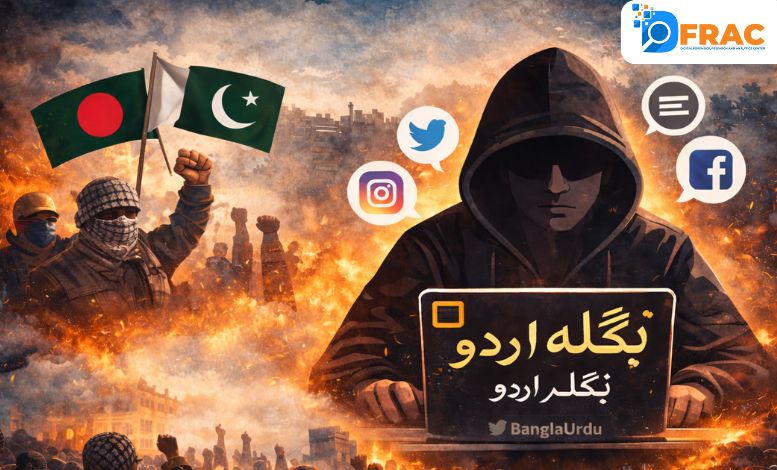
Bangla Urdu | بنگلہ اردو
“Bangla Urdu” is among the Bangladeshi social media accounts that have been accused of promoting narratives affecting India–Bangladesh relations. This account became active after the student-led movement of July 2024 and the political developments related to Sheikh Hasina. It appears to primarily target Urdu-speaking audiences.
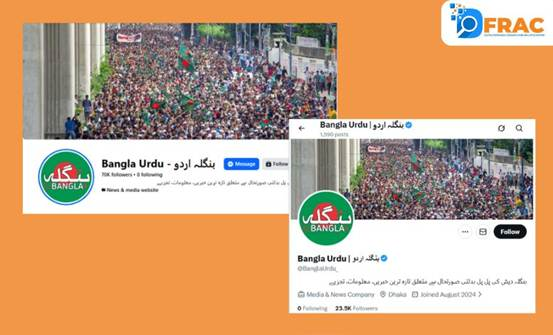
On the social media platform X (formerly Twitter), it has over 23,000 followers, while on Facebook it has more than 70,000 followers. The account presents itself as a news and media platform that claims to provide updates, information, and analysis on the evolving situation in Bangladesh.
In this DFRAC report, we analyze “Bangla Urdu” based on the following points:
- Use of the Kashmir issue against India
- Exaggeration of India’s internal problems
- Fake, hateful, and misleading content against India
- Anti-India and pro-Pakistan narratives
- Conclusion
1. Use of the Kashmir Issue Against India
Kashmir has remained a sensitive and disputed issue between India and Pakistan since independence. While Pakistan has consistently claimed Kashmir, India considers it an integral part of its territory. Historically, Bangladesh has not supported Pakistan’s claim on Kashmir and has generally maintained a balanced stance favoring India in most cases.
However, following recent political changes in Bangladesh, the Kashmir issue has started being raised differently on social media. Analysis of “Bangla Urdu” tweets shows that Kashmir is not used as a direct issue, but rather as a narrative tool against India.
For example:
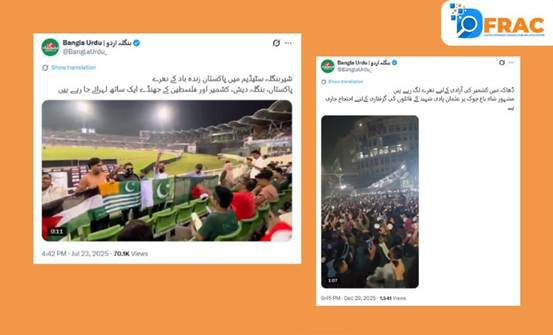
A tweet claimed that during protests in Dhaka, flags of Kashmir, Pakistan, and Palestine were waved.
Another claimed that students raised slogans in support of Kashmir.
In these posts, Kashmir is used symbolically to portray India as a country allegedly engaged in oppression in other regions as well.
Source: X
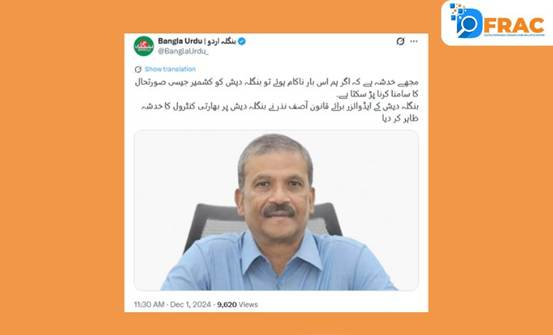
Some tweets also use Kashmir to create fear, such as:
“If India intervenes, Bangladesh could become Kashmir.”
“Bangladesh must be saved from becoming Kashmir.”
Here, Kashmir is presented as a negative example to create the perception that increasing Indian influence could lead Bangladesh toward a similar situation.
2. Exaggeration of India’s Internal Problems
The “Bangla Urdu” account has also attempted to influence perceptions regarding India’s internal affairs.
This includes:
Selectively highlighting incidents
Exaggerating problems
Presenting events in a distorted manner
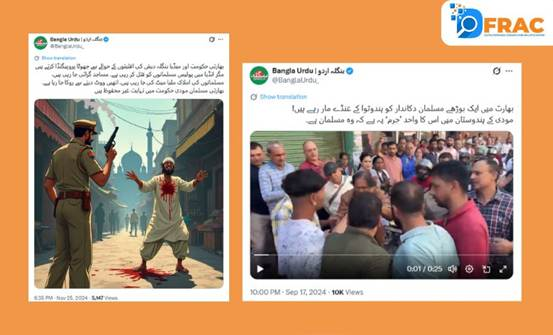
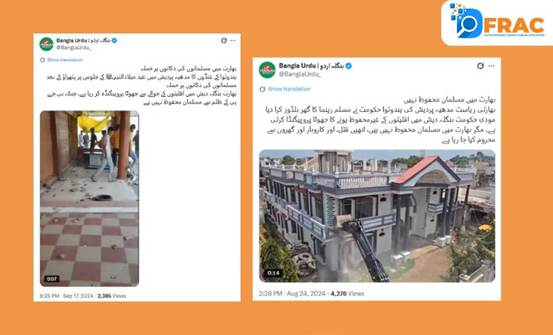
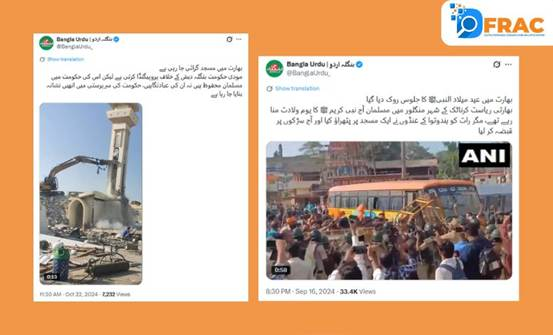
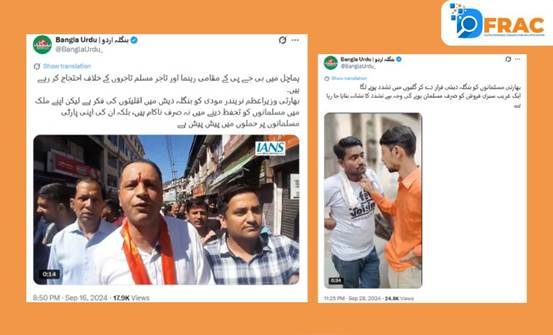
Content focusing on alleged violence against Muslims by Hindutva groups is prominently highlighted to create a negative image of India, suggesting that Indian Muslims feel extremely unsafe.
To support this narrative:
Fake news is circulated
Real incidents are misrepresented
3. Fake, Hate, and Misleading Content Against India
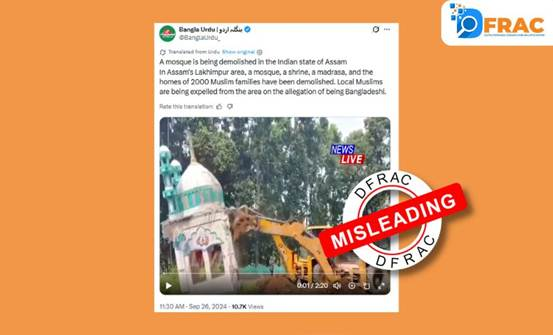
Fact Check: Assam Demolition Claim
Source: X
On September 26, 2024, “Bangla Urdu” shared a video showing demolition of structures with JCB machines. It claimed that a mosque in Lakhimpur, Assam, was being demolished and that a mosque, dargah, madrasa, and around 2,000 Muslim homes were destroyed, with locals labeled as “Bangladeshi” and evicted.
Fact Check Findings:
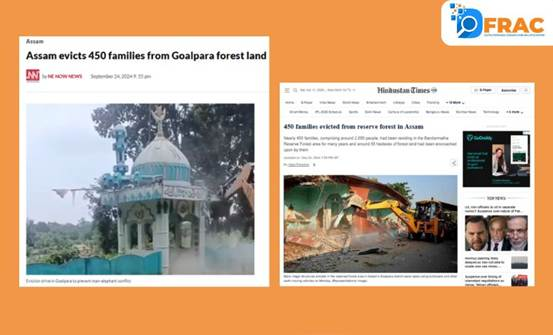
Source: NorthEast Now, HT
The video was not from Lakhimpur but from Bandarmatha Reserve Forest in Goalpara district, Assam. The action involved removal of encroachment from about 55–60 hectares of forest land following orders from the Gauhati High Court.
Fact Check: Ghaziabad Violence Claim
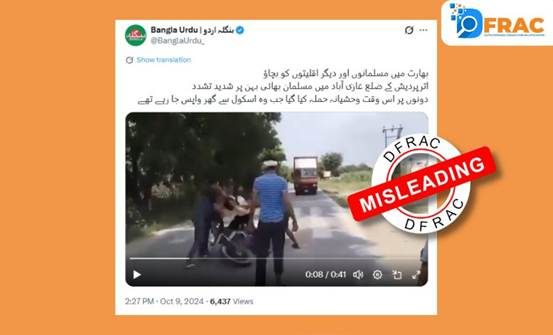
Source: X
On October 9, 2024, a video was shared showing a young man and woman being beaten on the road. It was claimed that Muslim siblings were attacked in Ghaziabad while returning from school.
Fact Check Findings:
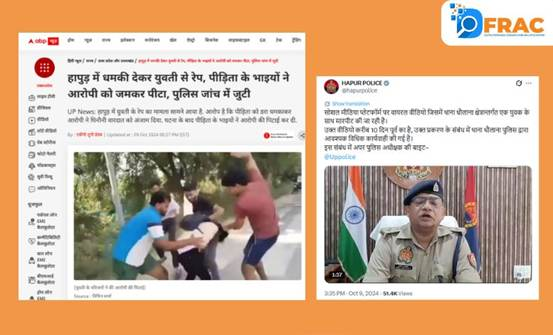
The incident was not from Ghaziabad but from Hapur district (Dhaulana police station area). It involved a personal dispute where a young man was beaten by the girl’s relatives after being caught with her.
Fact Check: AI-Generated Video Targeting Indian Army
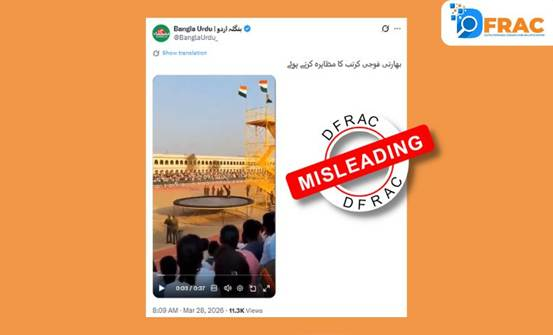
Source: X
On March 28, 2026, a video was shared showing alleged Indian soldiers performing strange and uncoordinated stunts to mock the Indian Army.
Fact Check Findings:
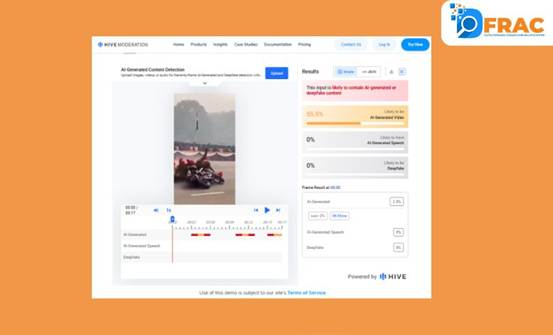
The video appears to be AI-generated. Analysis using Hive Moderation tools indicated a 55.5% probability of AI generation. The video showed unnatural movements, inconsistencies, and visual anomalies.
4. Anti-India and Pro-Pakistan Narrative
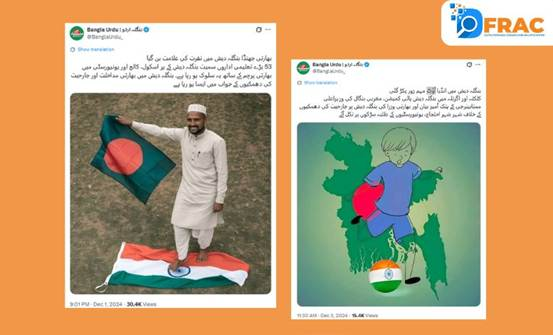
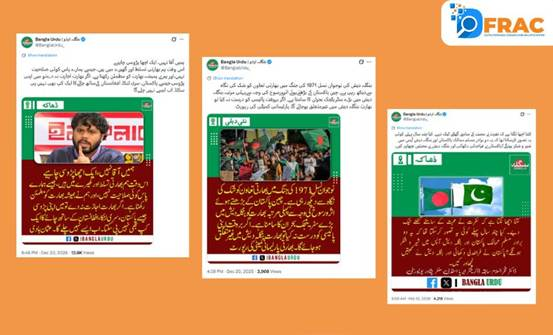
The account actively promotes anti-India narratives, including campaigns like “India Out.”
It also portrays increasing closeness between Pakistan and Bangladesh in a way that contrasts with India.
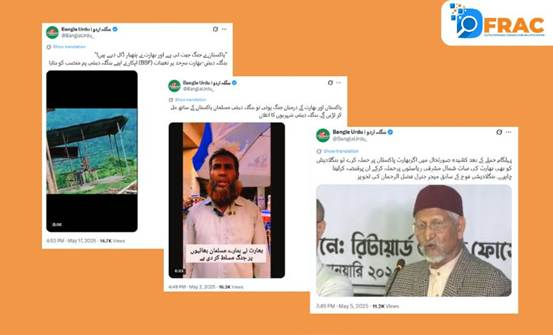
Methods used include:
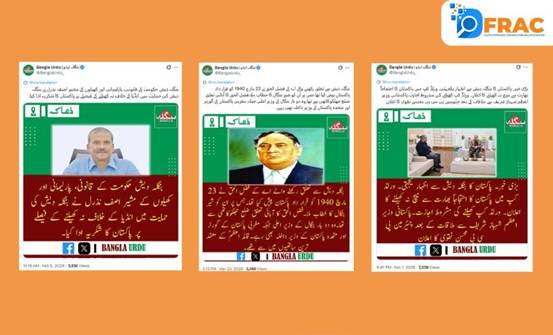
Historical references
Cultural connections
Even cricket as symbolic messaging
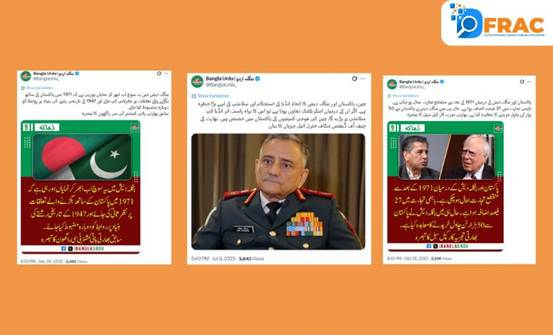
Additionally:
Statements of Indian politicians, military officials, and diplomats are selectively presented
Narratives suggest Bangladesh aligning with Pakistan in potential conflicts
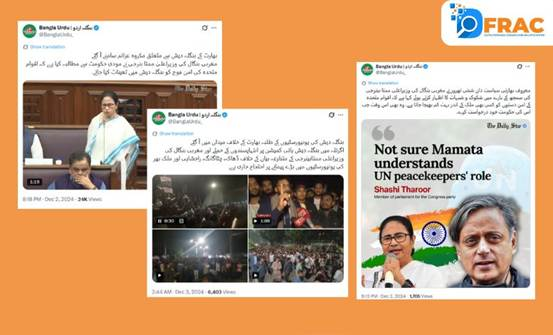
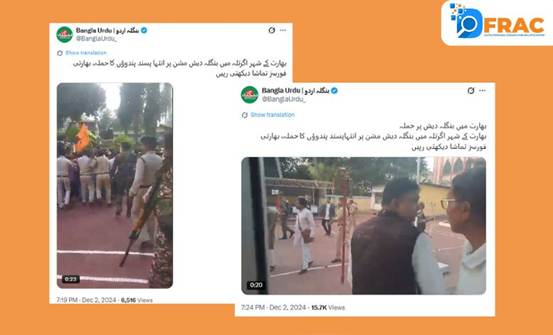
During controversies in India over alleged attacks on Hindus in Bangladesh, statements by West Bengal’s Chief Minister calling for UN peacekeeping intervention were exaggerated to present a larger conflict narrative.
Conclusion
An analysis of the “Bangla Urdu” account reveals that several issues related to India have been presented in a selective, exaggerated, and, in some cases, misleading manner. The account shows a clear attempt to shape a particular perception through the symbolic use of sensitive topics such as Kashmir, the exaggerated portrayal of internal events, and an anti-India narrative.
Additionally, there is a visible effort to portray India’s image in a comparatively negative light by highlighting the closeness between Pakistan and Bangladesh through historical, cultural, and sporting lenses.