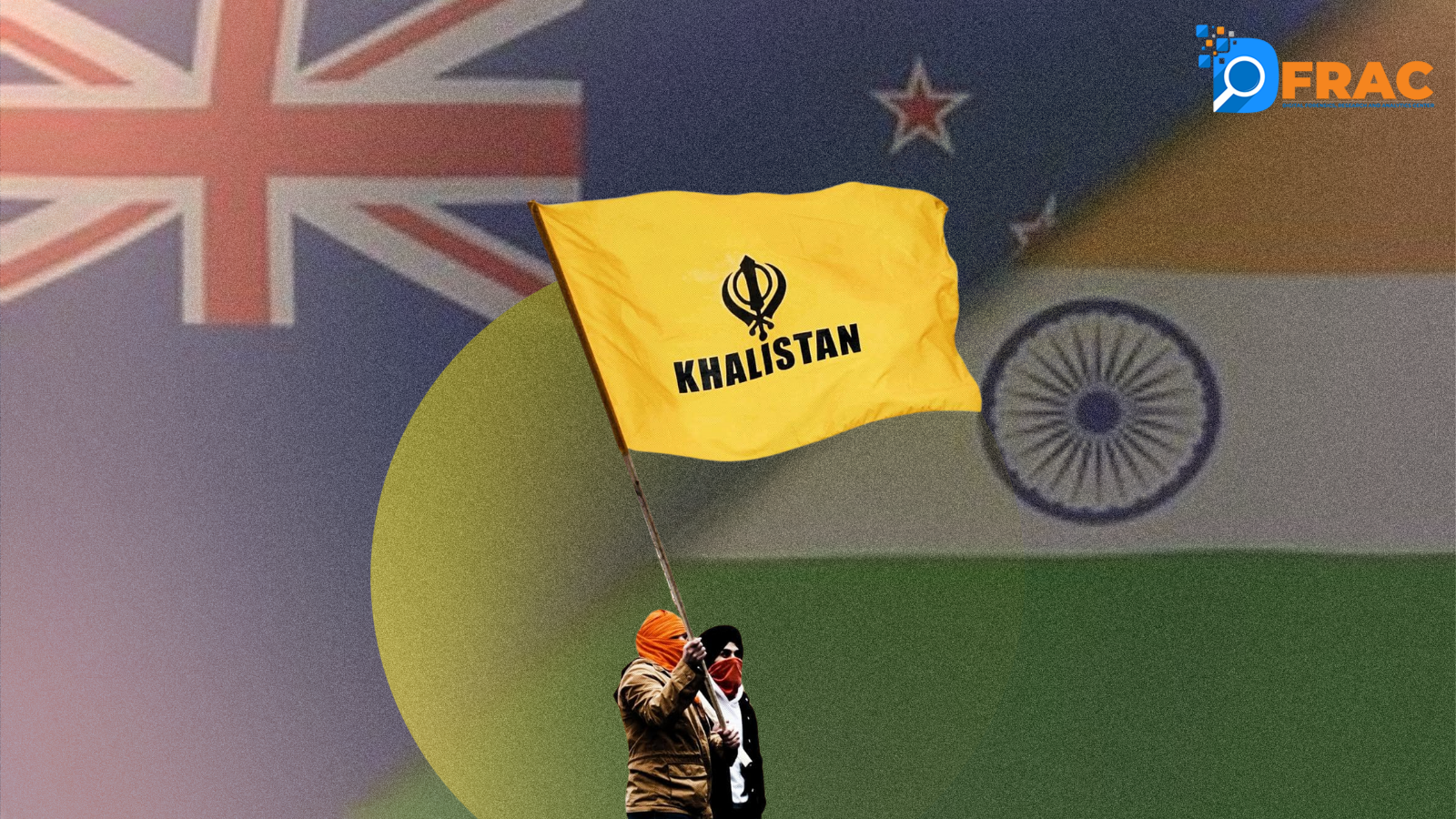
The Pro-Khalistan movement has established a significant operational presence in New Zealand, marking a strategic expansion from traditional strongholds in the UK, Canada, and US to the Oceania region. In report below we focus on active Khalistani elements present in New Zealand and the actors supporting this anti India campaign.
Table of Contents
- Referendum Marks New Chapter in Oceania Campaign
- Media Operations: From Community News to Global Advocacy
- Anti-India Sentiment and Editorial Strategy
- Key Figure: Ravinder Singh Johal
- Escalating Street Activities and Protests
- Youth Organization Involvement
- Government Response and Community Divisions
- Violent Incidents and Security Concerns
- Strategic Expansion and Public Messaging
- Implications for New Zealand-India Relations
Referendum Marks New Chapter in Oceania Campaign
The Pro-Khalistan movement has established a significant presence in New Zealand, marking a strategic expansion beyond its traditional strongholds in the United Kingdom, Canada, and the United States. This shift became prominently visible on November 17, 2024, when the Sikhs for Justice (SFJ) organization conducted what they called a “referendum” for an independent Sikh homeland at Auckland’s Aotea Square.
The event, overseen by the independent Punjab Referendum Commission (PRC), reportedly attracted over 37,000 votes according to Dr. Bakhshish Singh Sandhu, president of the Council of Khalistan and founding member of SFJ. This substantial turnout suggests the movement has gained considerable traction in New Zealand’s Sikh community.
Media Operations: From Community News to Global Advocacy
Central to the movement’s operations in New Zealand is a media outlet that has undergone a telling transformation. Originally established as “NZ Sikh News,” the platform initially positioned itself as a community forum, stating its dedication to “providing the Sikh community in New Zealand with relevant news and updates” in both English and Punjabi.
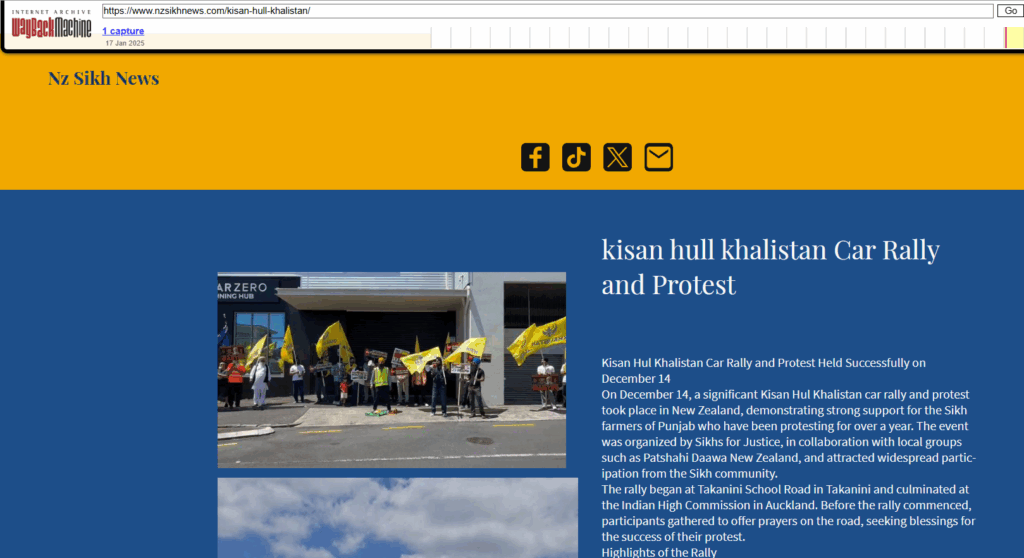

However, recent investigations reveal a significant shift in both branding and mission. In May 2025, the domain was registered as “Deep State Press,” though the content remained largely unchanged. Domain registration records show the site was first registered on May 23, 2025, with its most recent update occurring on July 22, 2025 – indicating active management and recent changes to the platform.

The transformation from a local community news service to a global Khalistan advocacy platform represents a clear evolution in strategy. Deep State Press now publishes articles promoting the Khalistani agenda and criticizing Indian government policies, extending its reach far beyond New Zealand’s borders to cover pro-Khalistan activities worldwide.
Key Figure: Ravinder Singh Johal
At the center of these media operations is Ravinder Singh Johal, a New Zealand resident who has actively promoted both the original NZ Sikh News and the current Deep State Press as his own initiatives. Johal maintains a significant social media presence across multiple platforms including Twitter, Instagram, and TikTok, using these channels to advance the Khalistan cause.

His influence extends beyond digital media. Johal has also established “Khalistan Radio” and has been photographed with Avtaar Singh Pannu, a prominent Khalistan advocate.

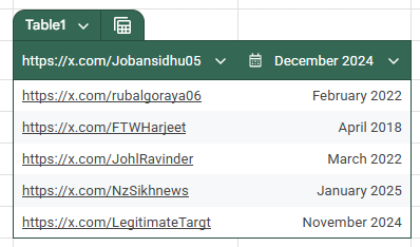
Six Twitter accounts have been identified as actively promoting articles from his media outlets, with creation dates spanning from 2018 to 2025, suggesting a coordinated and sustained online campaign.

Escalating Street Activities and Protests
The movement’s activities have not remained confined to digital spaces. Throughout 2024, several public demonstrations took place that highlighted growing tensions within New Zealand’s Indian diaspora community.
On October 19, 2024, SFJ organized a car rally from Takanini to the Indian Consulate in Auckland. The event turned controversial when participants reportedly engaged in anti-India slogans and, most provocatively, desecrated the Indian flag. The New Zealand Indian Central Association immediately filed complaints, describing the actions as “hate speeches” and expressing particular offense at the flag-burning incident.
Two months later, on December 14, 2024, SFJ collaborated with allied group Patshahi Daawa NZ to organize the “Kisan Hul” car protest in Auckland. This demonstration featured slogans supporting Sikh farmers alongside more pointed political messages including “Kill Modi Politics” and “Khalistan Zindabad” (Long Live Khalistan).

Anti-India Sentiment and Editorial Strategy
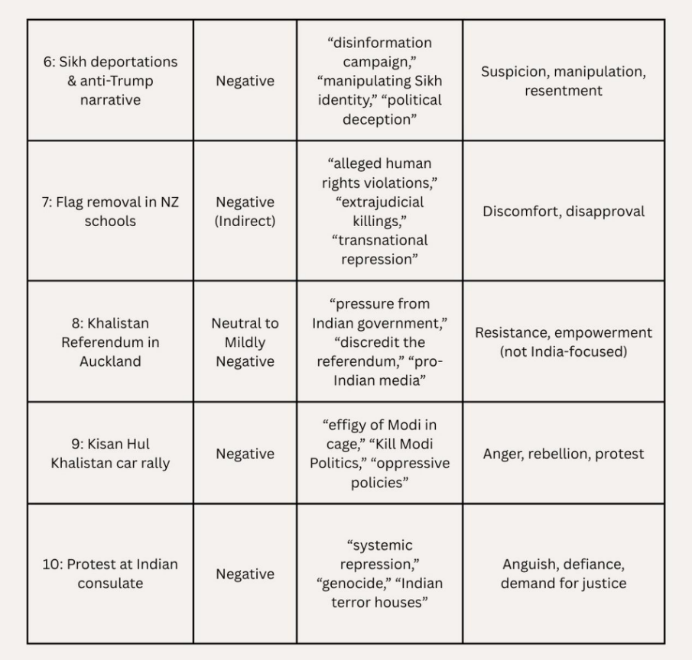
An analysis of Deep State Press articles reveals a consistently negative sentiment toward India across multiple themes and storylines. The publication’s editorial approach systematically portrays India in an unfavorable light through ten key narrative threads, each designed to evoke specific emotional responses from readers.
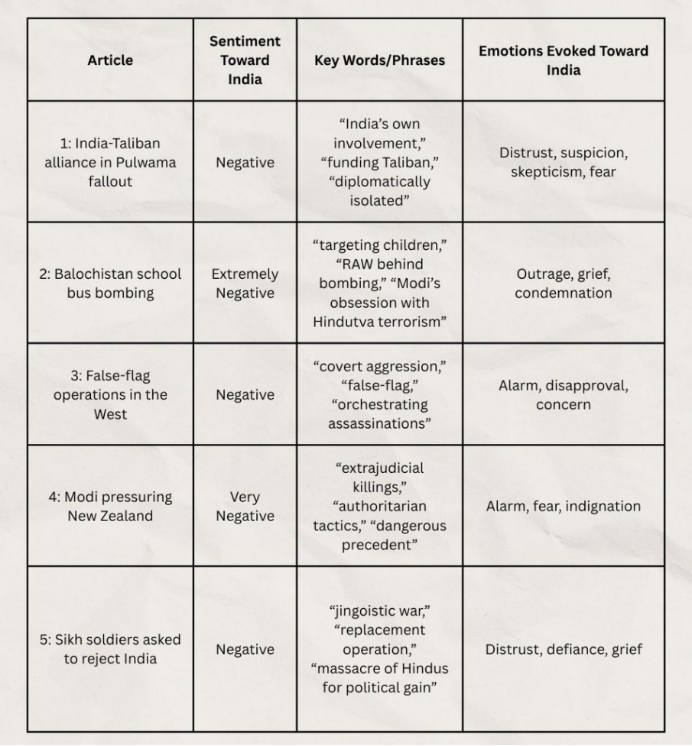
The publication consistently employs emotionally charged terminology across its coverage. Articles about India-Taliban connections use phrases like “India’s own involvement,” “funding Taliban,” and “diplomatically isolated” to foster distrust and suspicion. Coverage of Sikh-related issues incorporates language such as “jingoistic war,” “replacement operation,” and “massacre of Hindus for political gain” to promote defiance and grief within the Sikh community.
Even in coverage of local New Zealand events, the anti-India sentiment remains prominent. The Khalistan referendum coverage, while maintaining a relatively neutral tone about the event itself, still incorporates criticism of “pressure from Indian government” and “pro-Indian media” bias. The most direct expressions of hostility appear in protest coverage, featuring descriptions of “effigy of Modi in cage,” “Kill Modi Politics,” and references to “Indian terror houses” that explicitly promote anger, rebellion, and demands for justice.
This systematic negative framing across diverse topics , from international relations and terrorism allegations to local community events, suggests a coordinated editorial strategy designed to consistently undermine India’s
reputation while building support for the Khalistan cause through emotional manipulation and selective narrative construction.
Youth Organization Involvement
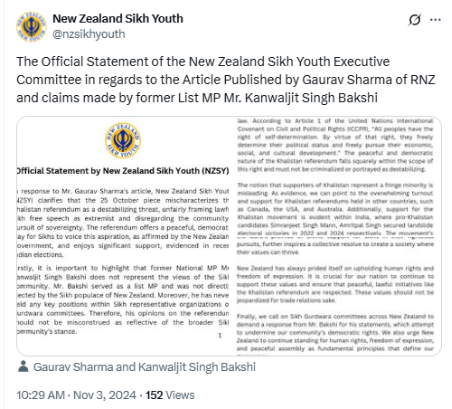
The movement has also gained institutional support through the New Zealand Sikh Youth organization, established on July 12, 2020. This group has openly endorsed the Khalistan referendum, releasing a statement that frames their support in terms of democratic principles and human rights.
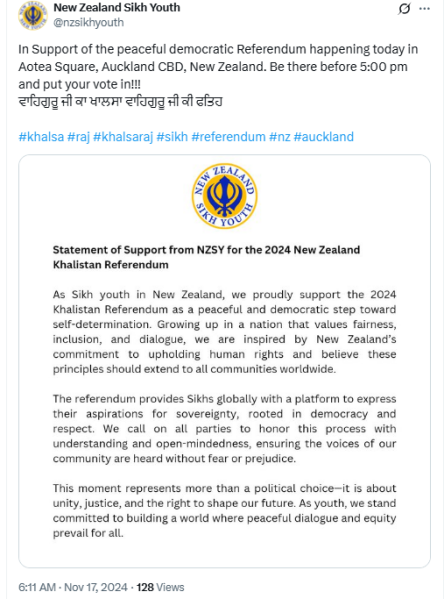
“As Sikh youth in New Zealand, we proudly support the 2024 Khalistan Referendum as a peaceful and democratic step toward self-determination,” their executive committee declared. The organization drew parallels between New Zealand’s values of “fairness, inclusion and dialogue” and their support for Sikh sovereignty aspirations.
Government Response and Community Divisions
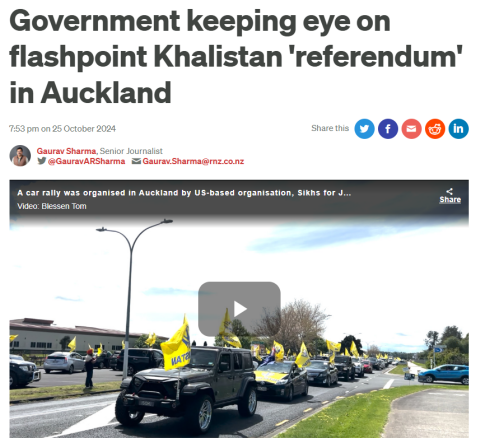
The activities have not gone unnoticed by New Zealand authorities. Journalist Gaurav Sharma reported on October 25, 2024, that the New Zealand government was closely monitoring the planned referendum. The Ministry of Foreign Affairs and Trade (MFAT) found itself balancing support for lawful freedom of speech while reaffirming New Zealand’s recognition of India’s sovereignty and territorial integrity.
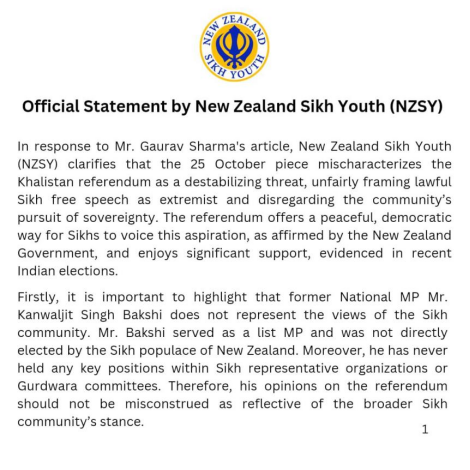
The situation has created visible divisions within the Sikh community itself. Former National Party MP Kanwaljit Singh Bakshi publicly stated that most Sikhs in New Zealand do not support the referendum, characterizing it as a fringe movement unrepresentative of broader community views.
However, the New Zealand Sikh Youth organization strongly contested this characterization, arguing that Bakshi “does not represent the views of the Sikh community” since he was never directly elected by New Zealand’s Sikh population nor held key positions in Sikh representative organizations or Gurdwara committees.
Violent Incidents and Security Concerns
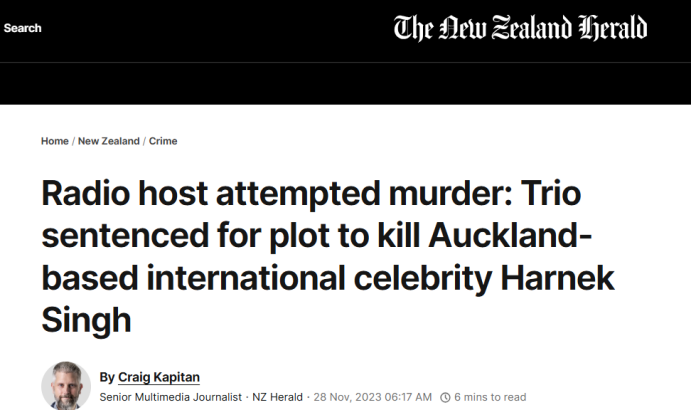
The movement’s presence in New Zealand has not been without serious incidents. In December 2023, three Khalistan extremists were sentenced for the attempted murder of Harnek Singh, a popular Auckland-based radio host known for his vocal opposition to Khalistan ideology.
The attack, which occurred on December 23, 2020, saw Singh ambushed in his driveway by religious extremists. He suffered over 40 stab wounds, requiring more than 350 stitches and multiple surgeries for recovery. Sarvjeet Sidhu, aged 27, pleaded guilty to attempted murder, while Sukhpreet Singh, aged 44, was found guilty of being an accessory. A third individual, a 48-year-old Auckland resident whose name remains suppressed, was identified as the attack’s planner.
Judge Mark Woolford emphasized the religious extremist nature of the attack during sentencing, stating it “bears all the hallmarks of religious fanaticism” and stressing the need for “protecting the community from further violence” while sending “a strong message of deterrence to others.”
Strategic Expansion and Public Messaging
The movement has demonstrated sophisticated understanding of public messaging, utilizing electronic billboards in major New Zealand cities like Auckland to promote their agenda. This represents a significant investment in visibility and suggests organized funding and coordination.
The expansion to New Zealand and Australia represents a strategic shift for the Khalistan movement, which has traditionally focused on countries with larger Sikh populations. This geographic diversification may indicate either growing confidence in the movement’s appeal or recognition of the need to establish footholds in new territories.
Implications for New Zealand-India Relations
Experts have warned that these activities could strain New Zealand-India diplomatic relations, potentially mirroring the ongoing tensions between India and Canada over similar issues. India has designated SFJ co-founder Gurpatwant Singh Pannun as a terrorist and banned the organization under its terrorism laws, creating a complex diplomatic challenge for countries where the group operates legally.
The situation in New Zealand reflects broader global tensions surrounding the Khalistan movement, balancing freedom of expression and peaceful protest rights against concerns about extremism and international diplomatic relationships. As activities continue to expand and evolve, New Zealand authorities face the ongoing challenge of maintaining this delicate balance while ensuring community safety and security.